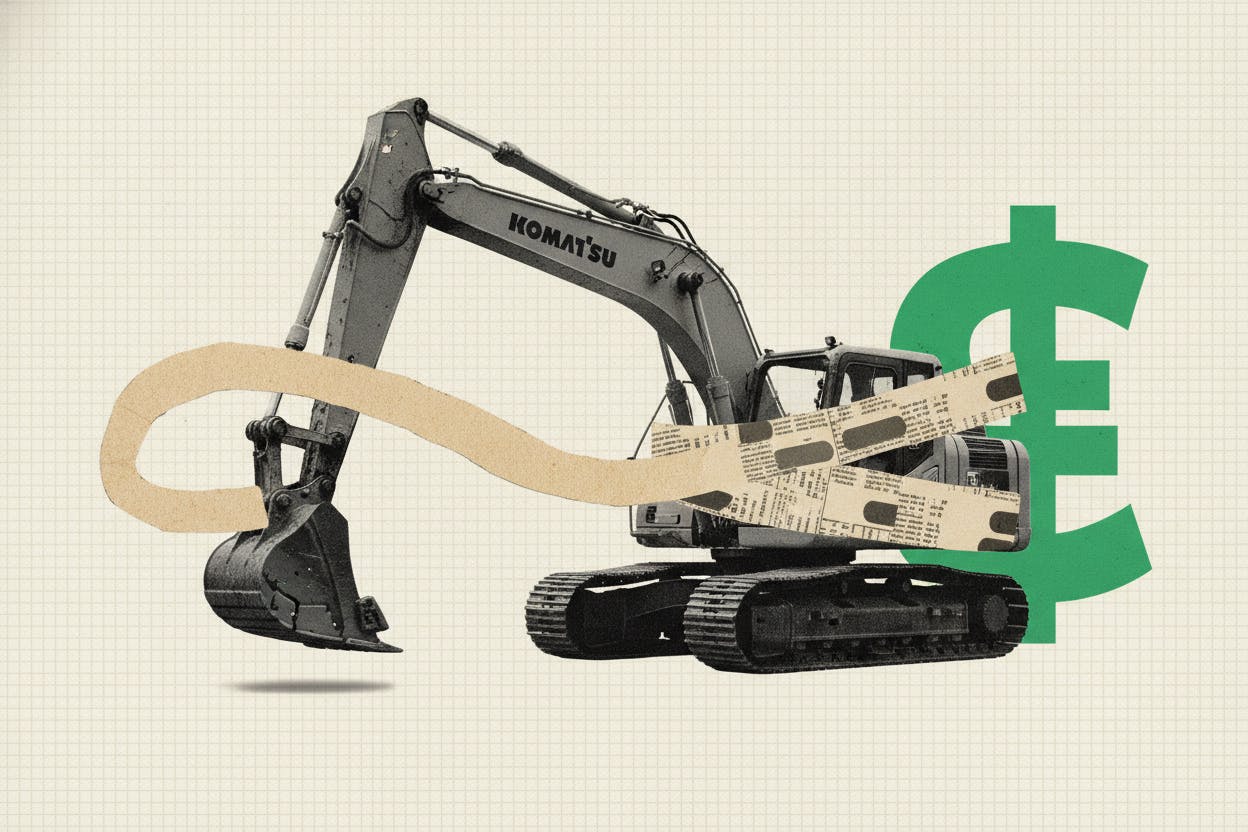
Japanese construction and mining equipment maker Komatsu reported a solid first quarter, with sales rising 15% and operating income climbing 8%, as a weaker yen provided a significant tailwind. However, the company also trimmed its full-year profit forecast, citing headwinds from US tariffs and rising shipping costs linked to Middle East disruptions.
For the three months ended June 30, Komatsu posted sales of 1.043 trillion yen ($7.2 billion) and operating income of 151.6 billion yen. The weaker yen was a key factor: because Komatsu earns a large portion of its revenue in dollars and euros, those foreign earnings translate into more yen when the Japanese currency is weak. That currency boost helped offset some of the pressure from tariffs and logistics.
Tariffs and shipping detours weigh on outlook
Despite the strong quarter, Komatsu lowered its full-year profit forecast, pointing to US tariffs on imported steel and aluminum, as well as on certain finished goods. The company also noted that ongoing shipping disruptions in the Middle East, particularly rerouting around the Red Sea due to Houthi attacks, have pushed up logistics costs. Those detours force ships to take longer routes, raising fuel and insurance expenses.
Komatsu is not alone in facing these pressures. Other industrial companies have also flagged tariff and shipping cost issues. For example, Ford raised its profit forecast recently, but only because strong truck demand and cost cuts offset similar tariff drag. The broader picture is that global trade friction and geopolitical instability are creating a mixed environment for manufacturers.
What it means for investors
For everyday investors, Komatsu's results illustrate how currency movements can significantly affect multinational companies. A weaker yen helps Japanese exporters by making their products cheaper abroad and boosting the yen value of foreign earnings. But that benefit can be eroded by other factors, such as tariffs and higher shipping costs.
Investors should watch how Komatsu manages its cost base and pricing power. The company's ability to pass on higher costs to customers will be key. Also, any further escalation in US trade policy or Middle East tensions could add more pressure. On the flip side, if the yen strengthens, the currency tailwind could reverse.
Komatsu's experience is a reminder that even strong quarterly results can come with cautious guidance. The company's trimmed forecast suggests management sees more headwinds than tailwinds in the near term. For those invested in industrial stocks, keeping an eye on tariff developments and shipping costs is essential.
In the broader market, similar dynamics are playing out. Electrolux beat profit forecasts but saw North America sales still falling, highlighting regional disparities. And NXP Semiconductors beat sales forecasts as AI demand broadened, showing that tech-driven growth can offset some macro headwinds.
Komatsu's next quarterly report will be closely watched to see if the tariff and shipping cost pressures ease or intensify. For now, the weak yen remains a powerful but potentially temporary advantage.