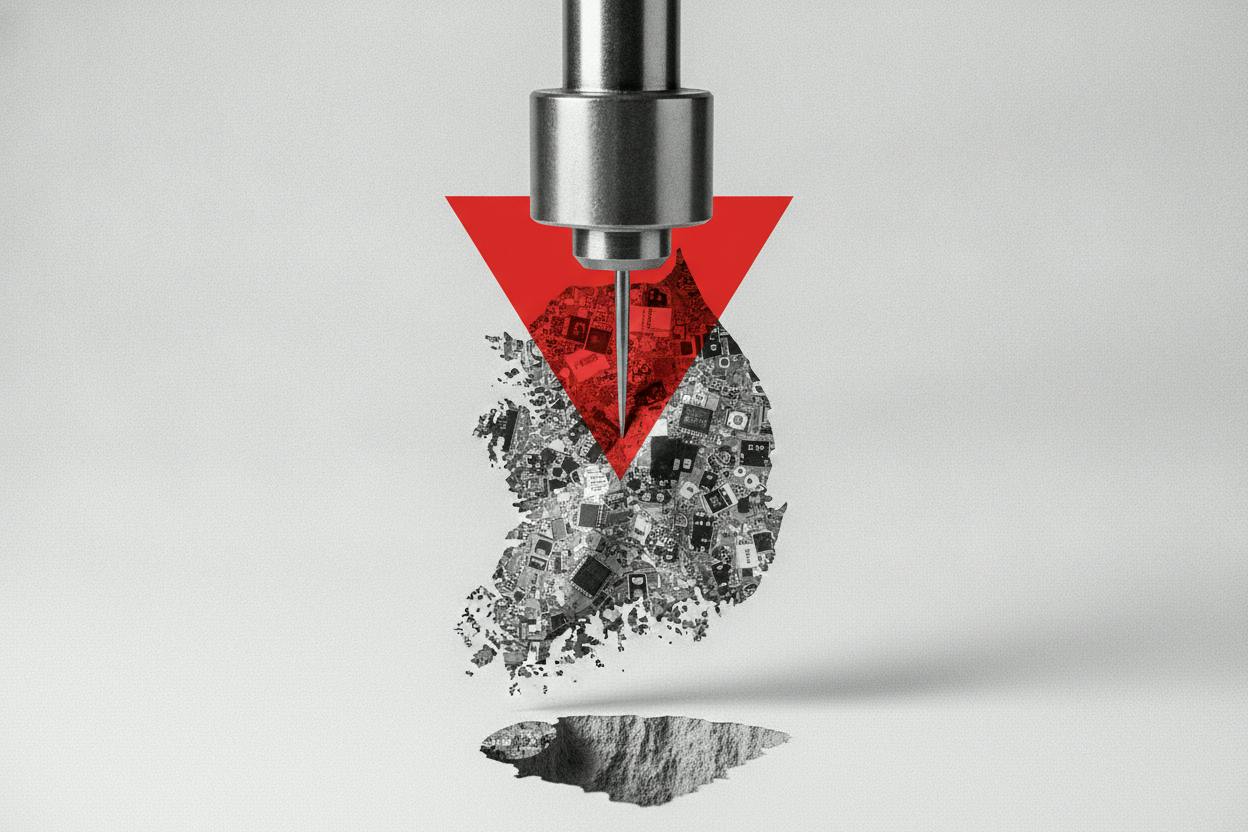
South Korean stocks fell more than 1% on [day], as investors weighed a hawkish signal from the U.S. Federal Reserve and fresh jitters over a record-breaking tech IPO. The KOSPI index slid 1.10% to close at 5,011.59, with heavyweight exporters bearing the brunt of the selling.
Samsung Electronics dropped 1.64% and SK Hynix slipped 0.52%, reflecting the market's sensitivity to global interest rate expectations. The trigger was the release of the Fed's October 27-28 meeting minutes, which showed officials remain uneasy about inflation and may be willing to keep policy tighter for longer than previously anticipated.
Adding to the cautious tone, Fed Governor Christopher Waller floated the possibility of a half-percentage-point rate hike at the December meeting. That comment served as a stark reminder that the rate outlook can shift quickly, and it rippled through markets worldwide.
Why higher U.S. rates hit Korea's tech stocks
When the Fed signals it may keep rates higher for longer, it lifts the 'discount rate' investors use to value future profits. In simple terms, tomorrow's earnings become worth less in today's dollars. That dynamic tends to squeeze valuations most for 'long-duration' assets—companies whose expected growth sits further in the future.
Tech-heavy markets like Korea's are especially vulnerable to this repricing. The KOSPI's biggest names, including Samsung Electronics and SK Hynix, are closely tied to the global semiconductor cycle and global risk appetite. So even if the pressure starts in the U.S., a shift in rate expectations can quickly translate into lower valuation multiples for Korea's exporters.
The cautious mood also showed up in positioning. Foreign investors were net sellers of 162.6 billion won during the session, even as Korean government bond yields edged down and the won firmed slightly against the dollar. That mix suggests investors were trimming risk rather than fleeing the market entirely.
The Anthropic IPO factor
Adding to the unease was news of Anthropic's blockbuster IPO valuation, reported at a record $81.31 billion. While the AI company's listing is a U.S. event, its sheer size has rippled through global markets. Investors are watching how the IPO will absorb capital and what it signals about valuations in the tech sector.
Anthropic's debut comes at a time when AI-related stocks have been a major driver of market gains. A mega-IPO can divert attention and capital away from existing tech names, and it can also raise questions about whether valuations have run ahead of fundamentals. For Korean investors, the concern is that a cooling in global tech sentiment could weigh on local chipmakers and other exporters.
The KOSPI's decline mirrors moves in other Asian markets. Japan's stocks also slipped on similar concerns, and European markets slid as copper slumped and IPO jitters spread. The Fed's hawkish minutes have also rattled U.S. equities, with Nvidia slipping as rate fears persist.
What it means for investors
For everyday investors, the key takeaway is that interest rate expectations remain a powerful force in global markets. When the Fed sounds more willing to hike, it can quickly reset valuations across the board—especially for tech and growth stocks.
For those holding Korean equities, the focus should be on how the semiconductor cycle evolves and whether global risk appetite holds up. Samsung and SK Hynix are bellwethers for the sector, and their fortunes are tied to demand for memory chips and other components.
It's also worth remembering that market moves like this are often short-term reactions. The Fed's actual decision in December will depend on incoming data, and officials have stressed that they are data-dependent. Investors should watch for further clues in economic releases and Fed speeches in the weeks ahead.
In the meantime, the KOSPI's slide is a reminder that even a distant central bank can have a direct impact on your portfolio. Keeping an eye on U.S. rate expectations—and how they feed into global tech valuations—can help you understand why your investments move the way they do.