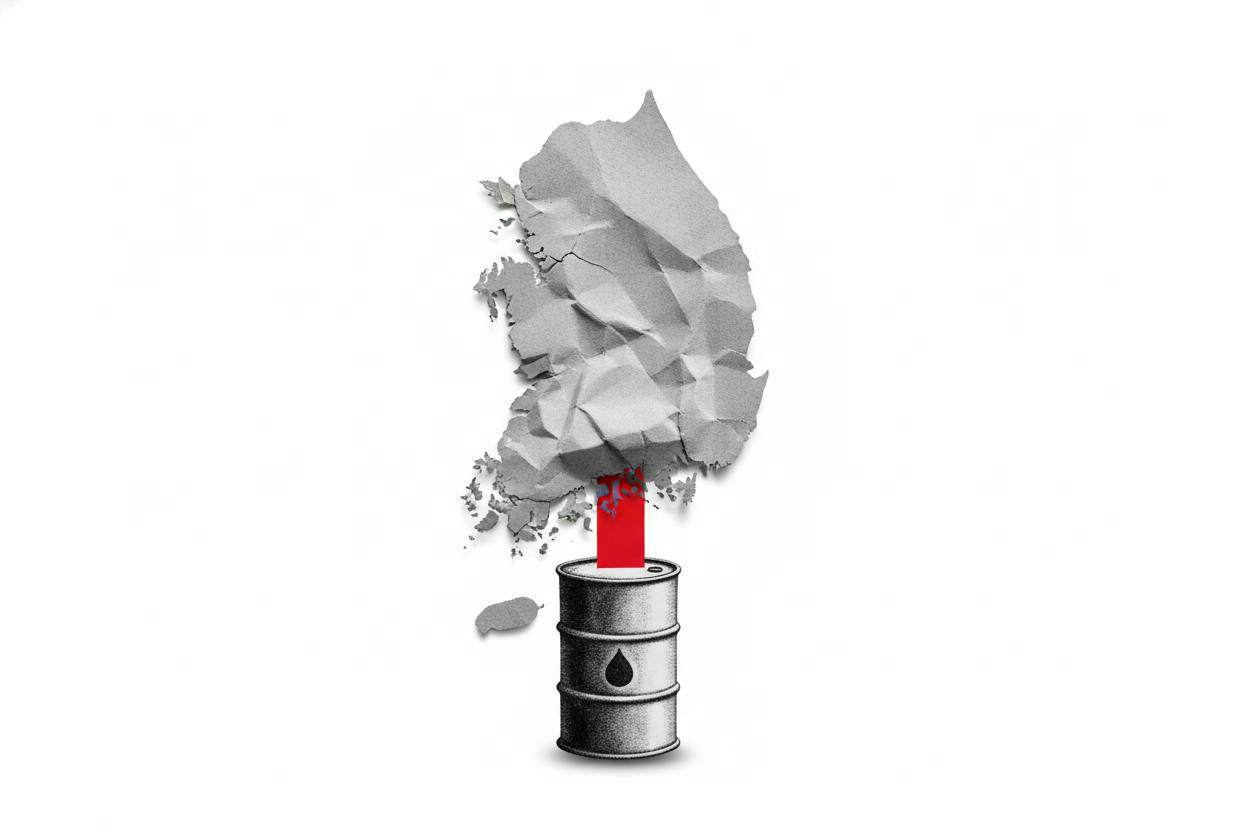
South Korean stocks tumbled on [day], with the benchmark KOSPI index falling 3.3% as technology shares led a broad selloff. The drop came as Brent crude climbed nearly 3% to trade above $107 a barrel, after attacks on Saudi infrastructure and fresh threats in the Strait of Hormuz reignited fears of supply disruptions in the world's most important oil shipping lanes.
The move highlights how quickly geopolitical tensions in the Middle East can spill into Asian equity markets, especially for economies like South Korea that are heavily reliant on energy imports. The KOSPI's decline was the sharpest in recent weeks, with chipmakers and other tech heavyweights bearing the brunt of the selling.
Oil's geopolitical premium returns
Oil is often the fastest conduit for geopolitical risk to reach financial markets. When traders worry about potential supply interruptions around Saudi Arabia's energy infrastructure or the Strait of Hormuz – a narrow waterway through which roughly a fifth of global oil consumption passes – crude prices tend to spike quickly. The latest attacks on Saudi facilities and renewed threats in the strait have revived that risk premium, pushing Brent back above the psychologically important $107 level.
The rise in crude is a double-edged sword for Asian markets. While energy producers and oil-related stocks can benefit, import-dependent economies like South Korea face higher input costs, which can squeeze corporate margins and weigh on consumer spending. For tech companies, which are already grappling with concerns about slowing demand and stretched valuations, the added pressure from rising energy costs is an unwelcome complication.
This isn't the first time this year that oil spikes have rattled Asian equities. Earlier episodes saw oil spikes and a firm dollar hit emerging Asian currencies and AI stocks, as investors fled riskier assets. The current selloff in Seoul echoes that pattern, with the KOSPI's tech-heavy composition making it particularly sensitive to shifts in global risk appetite.
Tech shares lead the decline
The KOSPI's 3.3% drop was driven largely by technology stocks, which have been under pressure in recent sessions. The index had already fallen 2% earlier this week on AI safety warnings that hit chip stocks, and today's slide extends that losing streak. Investors are increasingly worried that the AI-driven rally in semiconductor shares may have run ahead of fundamentals, especially as energy costs rise and global growth prospects dim.
The selloff in Seoul is part of a broader regional trend. European tech stocks also slid as an AI slowdown call hit chipmakers, suggesting the weakness is not confined to Asia. The interconnected nature of the global tech supply chain means that a slowdown in one region can quickly ripple across markets.
For South Korean exporters, the combination of higher oil prices and a weaker global demand outlook is particularly challenging. The country's economy is heavily dependent on exports of semiconductors, automobiles, and electronics, all of which are sensitive to energy costs and global trade conditions.
What it means for investors
For investors, the key takeaway is that geopolitical risk remains a live threat to market stability. The attacks on Saudi infrastructure and the threats in the Strait of Hormuz are reminders that supply disruptions can occur with little warning, and that oil prices can move quickly in response.
Higher oil prices are likely to feed through to inflation, which could complicate central banks' efforts to ease monetary policy. If energy costs remain elevated, policymakers may be less inclined to cut interest rates, which would be a headwind for equity valuations.
For South Korean investors, the immediate focus will be on whether the KOSPI can stabilize after such a sharp drop. Historically, markets tend to recover from geopolitical shocks once the immediate panic subsides, but the path is rarely smooth. Australian shares were set to rise as oil jumped on Middle East supply fears, showing that not all markets are moving in the same direction.
Investors should also watch for any further developments in the Middle East, as well as the response of major oil producers. If supply disruptions persist, oil could push even higher, putting more pressure on import-dependent economies and their stock markets.
In the meantime, the KOSPI's slide serves as a reminder that even as markets focus on earnings and interest rates, geopolitics can quickly reassert itself as the dominant driver of asset prices. For now, the prudent approach may be to stay diversified and keep an eye on oil's next move.