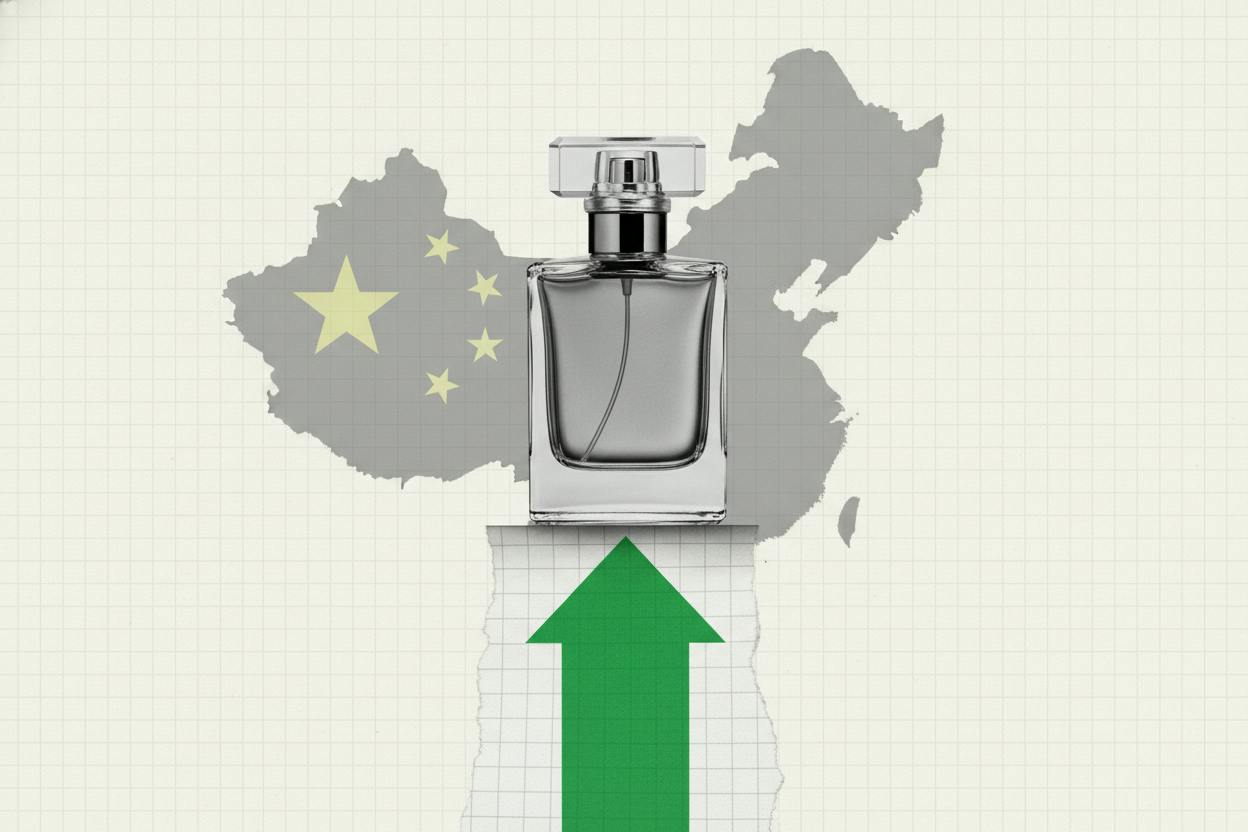
L'Oréal, the world's largest cosmetics company, reported third-quarter sales that came in ahead of analyst expectations, helped by strong demand for its premium fragrances and a pickup in China and other emerging markets. Like-for-like sales rose 7.7% to €11.56 billion, beating the 5.9% growth that analysts tracked by Visible Alpha had forecast.
The beat was broad, but the standout was the company's luxury division, which accounts for more than a third of total revenue. That segment grew 7% on a like-for-like basis, well above the 4.5% analysts had expected. Fragrances, including Prada Paradigme, were a key driver, according to management.
Why the luxury mix matters
For investors, the composition of the sales growth can be as important as the headline number. Luxury beauty and fragrance products typically carry higher profit margins than mass-market items. When premium categories outperform, a relatively small sales surprise can translate into a bigger bump in operating profit.
This is known as a favorable mix shift. As more revenue comes from higher-margin prestige products, the company's overall profitability improves without needing to sell significantly more units. It also creates operating leverage: once fixed costs like marketing and store support are covered, additional revenue tends to drop through to profit more efficiently.
That dynamic is why a luxury-led beat often carries more weight with investors than a similar-sized surprise driven by cheaper, higher-volume products. It can nudge analysts to raise their profit forecasts for the coming quarters, and it can influence how much investors are willing to pay for a consumer staple that is often seen as a defensive, "all-weather" holding.
China and emerging markets rebound
Management also pointed to improving momentum in China after a tough stretch for the company in that market. Chinese consumers have been spending more cautiously in recent years, which has weighed on many global luxury and beauty brands. A pickup there is a positive sign, though the company did not provide specific numbers.
Beyond China, L'Oréal cited strong demand across parts of Europe, South Asia, and the Middle East. That geographic diversity helps cushion the company against weakness in any single region.
The results echo a broader theme in the consumer sector: companies that can sell premium products to affluent shoppers are often weathering the slowdown in discretionary spending better than those reliant on mass-market goods. For example, P&G recently beat sales forecasts but warned of cost pressures, highlighting how even large consumer giants face headwinds.
What it means for investors
For everyday investors, L'Oréal's report is a reminder that not all sales growth is created equal. A company that beats expectations by selling more of its most profitable products is in a stronger position than one that hits its numbers by discounting or pushing volume through lower-margin channels.
The luxury division's performance is particularly important because it signals that consumer demand for high-end beauty and fragrance remains resilient, even as some other parts of the luxury market have cooled. Prada's recent results showed only modest growth, suggesting that the broader luxury sector is not uniformly strong.
L'Oréal's ability to grow faster than expected in this environment could support its premium valuation. Consumer staples companies are often valued for their stability, and a company that can consistently beat forecasts while improving its product mix is likely to attract investor interest.
However, investors should also keep an eye on the risks. The company's reliance on China means that any renewed slowdown there could weigh on future results. Currency fluctuations can also affect reported sales, though like-for-like figures strip out those effects.
Overall, the third-quarter report suggests L'Oréal is navigating a mixed consumer environment well. The strength in luxury fragrances and emerging markets provides a solid foundation, and the mix shift toward higher-margin products could support profitability even if overall growth moderates.
For those watching the broader market, L'Oréal's performance is another data point in the ongoing story of how consumer companies are coping with inflation and shifting spending habits. Europe's earnings have been beating forecasts, but the underlying picture is often more nuanced. L'Oréal's luxury-led beat is a clear positive, but investors will want to see if the momentum continues in the key holiday quarter.