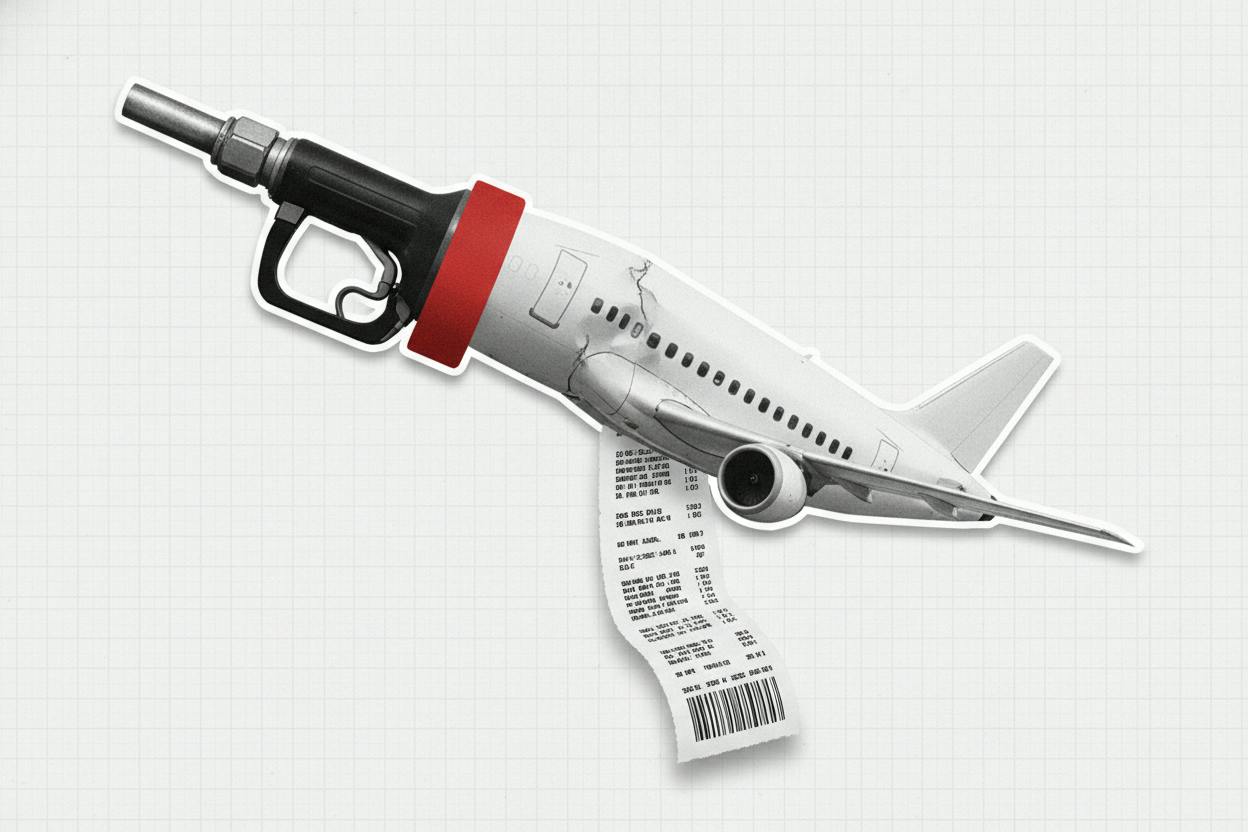
US airlines just wrapped up a blockbuster summer travel season, posting record third-quarter revenue. But the good times may be hitting turbulence: several major carriers have already trimmed their earnings outlooks for the coming months, and the culprit is the same one that has plagued the industry for decades—jet fuel.
With jet fuel prices expected to range between $4.25 and $5.00 a gallon in the fourth quarter, airlines are finding that even sharply higher ticket prices aren't enough to cover the extra cost at the pump. The result is a familiar squeeze: revenue is up, but profit margins are under pressure.
Record revenue, but a growing fuel bill
Airlines have been able to raise fares significantly this year. According to Reuters, US airfares were up nearly 23% year-on-year in the seven months through September. That's a big jump for consumers, but it's still not matching the surge in fuel costs.
Jet fuel, which was below $4 a gallon in the third quarter, is now expected to cost carriers between $4.25 and $4.85 a gallon in the fourth quarter, with some estimates reaching as high as $5.00. For an industry where fuel is typically one of the largest operating expenses, even a 10% increase in fuel prices can wipe out a significant chunk of profit.
The mismatch between fare increases and fuel costs has already forced several big names to walk back their profit forecasts. American Airlines cut its 2026 outlook, and Delta Air Lines, Southwest Airlines, and United Airlines have also trimmed their earnings guidance for the period ahead.
Why fuel costs are climbing
Jet fuel prices are tied directly to crude oil, and global oil markets have been volatile. Geopolitical tensions, production cuts by major oil producers, and refinery constraints have all contributed to higher prices at the pump for airlines. Unlike other industries, airlines have limited ability to pass on these costs quickly. Fares are set months in advance, and competition often keeps ticket prices in check.
This isn't a new problem. Airlines have long struggled with fuel price swings, and many have tried to hedge against them by locking in fuel prices in advance. But hedging only goes so far, and when prices spike suddenly, carriers are left exposed.
The broader economic backdrop adds another layer of pressure. Rising energy costs are showing up across the economy, from factory-gate prices to transportation. For airlines, that means not only higher jet fuel bills but also higher costs for maintenance, ground services, and even catering.
What it means for investors
For everyday investors, the key takeaway is that airline stocks are highly sensitive to fuel prices. Even when demand is strong and revenue is at record levels, a spike in jet fuel can quickly erode profits. That's why airline earnings guidance is often more important than the headline revenue number.
When carriers trim their outlooks, it's a signal that the cost side of the business is deteriorating, even if the revenue side looks healthy. Investors should watch how airlines manage their fuel costs, whether through hedging, fuel-efficient fleets, or further fare increases.
It's also worth noting that airlines have been able to raise fares significantly this year, which shows strong consumer demand. But there's a limit to how much passengers will pay. If fuel prices stay high, airlines may have to choose between absorbing the cost (and hurting margins) or raising fares further (and risking a drop in demand).
For now, the industry is in a wait-and-see mode. The fourth quarter will be a test of whether airlines can keep their profit forecasts intact, or whether more cuts are on the way. Other transportation companies are facing similar fuel cost pressures, so this isn't unique to airlines—but it's particularly acute for them because fuel is such a large share of their costs.
The bottom line
Record revenue is great, but it doesn't pay the bills if costs are rising faster. US airlines are in that exact spot right now. Higher airfares have helped, but they haven't been enough to cover the jump in jet fuel prices. As a result, several big carriers have lowered their earnings outlooks for the fourth quarter and beyond.
For investors, this is a reminder that airline profitability is fragile and closely tied to fuel prices. While the industry has shown resilience in raising fares, the fuel bill remains a wildcard. Keep an eye on oil prices and airline guidance in the coming weeks—they'll tell you a lot about where the industry is headed.