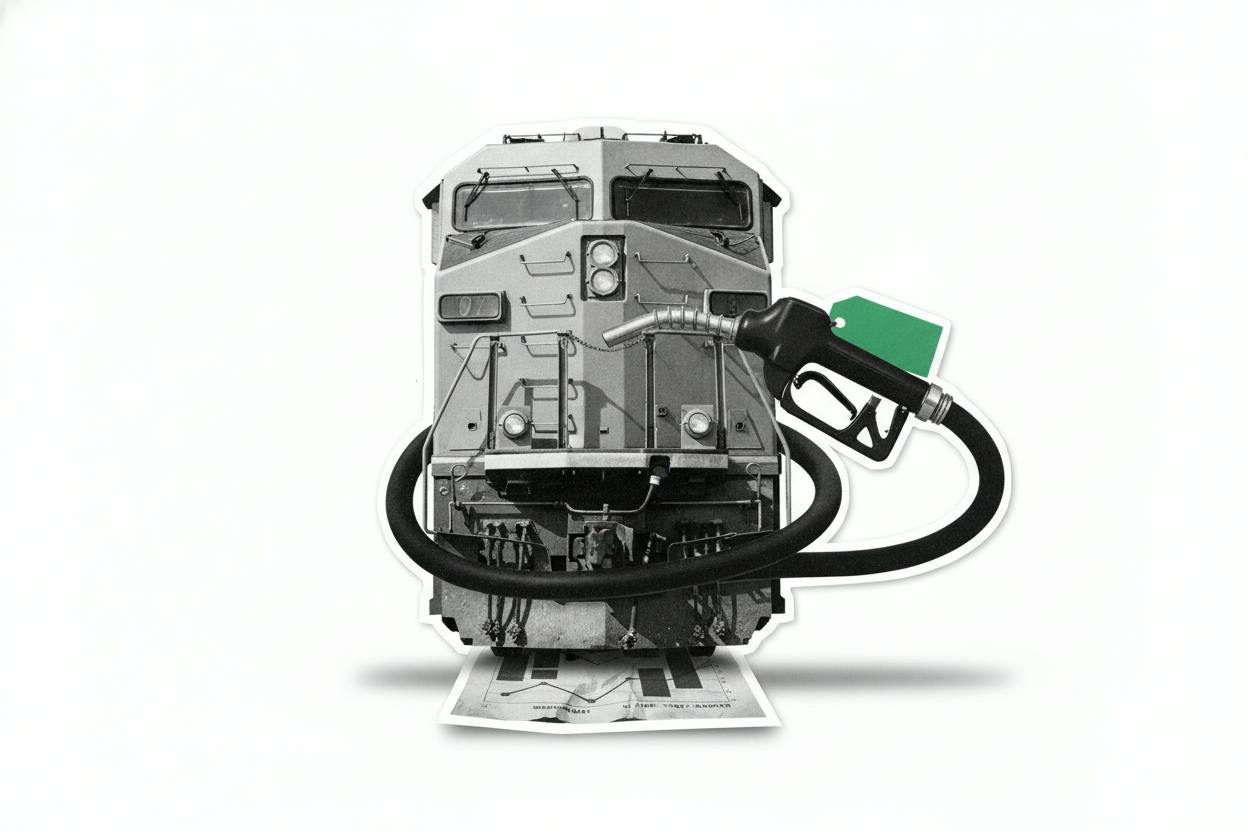
Norfolk Southern, one of the largest U.S. freight railroads, reported adjusted earnings of $3.62 per share for the latest quarter, beating analysts' expectations of $3.47. The better-than-expected profit came despite persistently high diesel prices, as resilient intermodal shipping demand and fuel surcharges helped offset rising costs.
Intermodal shipping—moving goods in containers that can transfer between trucks, trains, and ships—has been a bright spot for railroads as e-commerce and supply chain shifts drive demand. Fuel surcharges, which railroads add to customer bills when diesel prices climb, also boosted revenue. But these surcharges are a double-edged sword: they raise both revenue and expenses, so they don't necessarily improve underlying profitability.
The operating ratio: a clearer picture
Because fuel surcharges flow through the income statement, analysts focus on the operating ratio—operating expenses divided by revenue—to gauge a railroad's cost control and productivity. A lower ratio means better efficiency. Norfolk Southern's adjusted operating ratio worsened to 67.4%, up 280 basis points from a year earlier. That suggests costs grew faster than core revenue once the fuel pass-through is stripped out.
The company also reported that railway operating income rose 12.9% to $3.5 billion, according to LSEG data cited by Reuters. That headline growth looks strong, but the deterioration in the operating ratio tells a more nuanced story about how efficiently the railroad is running.
Why the operating ratio matters for investors
For rail stocks, a single quarter's earnings beat can matter less than the direction of the operating ratio. Since fuel surcharges largely pass higher diesel costs on to customers, they can make results look stronger without improving the underlying business. A 280-basis-point deterioration to 67.4% can reinforce investor skepticism about efficiency, even alongside higher operating income.
That helps explain why a railroad can deliver a headline EPS beat and still struggle to close a performance gap versus the broader market. Investors are looking beyond the surface numbers to see whether the company is becoming more productive and controlling costs, not just passing them along.
What it means for everyday investors
If you own Norfolk Southern stock or are considering it, the operating ratio is a key metric to watch. A worsening ratio could signal that the company is facing cost pressures that fuel surcharges can't fully offset. It also raises questions about management's ability to improve efficiency over time.
For context, other companies are also feeling the pinch from higher fuel costs. For example, American Airlines cut its 2026 outlook as fuel costs outpace fares, and P&G beat sales forecasts but diesel costs squeezed profits. These stories highlight how fuel prices are a common headwind across industries.
In the energy sector, Valero's record profit shows refining margins surging on Middle East supply fears, which underscores the volatility in fuel markets. For railroads, fuel surcharges provide some protection, but they don't eliminate the impact of rising costs.
Looking ahead
Investors will likely keep a close eye on Norfolk Southern's operating ratio in coming quarters. If diesel prices stay high, the company will need to find other ways to improve efficiency—such as better network utilization, lower labor costs, or higher pricing power—to convince the market that its profitability is sustainable.
The broader takeaway: a headline earnings beat is nice, but for railroads, the operating ratio is the real scorecard. It tells you whether the company is getting more efficient or just passing costs along. As always, it's important to look beyond the surface numbers and understand the underlying drivers of a company's performance.