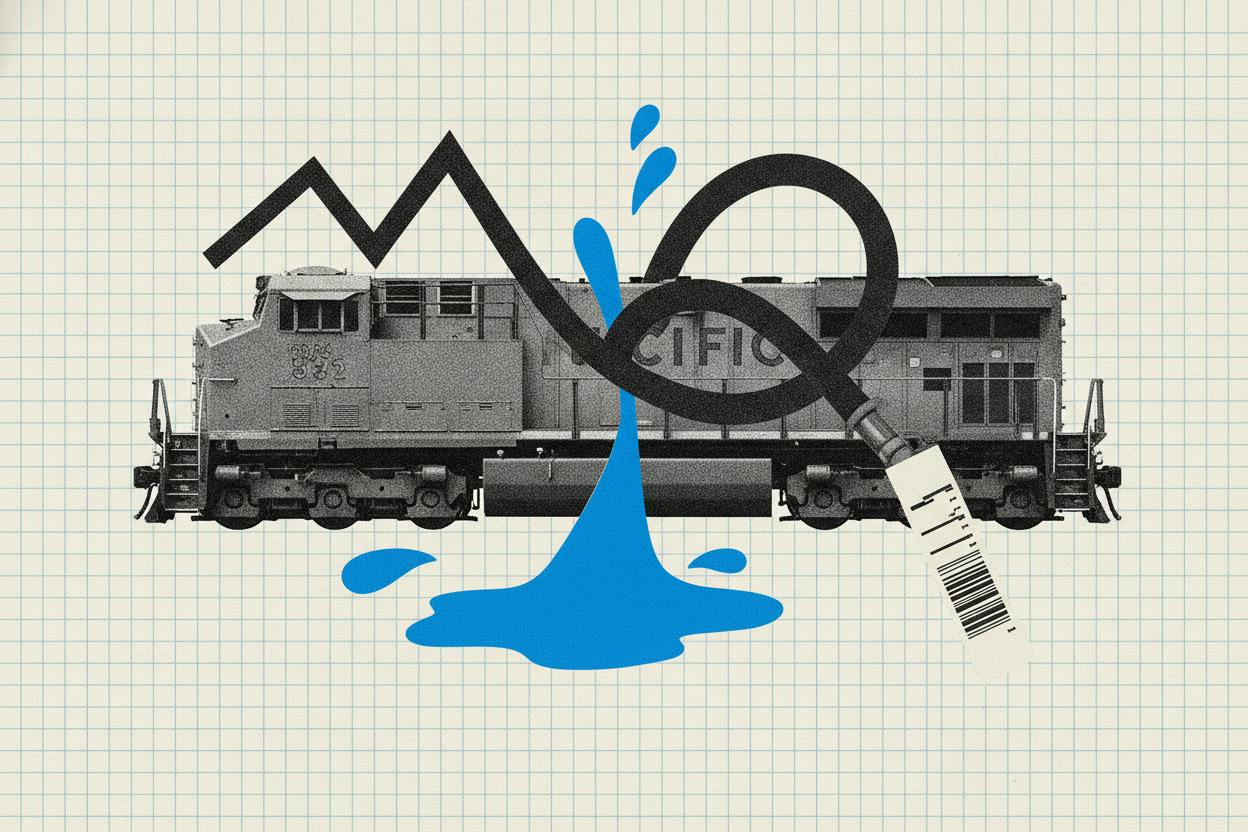
Union Pacific beat Wall Street's third-quarter profit forecasts, but a sharp rise in diesel costs weighed on its key efficiency metric, the operating ratio.
The Omaha, Nebraska-based railroad said operating revenue rose 15% from a year earlier to $7.2 billion, helped by core pricing gains, higher fuel surcharges and increased shipments. Even excluding fuel surcharges, freight revenue climbed 6%, suggesting demand and pricing held up well during the quarter.
But the company's operating ratio — a key measure of efficiency that shows how much of each dollar of revenue is consumed by operating costs — deteriorated as diesel prices surged. The average price of diesel hit a record $6.53 per gallon in September, according to auto group AAA, and Union Pacific said fuel inflation pressured its results.
What is the operating ratio?
For railroads, the operating ratio is one of the most closely watched numbers. It's calculated by dividing operating expenses by operating revenue. A lower ratio is better — it means the railroad is keeping more of each dollar it earns. When the ratio rises, it signals that costs are growing faster than revenue, which can squeeze profit margins.
Union Pacific's fuel bill is one of its largest variable costs. When diesel prices spike, the company can partially offset the impact through fuel surcharges built into its contracts with shippers. But those surcharges don't always cover the full increase, and they can lag behind the actual price moves.
What it means for investors
For everyday investors, the key takeaway is that Union Pacific's core business — moving freight — is holding up well. Revenue growth of 15% is strong, and the fact that freight revenue rose 6% even without fuel surcharges suggests that pricing power remains intact.
The concern is cost inflation. If diesel prices stay elevated, the railroad's operating ratio could remain under pressure in coming quarters. That matters because the operating ratio is a primary driver of the company's profit margins and, ultimately, its earnings per share.
Investors should also watch how Union Pacific manages its fuel costs relative to its surcharge mechanisms. Railroads typically adjust surcharges with a lag, so a period of sharply rising fuel prices can temporarily hurt results before the surcharges catch up.
Union Pacific's results come at a time when the broader freight market is showing signs of stabilization. Shipping volumes have been uneven across the economy, with consumer goods and agricultural products moving at different paces. The company's ability to grow revenue despite that backdrop is a positive signal for the broader industrial economy.
For investors, the bottom line is this: Union Pacific beat expectations, but the fuel bill is a reminder that even the best-run railroads are not immune to input cost inflation. The question going forward is whether diesel prices moderate — and whether the company can continue to offset them with pricing and surcharges.