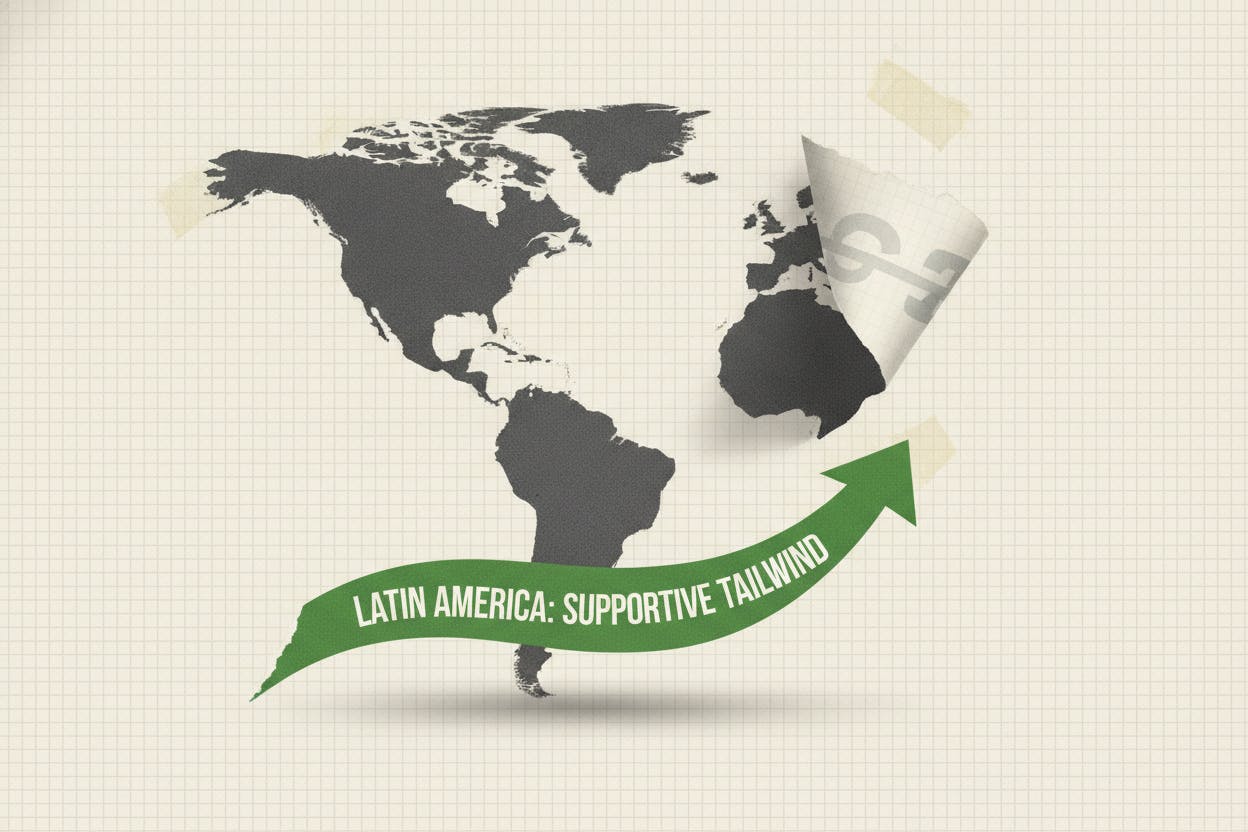
Latin American financial markets got a boost on Wednesday as a softer US dollar and rising commodity prices lifted regional stocks and currencies. MSCI's Latin America equities index, which tracks the region's largest companies, rose about 0.8%, while several of the region's currencies strengthened against the greenback.
The Brazilian real, Mexico's peso, and Chile's peso all firmed, reflecting a broader trend that often benefits emerging markets. When the dollar weakens, it becomes cheaper for international investors to hold local currencies and assets, and it can also make dollar-priced commodities—like oil, copper, and soybeans—more affordable for buyers using other currencies.
Why a weaker dollar matters
The dollar's movement is one of the most important forces for emerging markets. A strong dollar tends to pull capital out of riskier assets, as investors seek the safety and higher yields of US Treasuries. Conversely, a weaker dollar often encourages investors to look abroad for better returns, which can boost stock markets and currencies in developing economies.
This dynamic is especially pronounced in Latin America, where many countries are major exporters of raw materials. Higher commodity prices directly improve the earnings outlook for mining, energy, and agricultural companies, which in turn supports their stock prices. The recent strength in copper, for example, has been a key driver for miners in the region, as noted in copper's rally lifting Latin American miners.
The softer dollar also comes as traders look ahead to a heavy US data calendar, including jobs reports and Federal Reserve signals. As the dollar wavers ahead of key data, any surprises could shift the outlook for interest rates and, by extension, emerging market assets.
What this means for investors
For everyday investors, the move in Latin American markets is a reminder that global currencies and commodity prices are closely linked to the performance of stocks in the region. A weaker dollar can be a positive sign for emerging market funds and ETFs, as it often signals that investors are willing to take on more risk.
However, it's important to keep in mind that currency gains can be volatile. A sudden shift in US monetary policy or a drop in commodity prices could quickly reverse the trend. Investors with exposure to Latin America should watch not only the dollar but also the specific drivers of each country's economy—such as oil prices for Colombia or copper for Chile.
The broader emerging market landscape has been mixed recently, with emerging markets steadying as the AI trade cools and oil rebounds. That suggests that while the dollar's weakness is helping today, other factors—like global growth and trade tensions—still play a big role.
Currencies in focus
Among the currencies that firmed, Brazil's real and Mexico's peso are often seen as proxies for investor sentiment toward the region. The Chilean peso, meanwhile, is closely tied to copper prices, which have been supported by supply concerns and demand from the energy transition.
For investors, the key takeaway is that Latin American assets can offer diversification benefits, but they come with higher risk due to currency fluctuations and political uncertainty. As always, it's wise to consider how these assets fit into a broader portfolio rather than reacting to daily moves.
Looking ahead, much will depend on the upcoming US economic data and the Federal Reserve's next moves. If the dollar continues to soften, Latin American markets could see further gains. But if inflation surprises to the upside and the Fed turns hawkish, the tide could quickly turn.
In the meantime, the region's stock markets are enjoying a tailwind, and investors are watching to see if it lasts.