Latin American markets ended the session on a cautious note, with investors parsing a mixed bag of central bank signals across the region. Mexico's peso held its ground ahead of a key policy decision, while Brazil's currency gained after its central bank surprised with a pause in its easing cycle.
The regional mood was subdued: MSCI's Latin America equity gauge slipped 0.3%, and a broad currency index edged down 0.1%. The moves were modest, but they underscored how much of the day's action was driven by monetary policy expectations rather than corporate news.
Mexico: Banxico in the spotlight
All eyes were on Mexico, where the central bank, known as Banxico, was widely expected to keep its benchmark interest rate at 6.50%. Markets had priced in a hold, but a vocal minority still saw a chance of a cut, leaving room for a surprise.
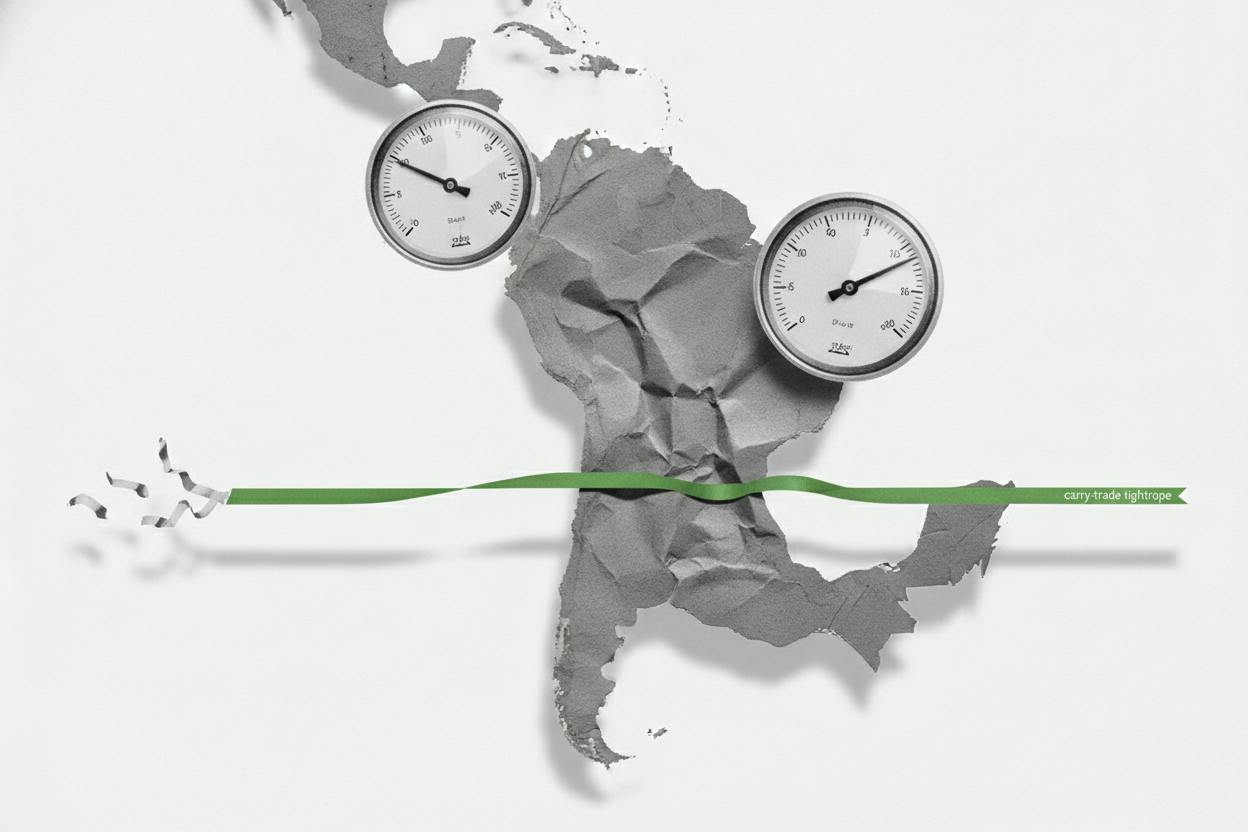
BBVA, one of Spain's largest banks, warned that an unexpected move could leave the peso "battered again" after it had already come under pressure in risk-off trading. The peso's resilience so far reflects Mexico's relatively high interest rates, which make the currency attractive for so-called carry trades. In a carry trade, investors borrow in a low-yielding currency and invest in a higher-yielding one, pocketing the difference. Mexico's rates have been a magnet for such flows, but a cut would shrink that yield advantage and could prompt traders to unwind positions quickly.
For foreign investors, currency swings can dominate returns. Even if Mexico's IPC index—recently around 71,016 points—rises, a weaker peso can erase those gains when translated back into US dollars. The exchange rate was hovering near 18.62 pesos per dollar, a level that leaves little margin for error.
Brazil: A hawkish pause
Brazil delivered the opposite kind of signal. Its central bank paused its easing cycle, lifted its inflation forecasts, and dropped language that had pointed to further cuts. That shift toward a more hawkish stance gave the real a lift, as investors saw less chance of aggressive monetary loosening.
The decision came even as data showed September industrial output fell more than expected—a reminder that high borrowing costs are still weighing on economic activity. The central bank's move suggests it is prioritizing inflation control over short-term growth support, a stance that often resonates with currency markets.
Brazil's situation mirrors a broader regional challenge: inflation expectations remain sticky, forcing policymakers to balance price stability against slowing economies.
Colombia: Inflation forecasts rise
Colombia added to the regional picture by lifting its inflation forecast for this year to 7.1%, up from a previous estimate of 6.9%. It also cut its 2026 growth outlook, signaling that policy credibility—not just near-term growth—is the main concern.
These moves across Latin America come as central banks worldwide are grappling with similar trade-offs. In the developed world, the dollar has been firming as traders brace for more central bank speeches and potential rate hikes. That global backdrop adds pressure on emerging-market currencies, which often weaken when the dollar strengthens.
What it means for investors
For everyday investors, the key takeaway is that central bank decisions in Latin America are not just academic. They directly affect the value of currencies, which in turn influences returns on local stocks and bonds when measured in dollars.
If Banxico holds rates steady, the peso's carry appeal may persist, supporting Mexican assets. But if it cuts, the peso could weaken, potentially offsetting gains in the IPC index. Similarly, Brazil's hawkish pause could support the real, but it also means borrowing costs stay higher for longer, which may slow economic growth and weigh on corporate earnings.
Investors should also keep an eye on inflation expectations, which remain sticky across the region. Colombia's upward revision is a reminder that price pressures are not fully contained, even as growth slows. This dynamic is playing out in other emerging markets too, as seen in the Czech central bank's recent rate hike and Malaysia's decision to hold rates.
For now, Latin American markets are likely to remain sensitive to central bank communication. Any hint of a shift in policy could trigger outsized currency moves, making it essential for investors to monitor not just the decisions themselves, but the language that accompanies them.