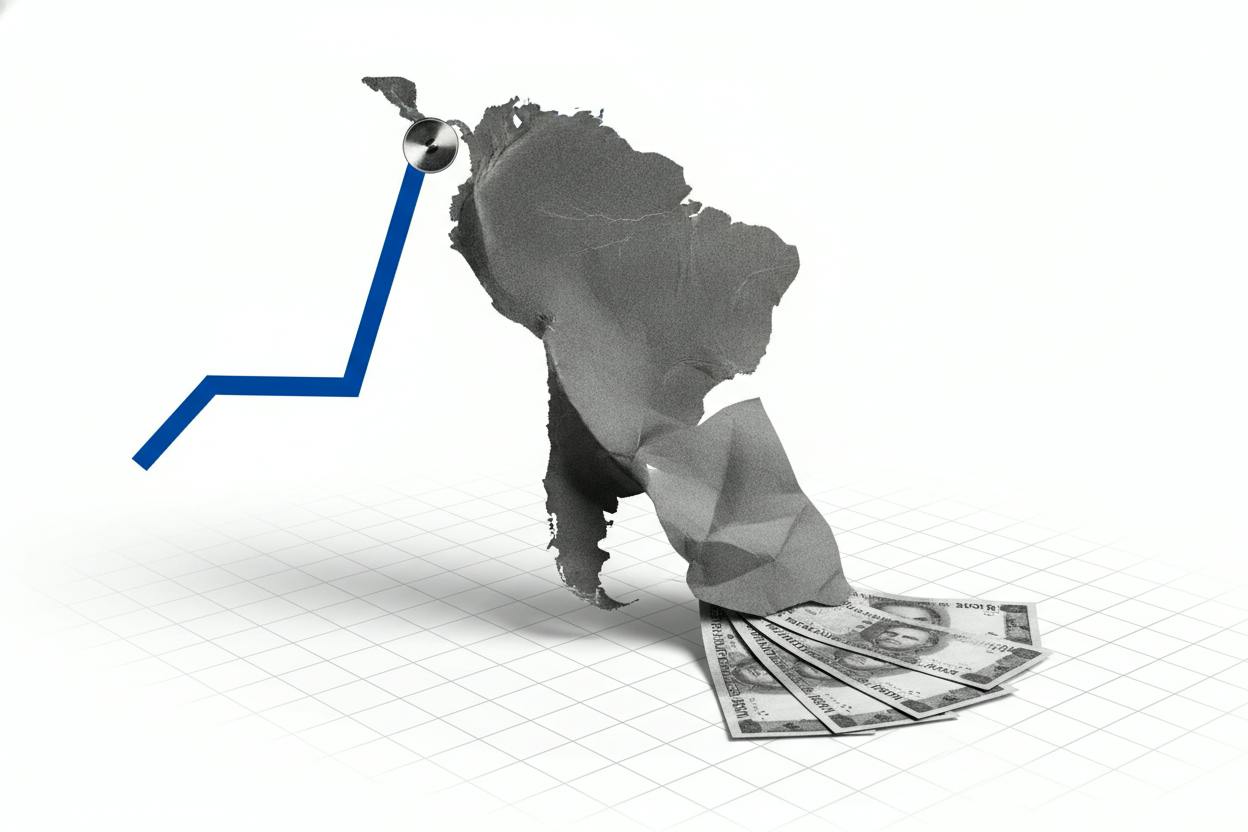
Latin American stocks slid on Thursday, with MSCI's regional equities index falling 0.86% to 2,579.01, its lowest level in more than a year. The decline came as a shaky mood around artificial intelligence and higher US interest rate expectations pushed investors away from riskier assets.
The move was part of a broader pullback in emerging markets. While Latin America has limited direct exposure to US mega-cap tech, it still feels the impact when global investors “de-risk” – meaning they cut positions they view as higher risk. This time, the pressure showed up in both stocks and currencies.
What's driving the sell-off?
Two main forces are at play. First, AI-related stocks have been under pressure globally. Anthropic's recent IPO failed to calm nerves, and its post-IPO slide has raised questions about whether AI valuations have run too far. That uncertainty has spilled over into other markets, as investors reassess the sustainability of the tech-driven rally.
Second, expectations for US interest rates have moved higher. When investors expect the Federal Reserve to keep rates elevated for longer, they tend to pull money out of emerging markets, where higher US yields make safer assets more attractive. This dynamic weighed on Latin American currencies, with MSCI's regional currency gauge dropping 1.5% for a fourth straight weekly loss, according to Reuters.
Brazil leads the decline
Brazil drove much of the regional move. The country's Bovespa index slid 0.69% to 166,376.43. Brazil is the largest economy in Latin America, and its stock market often sets the tone for the region. When Brazilian shares fall, other markets in the region tend to follow.
The weakness in Brazil reflects both global factors and local concerns. Like other emerging markets, Brazil is sensitive to shifts in global risk appetite. But it also has its own challenges, including fiscal worries and political uncertainty, which can amplify the impact of external shocks.
What it means for investors
For everyday investors, the key takeaway is that Latin American markets are highly sensitive to global sentiment. Even if you don't own Brazilian or Mexican stocks directly, you may feel the ripple effects through diversified funds or ETFs that include emerging-market exposure.
When US rate expectations rise, emerging-market assets often underperform. That's because higher US yields make dollar-denominated investments more appealing, drawing capital away from riskier markets. Currencies in the region also tend to weaken, which can hurt returns for foreign investors.
It's also worth noting that the AI-driven sell-off is not just a tech story. It can affect markets far from Silicon Valley, as investors reassess their overall risk tolerance. This is a reminder that global markets are interconnected, and events in one sector or region can have far-reaching consequences.
What to watch next
Investors will be watching several things in the coming days. First, any signals from the Federal Reserve about the path of interest rates will be crucial. If rate expectations ease, emerging markets could recover quickly. Second, the performance of AI-related stocks, including Anthropic, will be a barometer for risk appetite. Finally, local economic data from Brazil and other major Latin American economies could provide some support if it comes in stronger than expected.
For now, the mood is cautious. Latin American stocks are at their lowest in over a year, and currencies are under pressure. But markets can turn quickly, and a shift in sentiment – whether from a dovish Fed or a stabilization in AI stocks – could bring buyers back.
As always, it's important to remember that short-term market moves don't necessarily reflect long-term fundamentals. Latin American economies have their own growth drivers, including commodity exports and domestic consumption. For investors with a longer horizon, these dips can sometimes present opportunities – but only if you're comfortable with the risks.