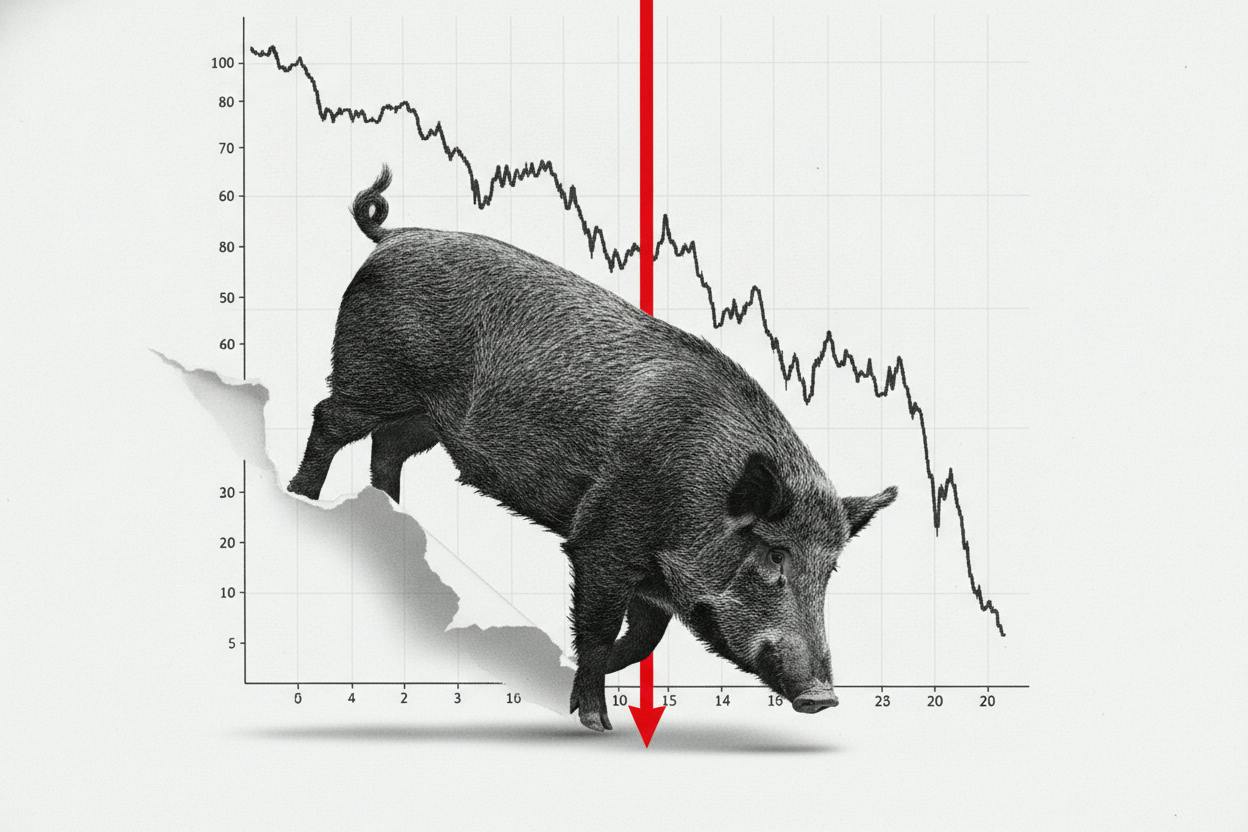
Lean hog futures tumbled to contract lows on the Chicago Mercantile Exchange (CME) on Tuesday, with the December contract briefly touching 57.425 cents per pound. The decline reflects a broader softening in pork demand, both at home and abroad, rather than a sudden surge in supply.
Analysts point to a demand story: US consumers have been pulling back on pork purchases as everyday costs remain elevated, while overseas buyers have not stepped in to fill the gap. China, the world's largest pork consumer, is currently working through its own oversupply, reducing its need for imports. Mexico, another key buyer of US pork, has also imported less, adding to the pressure.
Weakness spreads across the futures curve
What makes this move particularly notable is how far the weakness reached along the futures curve. Not only did the December contract hit a new low, but February and April 2027 lean hog futures also touched contract lows. This suggests that traders see the demand softness persisting for years, not just a short-term blip.
Futures contracts allow buyers and sellers to lock in prices for delivery at a future date. When far-dated contracts also fall, it signals that market participants expect the current demand environment to continue well into the future. That is a more bearish signal than a dip in just the nearby contract.
Why pork demand is slipping
US consumers have been grappling with higher prices for groceries and other essentials, which has led many to trade down or cut back on discretionary meat purchases. Pork, while often cheaper than beef, is still a significant line item in household budgets. When inflation squeezes wallets, demand for pork tends to soften.
On the export side, China's pork market is experiencing its own oversupply, partly due to a recovery in domestic production after African swine fever outbreaks in previous years. As a result, Chinese buyers have reduced their reliance on imported pork. Mexico, historically a steady buyer of US pork, has also trimmed its imports, possibly due to economic slowdown or shifting trade dynamics.
These factors combine to create a challenging environment for US pork producers, who rely on both domestic consumption and export markets to absorb their output.
What it means for investors
For everyday investors, the drop in lean hog futures is a reminder that commodity prices are driven by supply and demand fundamentals, which can shift quickly. While this news is specific to pork, it also offers a window into broader economic trends: weak consumer spending and softer global trade can ripple through agricultural markets.
Investors who hold shares in meat processing companies or agricultural ETFs may want to keep an eye on pork prices, as lower hog prices can squeeze producer margins. However, the impact varies by company—some processors benefit from cheaper input costs, while farmers who raise hogs may see their revenues decline.
It's also worth noting that the futures market is not a direct reflection of what consumers pay at the grocery store. Retail pork prices are influenced by many factors, including processing costs, transportation, and retail markups. So while futures prices are falling, shoppers may not see immediate relief at the meat counter.
Looking ahead
Traders will be watching for any signs of a turnaround in demand, such as a pickup in export orders or a shift in consumer spending patterns. The upcoming holiday season, which typically boosts pork demand, could provide some support, but the extended weakness in far-dated contracts suggests that the market is not counting on a quick recovery.
For those interested in the broader agricultural and commodity landscape, the current situation in pork echoes trends seen in other markets where demand has softened. As always, keeping an eye on supply-demand dynamics and global trade flows can help investors make more informed decisions.