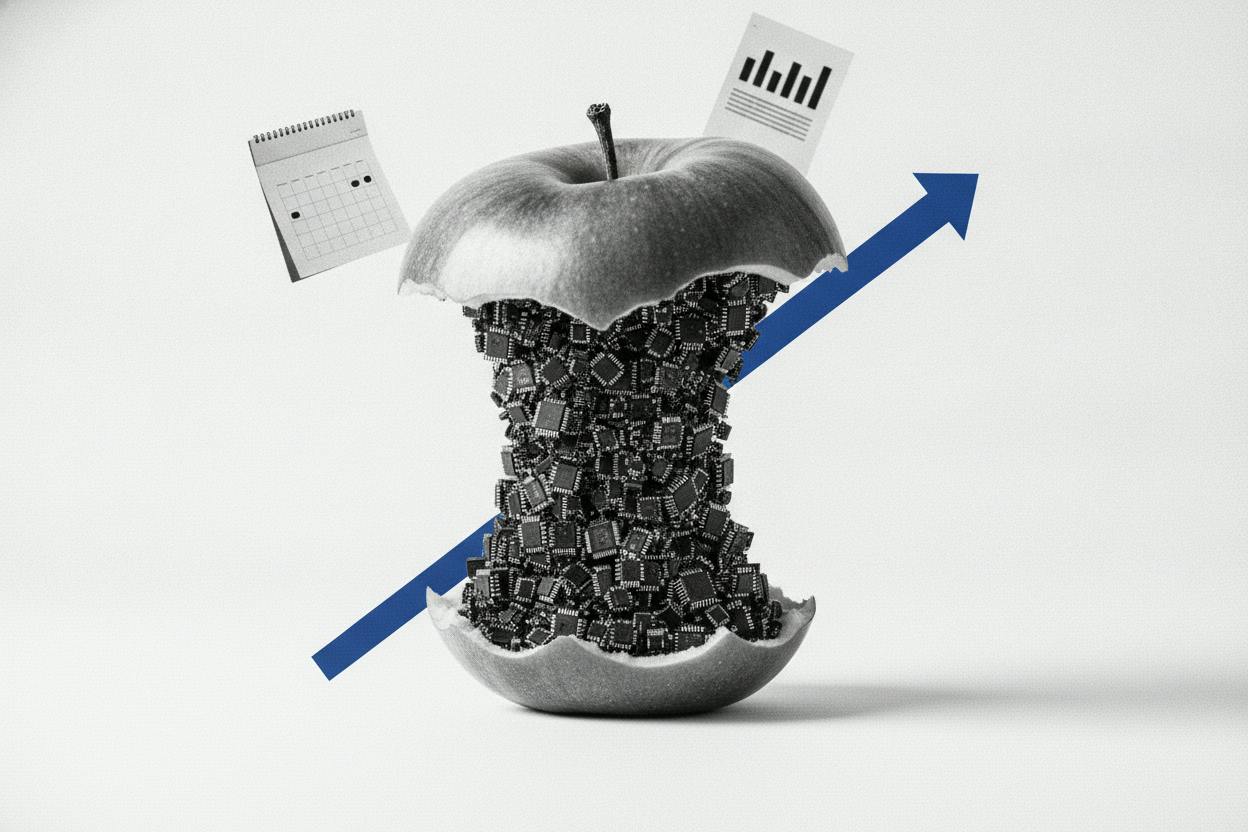
The Nasdaq composite rose on Tuesday, driven by a sharp rally in semiconductor stocks, even as Apple slipped after warning that higher memory-chip costs could squeeze its holiday-quarter profit margins. The move came as investors across global markets waited for the results of the US midterm elections, which will determine control of Congress.
The Philadelphia Semiconductor Index, a benchmark that tracks the biggest chipmakers, climbed nearly 3%, providing the main lift for the tech-heavy index. That strength helped offset weakness in Apple, one of the largest companies in the world by market value.
Why traders are rotating out of Apple
Apple's decline followed the company's caution that rising costs for memory chips—a key component in its devices—could pressure profitability during the crucial holiday shopping season. That warning, reported ahead of the election, made some investors rethink their exposure to the stock.
But the broader takeaway, market observers say, is that “tech” is not a single trade. When investors feel more optimistic about risk, they often favor more volatile names like chipmakers over steadier megacaps such as Apple. Chip stocks tend to have higher “beta,” meaning their prices move more sharply than the overall market, both up and down.
That dynamic was on full display Tuesday: while Apple dragged on the Nasdaq, the semiconductor index surged, pulling the index higher overall. It's a reminder that even within the same sector, different companies can react very differently to the same market conditions.
Midterm elections and market uncertainty
Politics also played a role in setting the tone. The US midterm elections determine which party controls the House of Representatives and the Senate, and the results will shape the legislative agenda for the next two years—including on taxes, regulation, and government spending.
Morgan Stanley, a global investment bank, said the vote could remove a major overhang for markets. The logic is straightforward: when an election is genuinely up in the air, investors often build in a “policy uncertainty” cushion because they can't confidently map out the next few years of fiscal policy. Once results clarify who can actually pass legislation, that uncertainty usually shrinks, which can lower volatility and lift valuations.
That effect tends to show up most in high-beta, long-duration tech stocks—companies whose expected profits sit further in the future, making their share prices more sensitive to shifts in risk appetite and interest-rate expectations. Indexes packed with chipmakers and growth stocks, like the Semiconductor Index and the Nasdaq-100, can therefore swing more than “safe tech” giants such as Apple, even on the same day.
What it means for investors
For everyday investors, Tuesday's action is a useful illustration of how market rotations work. When sentiment improves, money often flows from defensive, stable names into more cyclical or growth-oriented ones. That can create big moves in indices that are heavily weighted toward semiconductors and other high-beta tech stocks.
It also highlights the importance of diversification. Owning a broad tech index fund, for example, means you're exposed to both Apple and chipmakers—so a single company's warning won't necessarily sink your whole portfolio.
Looking ahead, the focus will shift to the election results and what they mean for policy. As history shows, stocks have often performed well after midterms, but this year's backdrop—including elevated interest rates and inflation—may make that pattern harder to repeat.
Investors will also be watching whether the chip rally has staying power. Chip stocks had steadied in premarket trading after Monday's tech selloff, and Tuesday's bounce suggests buyers are stepping in. But with earnings season ongoing and economic data still in focus, volatility is likely to remain.
For now, the key takeaway is that markets are pricing in a clearer political picture. As Morgan Stanley notes, once the uncertainty fades, the range of possible outcomes narrows—and that can be a positive for risk assets. But as always, nothing is guaranteed, and investors should be prepared for continued swings.