Linde, the world's largest industrial gas company, reported third-quarter earnings that beat Wall Street expectations, with a key boost from the artificial intelligence boom. The company posted adjusted earnings per share of $4.59 on $9.4 billion in sales, both ahead of analysts' forecasts tracked by LSEG. The standout detail: electronics end-market sales rose 15% year over year, a gain that Reuters linked to demand for AI and high-performance computing chips.
For everyday investors, this is a reminder that the AI trade isn't just about chip designers and data center operators. It also flows to the behind-the-scenes suppliers that make semiconductor manufacturing possible.
What Linde actually does
Linde produces industrial gases like oxygen, nitrogen, hydrogen, and argon. But its semiconductor business is special: chipmakers need ultra-high-purity gases to run fabrication plants, or fabs, without contamination. Even tiny impurities can ruin a batch of chips, so the gas must be exceptionally clean and delivered reliably.
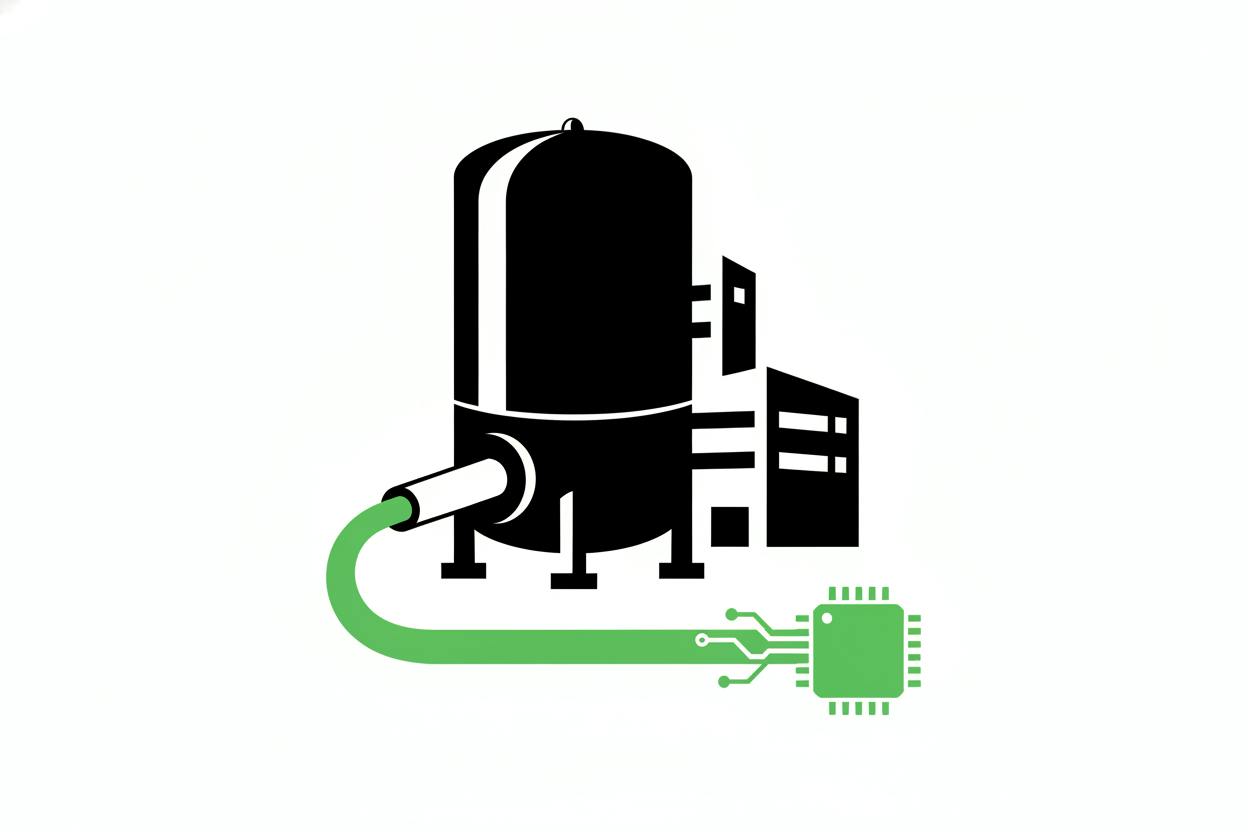
That's where Linde's model gets interesting. When a chipmaker builds a new fab, Linde often constructs an on-site gas production unit right next to the facility. It then signs a long-term supply contract to operate that unit for years. This isn't a simple spot-market sale; it's a dedicated, capital-intensive partnership.
In July, Linde said it had signed such a deal with one of the world's largest semiconductor manufacturers and planned to invest about $1 billion in Arizona. That signals the company expects the chip buildout to last long enough to justify building dedicated capacity.
Why the electronics growth matters
The 15% jump in electronics sales is significant because it shows the AI tailwind is reaching Linde's order book. When chip demand spikes, fabs run at higher utilization, which means they consume more gas. But Linde's revenue isn't purely tied to spot demand. Because of its on-site contracts, revenue depends more on how much the fab runs over the contract term than on short-term price fluctuations.
That structure creates high switching costs for customers. Once a fab is built around Linde's gas supply, switching to another provider would be disruptive and risky. So customers tend to stick with Linde for the long haul, providing a steady revenue stream.
For investors, this makes Linde's electronics growth more predictable than a typical commodity supplier. The company's $1 billion Arizona project is a bet that AI-driven chip demand will persist for years, not just quarters.
What it means for investors
Markets often focus less on a single strong quarter and more on whether earnings can hold up if chip-fab spending cools. Linde's model helps on that front: multi-year contracts and on-site infrastructure mean revenue is relatively insulated from short-term swings in chip prices or demand.
But there's a flip side. If new fab projects get delayed or scaled back, the ramp-up of that dedicated capacity can take longer than planned. That could weigh on near-term growth expectations, even if the long-term contracts remain intact.
Investors should watch Linde's electronics exposure closely in coming quarters. The company's ability to sign new on-site deals with chipmakers will be a key indicator of whether the AI tailwind is durable. A slowdown in fab construction could hit Linde's growth, while continued expansion would support its earnings.
Linde's results also fit a broader theme: the AI boom is lifting a wide range of suppliers, from gas companies to equipment makers. For example, STMicroelectronics recently beat profit forecasts on AI data center demand, showing the ripple effects across the semiconductor supply chain.
At the same time, not all companies are benefiting equally. Renault's EV demand lifted revenue despite a 6% drop in vehicle sales, a reminder that sector-specific trends can diverge sharply.
The bigger picture
Linde's earnings come as investors parse a mixed earnings season. Some companies are raising outlooks, like Henkel lifting its 2026 sales outlook on pricing power, while others face headwinds. The AI trade remains a bright spot, but it's not without risks.
For Linde, the key question is whether the AI chip boom is a multi-year trend or a short-lived spike. The company's willingness to invest $1 billion in Arizona suggests it believes the former. If that bet pays off, Linde could see more predictable growth in its electronics segment. If not, the dedicated capacity could become a drag.
Either way, Linde's Q3 results show that the AI wave is reaching far beyond the usual suspects. For investors, that's a reminder to look at the whole supply chain when assessing the impact of a major technological shift.