German consumer goods and adhesives maker Henkel has raised its sales growth outlook for 2026 after a stronger-than-expected third quarter, driven by its ability to charge higher prices without losing customers. The company, known for brands like Persil detergent and Loctite glue, now expects organic sales to grow between 3% and 4% in 2026, up from its previous guidance of 1.5% to 3.5%.
The upgrade follows a third quarter in which organic sales rose 6.5% year on year, comfortably beating the 4.1% consensus forecast compiled by Vara Research. Both of Henkel's main divisions — Adhesive Technologies and Consumer Brands — outperformed expectations, with the higher-margin adhesives unit growing 7.9%.
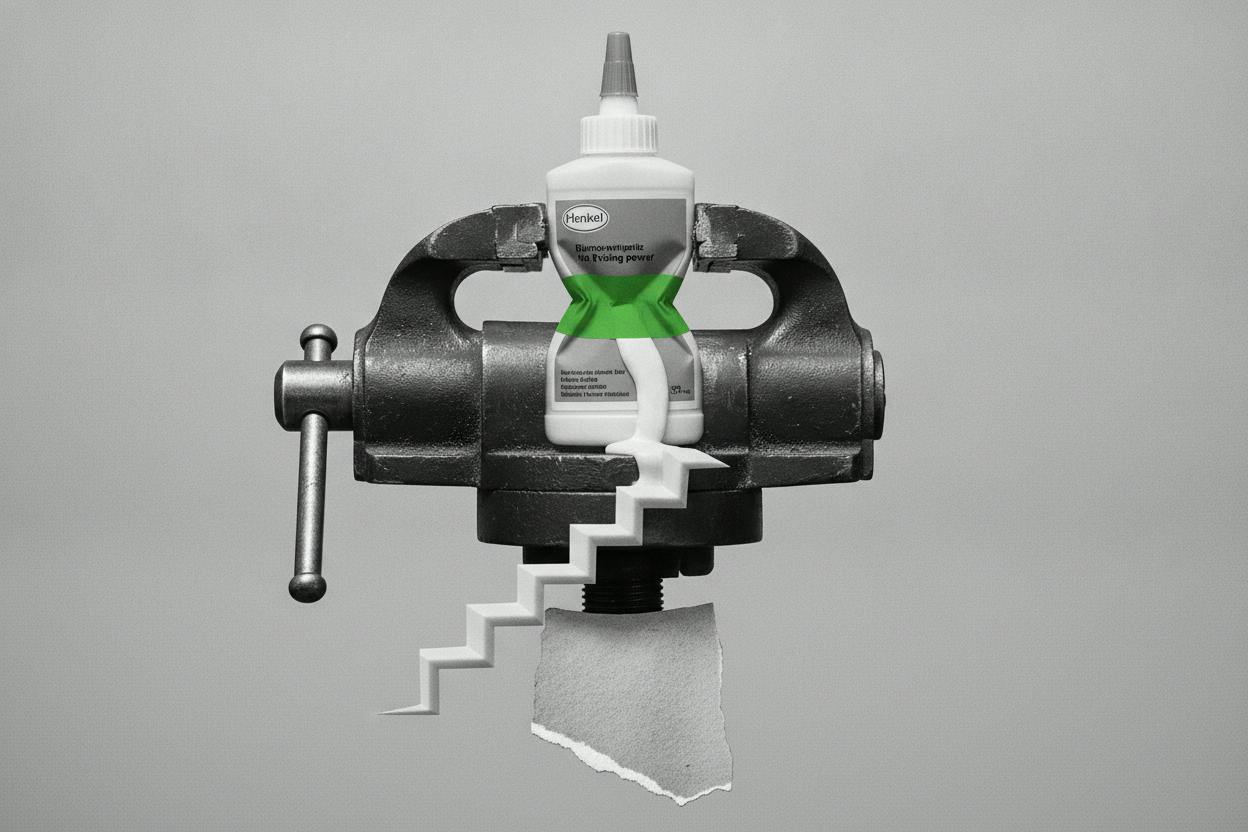
Pricing power is the engine
What stands out to analysts is how Henkel achieved that growth. According to Bernstein, pricing contributed about 5.4 percentage points to group sales growth, well above the 2.6% that had been expected. Volumes also held up better than forecast, which is crucial.
Pricing power only helps a company if customers keep buying. If a business raises prices and shoppers or industrial clients simply walk away, the strategy backfires. Henkel's results suggest its customers are absorbing the increases, at least for now. That matters because pricing is the cleanest way to protect profit margins when costs are rising.
This is not an isolated story. Across the consumer and industrial sectors, companies are trying to pass on higher input costs. Some are succeeding; others are seeing demand crack. Henkel's numbers put it firmly in the former camp, and the market has taken notice.
Costs and restructuring are rising
But the picture is not entirely rosy. Henkel now expects direct-material prices to rise about 10% compared with last year's average, a higher increase than previously guided. It also raised its restructuring cost estimate to between €200 million and €250 million, again above earlier expectations.
Restructuring charges are one-off costs tied to reorganising operations, such as closing plants, cutting jobs, or streamlining supply chains. They hit earnings and cash flow in the short term, even though they are meant to improve efficiency and profitability down the road. The company is in the middle of a multi-year programme to integrate and simplify its business, and the bill is coming in higher than initially planned.
That combination — stronger sales growth but higher costs and one-off charges — shifts the focus for investors. The question is no longer whether Henkel can grow. It is how efficiently it can convert that growth into operating profit after absorbing higher material costs and paying for restructuring.
What it means for investors
For everyday investors, the key metric to watch is profit conversion: how much of Henkel's stronger sales outlook actually shows up in operating profit rather than being eaten by costs. Pricing is the most direct lever, and the fact that volumes did not fall off suggests the company still has room to pass through higher direct-material prices without giving back too much demand.
Restructuring is a different story. It can lift long-term efficiency, but it is a near-term drag on earnings and cash flow because the costs hit before the benefits arrive. That is why the market's reaction to a 3%-4% growth outlook will depend less on the headline sales range and more on whether margins hold up while those one-offs run through the accounts.
Henkel's update is part of a broader trend in European markets, where companies are navigating input cost inflation and supply chain adjustments. Other consumer names have also lifted outlooks on the back of strong demand, while banks have benefited from low bad-loan costs. But the ability to raise prices without losing customers is not universal, and Henkel's performance stands out.
Investors should also keep an eye on the adhesives division, which is the higher-margin part of the business and a bellwether for industrial activity. Its 7.9% growth suggests demand from manufacturing and construction customers remains resilient, even in a slower global economy.
Ultimately, Henkel's raised outlook is a positive signal, but it comes with caveats. The company is betting that its pricing power holds and that restructuring costs will pay off in the long run. For now, the market seems willing to give it the benefit of the doubt — but the real test will come when the full-year results are reported and investors can see how much of that growth actually reaches the bottom line.