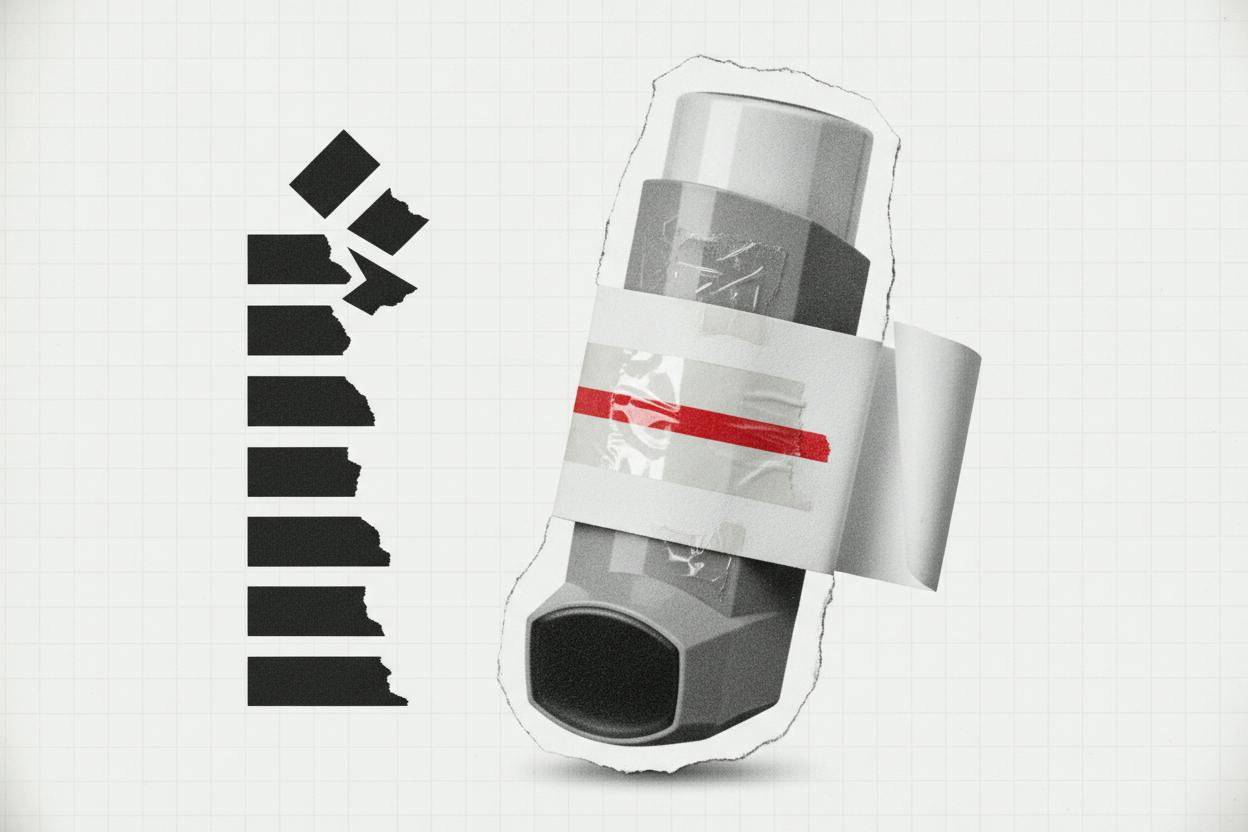
Liquidia, a small biotech focused on rare lung diseases, has ended a years-long patent battle with rival United Therapeutics. The settlement, announced Thursday, removes a major legal overhang for Liquidia's only marketed product, Yutrepia, and sent its shares up 26%.
Under the deal, Liquidia will pay United Therapeutics about $380.7 million in installments through 2027. In exchange, the two companies will drop six lawsuits, and Liquidia can continue selling Yutrepia for one of its two approved uses—pulmonary arterial hypertension (PAH)—but must stop promoting it for the other, pulmonary hypertension linked to interstitial lung disease (PH-ILD).
What is Yutrepia and why does it matter?
Yutrepia is an inhaled, dry-powder formulation of treprostinil, a medication that relaxes blood vessels in the lungs and improves exercise capacity in people with certain forms of pulmonary hypertension. Pulmonary hypertension is a rare, progressive condition in which the arteries in the lungs narrow, making the heart work harder to pump blood. It can be life-threatening if untreated.
Liquidia's drug competes directly with United Therapeutics' Tyvaso, which is also an inhaled treprostinil product. The two have been locked in patent litigation for years, with each side accusing the other of infringement. The dispute has cast a shadow over Yutrepia's commercial prospects, as potential partners and investors worried about the risk of an injunction or damages award.
The settlement resolves that uncertainty. Liquidia will keep selling Yutrepia for PAH, a market it has been building since the drug's approval. But it will stop promoting it for PH-ILD, a larger and faster-growing segment where Tyvaso has a strong foothold. Liquidia has also asked the US Food and Drug Administration (FDA) to remove PH-ILD from Yutrepia's label, and it is ending PH-ILD clinical trial cohorts and halting related publications, according to a filing from United Therapeutics.
What the settlement means for investors
For Liquidia, the deal trades a broad expansion story for a narrower, more predictable path. The company's CFO, Michael Kaseta, said Liquidia expects to fund the $380.7 million payments using ongoing Yutrepia sales and cash on hand. That is a significant commitment for a company that is still scaling up its commercial launch.
The settlement acts like a fixed claim on early cash flows. Even if Yutrepia sales grow strongly in PAH, a large portion of that revenue will go toward paying United Therapeutics over the next few years. That limits how much near-term sales momentum can translate into profits, and it makes Liquidia's ability to raise additional capital a key part of the equity story.
On the positive side, the removal of the legal cloud could make Liquidia a more attractive partner or acquisition target. The company now has a clear operating lane: build Yutrepia sales in PAH without the threat of an injunction. That clarity is likely why investors pushed the stock up 26% on the news.
For United Therapeutics, the settlement protects its Tyvaso franchise in PH-ILD, which is a major growth driver. By removing Liquidia's promotional efforts and clinical trials in that indication, United reduces the risk of a sudden competitive shock. That makes its growth outlook in PH-ILD easier for investors to underwrite.
Broader context and what to watch next
The settlement is part of a broader pattern in the biotech sector, where patent disputes often determine who gets to sell a drug and in which indications. For smaller companies like Liquidia, a single product can make or break the business, so legal clarity is often more valuable than a larger but riskier market opportunity.
Investors will now focus on how quickly Yutrepia can gain share in the PAH market, and whether Liquidia can manage its debt-like payment schedule without diluting shareholders. The company's cash position and ability to generate revenue from PAH sales will be critical. If Yutrepia sales disappoint, the $380.7 million obligation could strain the balance sheet.
For everyday investors, this story is a reminder that in biotech, legal outcomes can be as important as clinical data. A settlement that removes uncertainty can boost a stock, but the financial terms can also cap the upside. It's worth reading the fine print of any deal before assuming a legal win is a clear win for shareholders.
As the market digests the news, watch for updates on Yutrepia's sales trajectory and any new financing moves by Liquidia. The company's next earnings report will be the first chance to see how the settlement affects its cash flow and guidance.