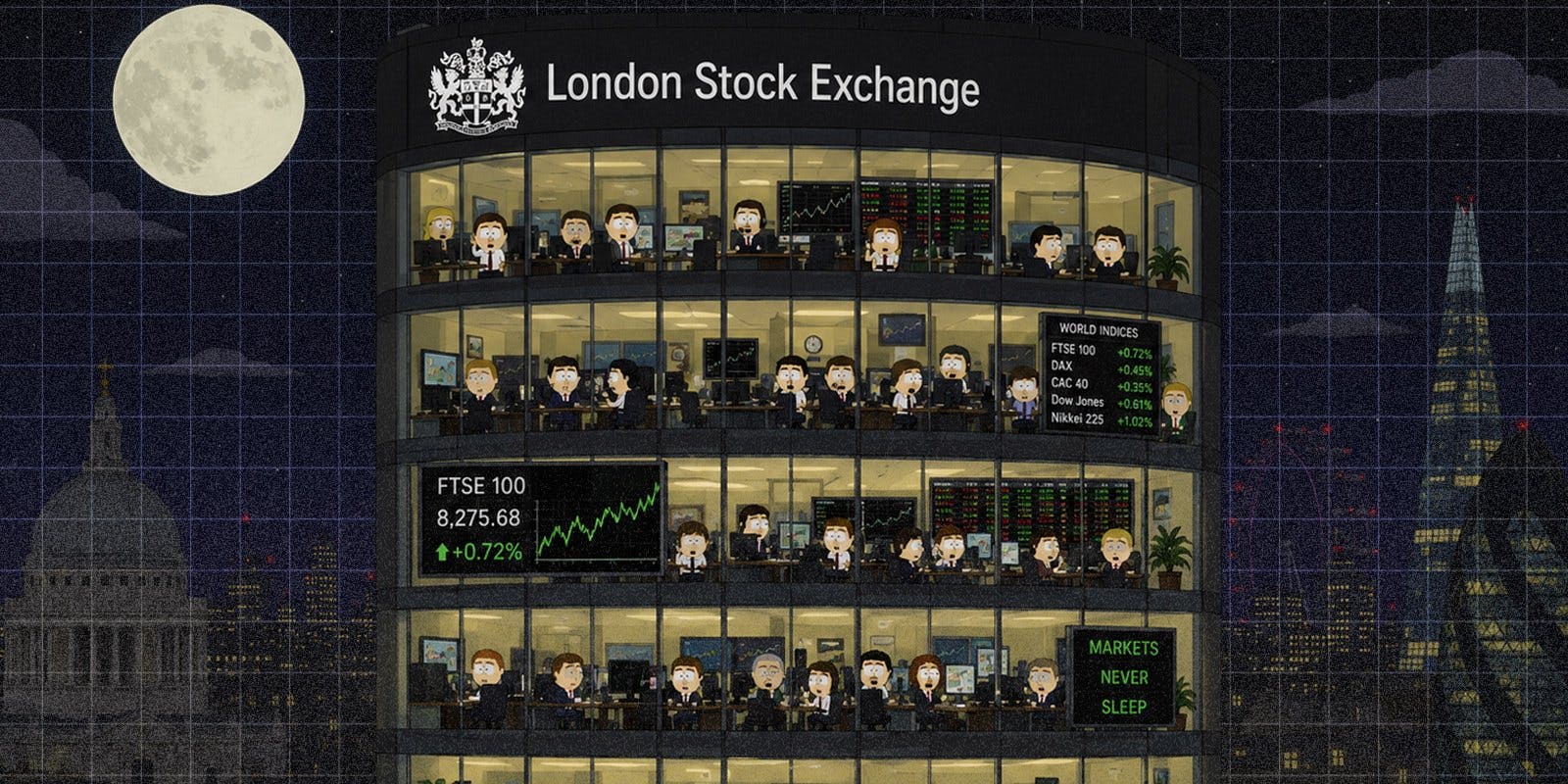
The London Stock Exchange (LSE) is preparing to launch a nearly round-the-clock trading platform in early 2027, a bold attempt to breathe life into a market that has been losing its global luster. The new venue, called LSE 24, will operate from 5:00 PM to 7:50 AM—effectively covering the hours when the main exchange is closed.
Currently, the LSE runs its regular trading session from 8:00 AM to 4:30 PM London time, a schedule that has remained largely unchanged for decades. But in an era where markets in New York, Tokyo, and Hong Kong trade across time zones, the LSE is acknowledging that its traditional hours may be leaving international investors on the sidelines.
What Is LSE 24?
LSE 24 will initially focus on exchange-traded products (ETPs)—investments that track the performance of an index, commodity, or basket of assets, similar to exchange-traded funds (ETFs). Individual stocks will not be traded on the new platform at launch. This narrow focus allows the exchange to test demand for extended hours without the complexity of handling thousands of individual securities.
The move is a recognition that global trading should keep global hours. Investors in Asia, for example, often find it difficult to trade UK-listed assets during their business day because the LSE is closed. By offering overnight trading, the LSE hopes to capture order flow from these regions and from institutional investors who want to react to news that breaks after the closing bell.
Why the LSE Needs a Jolt
The LSE has been losing ground to other global exchanges for years. The number of companies choosing to list in London has declined, with many high-growth firms opting for New York or even European rivals like Amsterdam. The UK market's diminishing importance is a concern for policymakers and investors alike, as it reduces the pool of investment opportunities and can lead to lower valuations for UK-listed companies.
This initiative comes amid a broader trend of exchanges extending their hours. The New York Stock Exchange and Nasdaq have both explored or implemented extended trading sessions to cater to global demand. The LSE's move is a direct response to that competitive pressure.
However, simply extending hours may not be enough to reverse the trend. As US exchange earnings have shown, volatility and trading volumes are closely linked, and the LSE will need to attract sufficient liquidity to make LSE 24 viable. Without enough buyers and sellers, the new venue could suffer from wide bid-ask spreads, making it less attractive to traders.
What It Means for Investors
For everyday investors, the launch of LSE 24 could offer more flexibility. If you hold exchange-traded products listed in London, you may eventually be able to trade them outside of standard market hours. This could be particularly useful if you want to react to overnight news—such as a surprise interest rate decision or a geopolitical event—without waiting for the next morning's open.
But there are risks. Extended-hours trading often comes with lower liquidity and higher volatility, which can lead to unexpected price swings. Investors should be aware that the prices they see during LSE 24 may not reflect the same supply-demand balance as during regular hours.
The move also signals that the LSE is trying to stay relevant in a globalized market. If successful, it could attract more international capital to UK-listed products, potentially boosting valuations. But if it fails to gain traction, it could underscore the challenges facing the UK market.
For now, the focus is on exchange-traded products, but if LSE 24 proves successful, the exchange may expand to individual stocks. That would be a more significant shift, opening up the entire UK equity market to near-24-hour trading.
Broader Context
The LSE's announcement comes at a time when global exchanges are competing fiercely for listings and trading volumes. The emerging markets rally and volatility in sectors like chip stocks highlight how quickly capital can move across borders. Exchanges that offer the most convenient access are likely to win.
Meanwhile, the UK's regulatory environment is also under scrutiny. The government has been pushing reforms to make London more attractive for listings, including changes to prospectus rules and the creation of a new 'international equity' category. The LSE 24 initiative is part of that broader effort.
Investors should watch for details on how LSE 24 will be structured, including fees, trading rules, and which specific ETPs will be available. The exchange is expected to provide more information closer to the 2027 launch date.
In the meantime, the message is clear: the LSE is no longer content to be a 9-to-5 market. Whether that will be enough to revive its fortunes remains to be seen.



