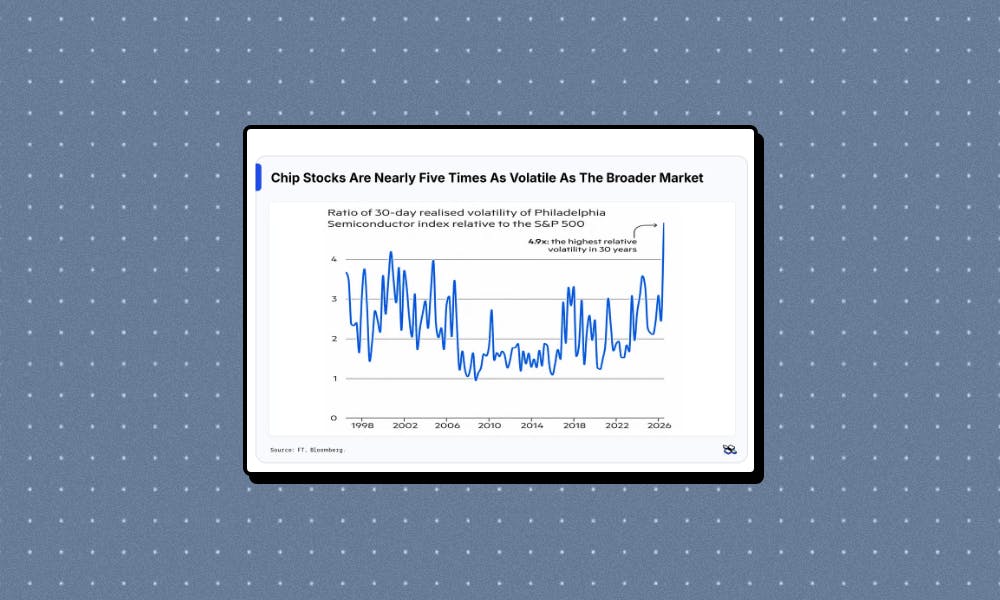
Semiconductor stocks are making investors' heads spin. The Philadelphia Semiconductor Index (SOX) is now moving nearly five times as fast as the S&P 500, a level of relative volatility not seen in three decades. That ratio—comparing day-to-day moves in the chip index against the broader market—currently sits at 4.9, meaning chip stocks are almost five times more volatile than the average large-cap stock.
To put that in perspective, a reading of 1.0 would mean the two are moving roughly in lockstep. The last time the ratio came close to this level was just after the dotcom bubble burst in 2000, when it peaked at 4.2 as investors dramatically repriced the sector. Today's figure is even punchier, signaling that the chip industry is in a period of extreme price swings.
What's Driving the Wild Swings?
The surge in volatility comes amid a complex backdrop for semiconductor companies. On one hand, demand for chips used in artificial intelligence (AI) data centers has been a powerful tailwind, driving up shares of companies like Nvidia and AMD. On the other hand, the broader chip industry faces headwinds from slowing consumer electronics demand, geopolitical tensions, and uncertainty around interest rates.
Recent developments have added to the jitters. For instance, a dip in oil prices earlier this week helped ease inflation fears and gave chip stocks a lift, as oil price dip eases inflation fears, lifts chip stocks amid Middle East tensions. But such relief can be short-lived, as the sector remains sensitive to macroeconomic signals and supply chain disruptions.
The volatility also reflects the market's struggle to price in the impact of potential trade restrictions and export controls, particularly those targeting China. Any news about tariffs or technology bans can send individual chip stocks—and the entire index—swinging.
A Historical Perspective
The current volatility ratio is a stark reminder of the dotcom era, when tech stocks were priced for perfection and then crashed. Back in 2000, the SOX-to-S&P 500 volatility ratio hit 4.2 as investors rushed to reassess the value of semiconductor companies after the bubble burst. Today's reading of 4.9 suggests even more dramatic repricing is underway.
However, the context is different. In 2000, the volatility was driven by a collapse in valuations after a speculative frenzy. Today, it's a mix of genuine growth opportunities in AI and heightened uncertainty about the global economy. The sector is also more concentrated, with a few mega-cap stocks like Nvidia and TSMC dominating the index, which can amplify moves.
What It Means for Everyday Investors
For the average investor, this extreme volatility is a double-edged sword. It can create opportunities for those with a high risk tolerance, but it also means that holding chip stocks—or funds that track the SOX—comes with significant short-term risk. A single piece of news, whether it's an earnings miss, a trade policy shift, or a change in interest rate expectations, can trigger outsized moves.
Investors should also be aware that the volatility ratio is a measure of relative risk. While the S&P 500 has its own ups and downs, chip stocks are amplifying those moves by a factor of five. That means a 1% drop in the broader market could translate into a 5% drop in semiconductor stocks on a given day—and vice versa on the upside.
For those with a long-term horizon, the key is to avoid being swayed by daily noise. The chip industry is cyclical by nature, and periods of high volatility often coincide with major technological shifts. The current AI boom is a genuine long-term trend, but the path will likely be bumpy.
If you're invested in chip stocks through an exchange-traded fund (ETF) or individual holdings, consider whether your portfolio can handle these swings. Diversification across sectors can help cushion the blow. And if you're tempted to trade on the volatility, remember that timing the market is notoriously difficult—even for professionals.
What to Watch Next
Investors will be keeping a close eye on upcoming earnings reports from major chipmakers, as well as any policy announcements from the Federal Reserve. Interest rate decisions have a direct impact on growth stocks, including semiconductors, because higher rates reduce the present value of future earnings.
Geopolitical developments also matter. For example, tensions in the Middle East have been affecting oil prices, which in turn influence inflation expectations and market sentiment. A recent oil rise to $82.94 as Houthi threat to block Saudi shipments rattles markets shows how quickly energy shocks can ripple through the broader market.
Meanwhile, the dollar's strength is another factor to watch. A strong dollar can hurt multinational chip companies by making their products more expensive overseas. The dollar holds near weekly high as oil volatility and rate fears drive currency markets, adding another layer of uncertainty for chip stocks.
In short, the current volatility in chip stocks is a signal that the market is grappling with big questions about growth, inflation, and geopolitics. For investors, the best approach is to stay informed, keep a long-term perspective, and avoid making impulsive decisions based on daily swings.