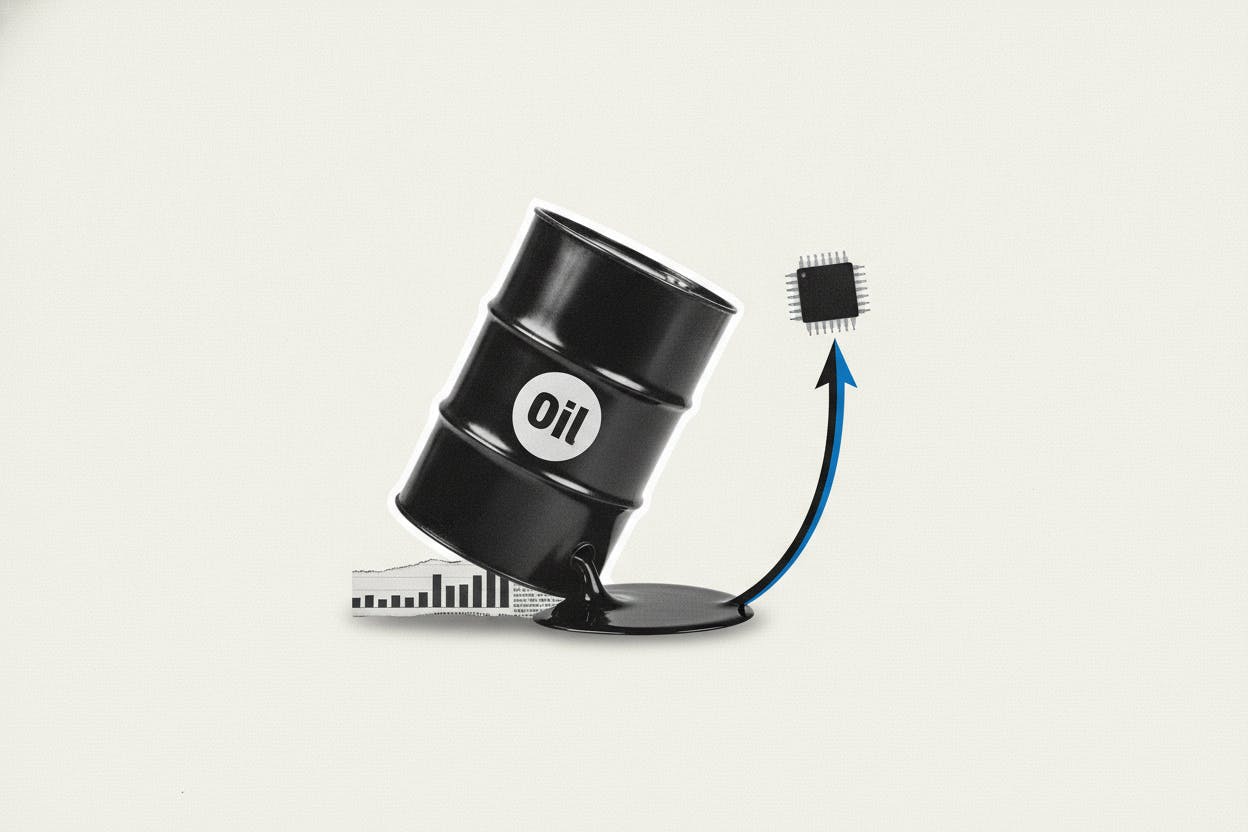
Markets took their cue from oil on Tuesday, as a dip in Brent crude prices helped ease inflation fears and sparked a rebound in chip stocks. The move came even as the ongoing conflict in the Middle East kept investors on edge.
What's going on here?
Brent crude, the global benchmark for oil prices, slipped from a one-month high as traders watched for signs of a potential ceasefire in the Middle East. Reports that Iran had received a mediator's proposal for a 10-day truce helped calm supply fears, prompting a pullback in prices. That shift in the energy market rippled through other asset classes, with chip stocks bouncing back after recent pressure.
The move underscores how oil, not artificial intelligence hype, is currently setting the mood in financial markets. When crude prices jump, investors worry that higher gasoline and shipping costs will keep inflation sticky, forcing central banks to keep interest rates higher for longer. So Brent's pullback eased those near-term inflation fears, and that tended to show up quickly in lower bond yields and a softer US dollar, which loosens overall financial conditions—how easy it is for businesses and households to borrow and spend.
Why oil matters more than AI right now
For much of 2024, the market narrative has been dominated by excitement around artificial intelligence, with chip stocks like Nvidia leading the charge. But in recent weeks, oil has reasserted itself as the dominant driver of market sentiment. That's because energy prices have a direct impact on inflation expectations, which in turn influence central bank policy.
When oil rises, it feeds into everything from gasoline prices to shipping costs, making it harder for inflation to fall back to central banks' 2% targets. That keeps the pressure on the Federal Reserve and other central banks to maintain higher interest rates, which can weigh on stock valuations, especially for growth-oriented tech stocks. Conversely, when oil falls, it removes that source of inflationary pressure, giving central banks more room to cut rates—a scenario that tends to boost stocks broadly.
Tuesday's move was a textbook example of this dynamic. As Brent pulled back, bond yields eased and the dollar softened, creating a more favorable environment for risk assets. Chip stocks, which had been under pressure from rising yields and geopolitical uncertainty, rebounded sharply.
Geopolitical risks remain
Despite the positive market reaction, the situation in the Middle East remains volatile. The conflict between Israel and Hamas, along with broader tensions involving Iran and Houthi rebels in Yemen, continues to pose risks to oil supply. Earlier this month, oil prices jumped after Houthi threats to block Saudi shipments, and similar threats have revived supply fears in recent weeks.
The ceasefire feelers that helped push Brent lower on Tuesday are still tentative, and any breakdown in talks could quickly reverse the move. Investors are also watching for any escalation that could disrupt oil flows through the Strait of Hormuz, a critical chokepoint for global crude shipments.
Meanwhile, the dollar held near a weekly high as oil volatility and rate fears continued to drive currency markets. A stronger dollar can be a headwind for commodities priced in the currency, including oil, but it also reflects the broader uncertainty around interest rates and inflation.
What it means for investors
For everyday investors, the key takeaway is that oil prices remain a critical variable to watch. Even as AI and tech stocks grab headlines, energy costs can quickly shift the market's direction by influencing inflation and interest rate expectations.
The recent pullback in Brent is a positive sign for stocks, particularly for growth and tech names that are sensitive to higher rates. But the relief may be temporary if geopolitical tensions flare up again. Investors should also keep an eye on bond yields and the dollar, as moves in those markets often signal how the broader financial conditions are evolving.
In the near term, the focus will be on any further developments in Middle East ceasefire talks, as well as upcoming economic data that could shape the Fed's rate path. If oil stays contained, it could provide a tailwind for stocks. But if supply fears resurface, the market mood could quickly sour again.
For now, the message is clear: oil, not AI, is setting the market mood. And that means investors need to pay close attention to what's happening in the energy pits, not just the tech sector.



