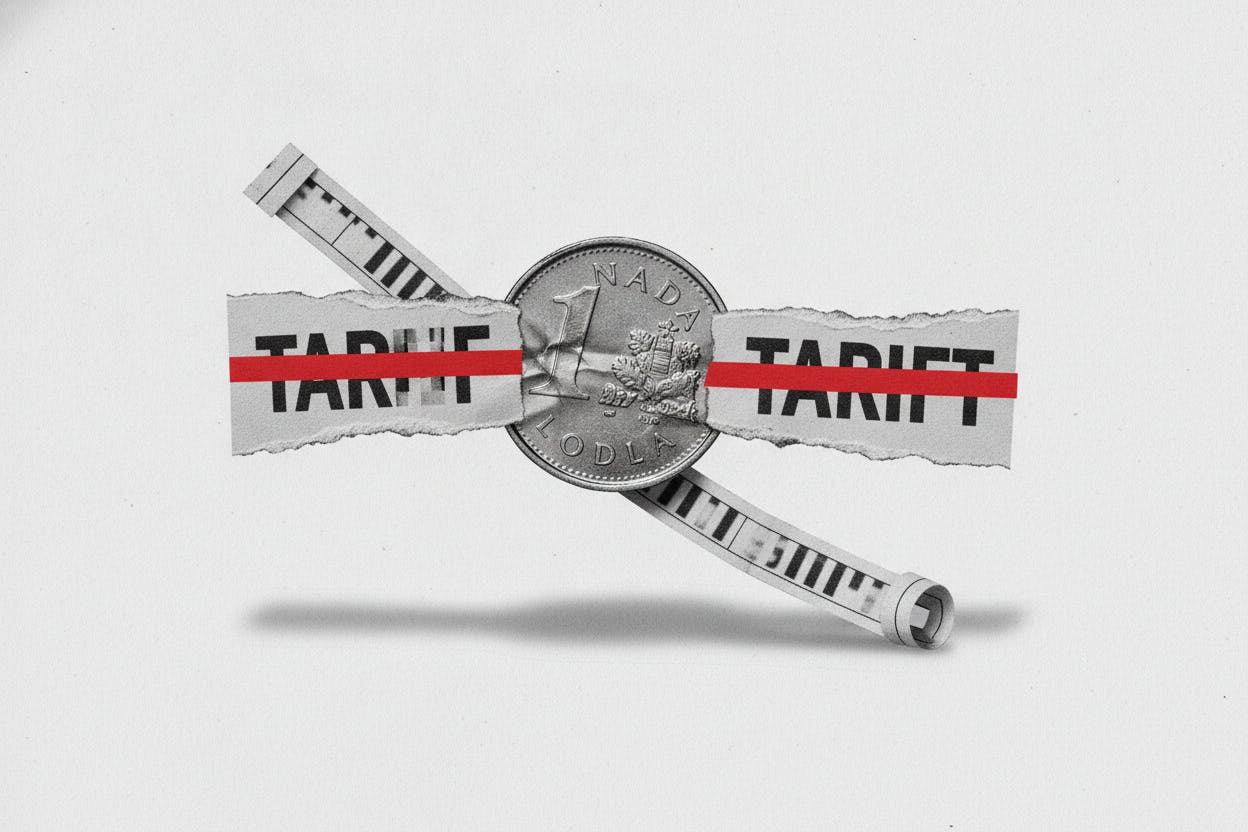
Canada's dollar slid to a one-week low on [day] as the United States imposed fresh 50% tariffs on roughly $20 billion of Canadian imports and Ottawa answered with retaliatory duties. The escalation puts trade risk squarely back at the center of the loonie's story, a reminder of how sensitive the currency remains to cross-border commerce.
The currency weakened about 0.4% to roughly 1.3885 per US dollar, as the greenback also strengthened broadly. For everyday investors, the move is a textbook example of how trade policy can ripple through currency markets and affect the value of international holdings.
Why tariffs hit the loonie so hard
Tariffs matter for Canada because exports and cross-border investment are big drivers of demand for Canadian dollars. When trade rules look shakier, investors tend to assume slower future cash flows for Canadian companies and ask for a higher “risk premium” to hold Canada-linked assets. That premium shows up as a weaker currency.
The new US tariffs target a wide range of goods, and Canada's retaliatory duties signal that both sides are willing to escalate. This is not the first time trade tensions have weighed on the loonie; previous rounds of tariffs have also caused volatility. But the speed and size of this move—$20 billion in imports—underscores how quickly sentiment can shift.
For investors, a weaker loonie has mixed implications. Canadians traveling abroad or buying US goods will find their money buys less. On the other hand, Canadian exporters, such as those selling commodities or manufactured goods, may benefit from a cheaper currency that makes their products more competitive globally. However, the broader uncertainty around trade can offset those gains.
What this means for your portfolio
If you hold Canadian stocks or funds, the currency move is a factor to watch. A falling loonie can reduce the value of Canadian investments when converted back to US dollars. Conversely, US investors with Canadian exposure might see a currency drag on returns.
The Bank of Canada is also in the spotlight. The central bank has been balancing concerns about inflation—which tariffs can stoke by raising import costs—against the need to support growth. As some analysts suggest the Bank of Canada may shrug off tariff inflation to protect growth, the currency's path could be influenced by how policymakers respond.
Trade tensions are also part of a broader global picture. Investors are already watching key US inflation data and central bank signals, as seen in the dollar's recent moves ahead of GDP and inflation reports. The loonie's slide adds another layer of uncertainty to currency markets.
What to watch next
The immediate focus will be on whether the two countries return to negotiations or if the tariffs escalate further. Any sign of de-escalation could help the loonie recover, while continued tit-for-tat measures could push it lower.
Investors should also keep an eye on economic data from both sides of the border. Canada's growth outlook has shown some resilience despite the tariff drag, according to a recent note from Macquarie. But that optimism could be tested if trade tensions persist.
For those with exposure to Canadian assets, the key takeaway is that currency risk is real and can be amplified by trade policy. Diversification across currencies and regions can help mitigate some of that risk, but no investment is immune to geopolitical shocks.
As the situation develops, expect more volatility in the loonie and potentially in Canadian equities. The broader trade war is widening, and that means investors should stay informed and prepared for further swings.



