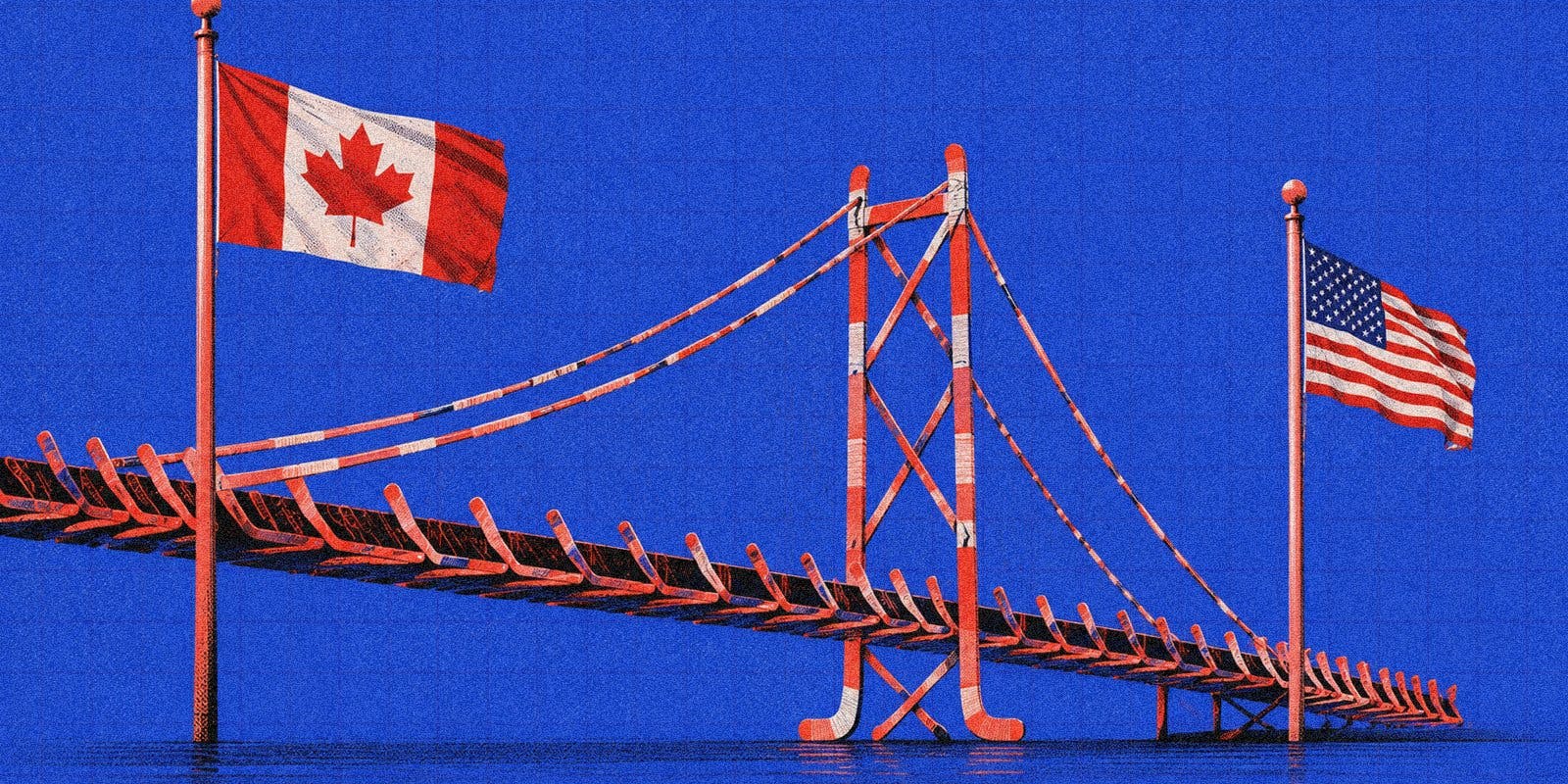
The United States is turning up the heat in its global trade disputes, targeting two of its biggest economic partners at once. Starting January 1st, the US will double tariffs on cars, trucks, and auto parts imported from Canada to 50%, according to the latest announcement. That comes on top of existing 50% levies on roughly $20 billion worth of Canadian goods, including wine, cement, and hockey sticks.
Canada isn't waiting to respond. The country has said it will hit back with dollar-for-dollar retaliation tariffs beginning September 8th. Meanwhile, the US has also warned that countries trading with Iran will face sanctions, putting China squarely in the spotlight.
The moves mark a significant escalation in what has become a worldwide economic confrontation. Trade talks between the US and Canada reportedly collapsed, paving the way for the tougher tariffs. For everyday investors, the question is no longer whether retaliation will happen, but how far it will go—and what it means for markets.
What's driving the escalation?
Tariffs are taxes on imported goods, and they're typically used to protect domestic industries or to pressure other countries into changing their policies. In this case, the US is using them as a blunt instrument in a broader geopolitical struggle. The doubling of auto tariffs is particularly notable because cars and trucks are a major part of cross-border trade between the US and Canada. Many vehicles and parts cross the border multiple times during assembly, so even a single tariff can have outsized effects on supply chains.
The threat of sanctions on Iran adds another layer. Sanctions are restrictions on trade or financial transactions with a country, and the US has a long history of using them to isolate Iran economically. By warning that countries trading with Iran will face sanctions, the US is effectively trying to cut off Iran's access to global markets. China, as one of Iran's largest trading partners, is a natural target.
This isn't happening in a vacuum. The US has been engaged in trade disputes with multiple countries for years, and the current administration has shown a willingness to use tariffs and sanctions as leverage. The collapse of trade talks with Canada suggests that diplomatic solutions are not currently a priority.
What does this mean for investors?
For investors, the immediate impact is likely to be felt in a few key areas. First, companies that rely on cross-border supply chains—particularly automakers and parts suppliers—could see their costs rise. Tariffs are essentially a tax on those companies, and they may pass the costs on to consumers or see their profit margins shrink.
Second, the threat of sanctions on China could affect global trade flows and commodity prices. China is a major buyer of oil and other raw materials, and any disruption to its trade with Iran could ripple through energy markets. Latin American stocks have already slipped as oil prices dropped amid Iran sanction concerns, showing how quickly these geopolitical tensions can move markets.
Third, the broader uncertainty itself is a factor. Trade wars tend to make investors nervous because they're hard to predict. Every new tariff or sanction can change the calculus for companies and economies, leading to market volatility. Tech futures rebounded recently as the US tightened Iran sanctions, but that kind of whiplash is common in these situations.
Canada's response and the road ahead
Canada's dollar-for-dollar retaliation is a classic response in trade disputes. It's designed to show that the country won't be pushed around, while also putting pressure on US businesses that export to Canada. The September 8th start date gives both sides a little time to negotiate, but the collapse of talks suggests a deal isn't imminent.
Some analysts see room for a year-end deal, however. Commerzbank notes that the tariffs could still be reversed if negotiations resume. That's a reminder that trade policy can change quickly, and investors shouldn't overreact to any single announcement.
For China, the situation is more complex. The US has already imposed tariffs on Chinese goods, and the threat of sanctions over Iran adds a new dimension. Chinese stocks have been split as the US weighs a 7.5% tariff and sanctions widen. Investors in Chinese equities should be prepared for continued volatility.
What to watch next
For investors, the key dates to watch are September 8th, when Canada's retaliation kicks in, and January 1st, when the doubled auto tariffs take effect. Any sign of renewed negotiations could ease market fears, while further escalation could deepen them.
It's also worth keeping an eye on how companies respond. Some companies are already cutting profit outlooks due to weak sales in the US and China, and tariffs could accelerate that trend. Supply chain disruptions and higher costs are likely to be recurring themes in earnings calls over the coming months.
For the average investor, the takeaway is to expect more volatility. Trade tensions are a known risk factor, and they can affect everything from stock prices to the cost of goods. Diversification and a long-term perspective remain the best defenses. As always, it's important to focus on your own financial goals rather than reacting to every headline.
The situation is fluid, and the only certainty is that the US is willing to use its economic power to get what it wants. How Canada and China respond will shape the next chapter of this global trade war—and investors will be watching closely.



