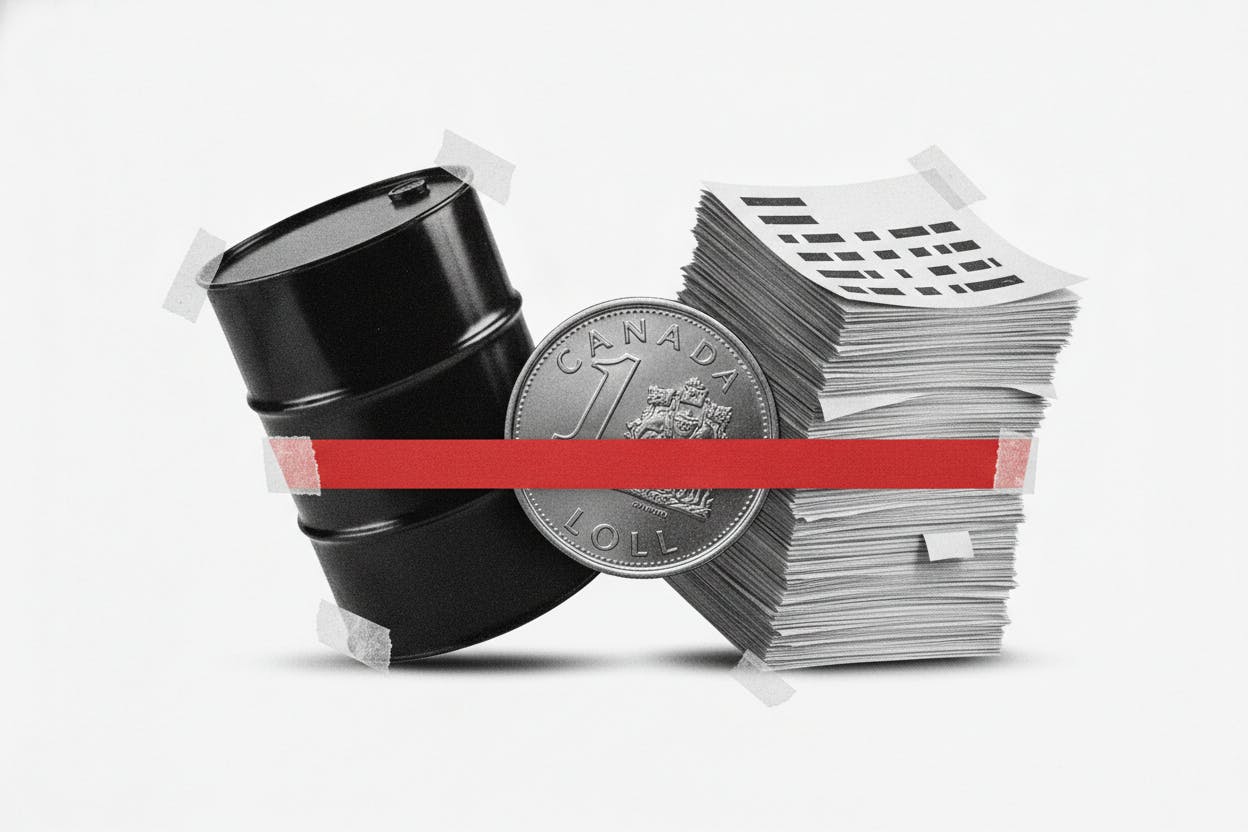
Canada's dollar, known as the loonie, is lagging behind its major-currency peers, and Commerzbank Research says two heavyweights are doing most of the heavy lifting: oil prices and US trade policy.
In a note to clients, the German bank said Canada's domestic economic picture appears to be stabilizing, but the currency still trades like a "two-factor" story. The first factor is oil. As one of the world's largest energy exporters, Canada often benefits when crude prices rise, because foreign buyers need Canadian dollars to pay Canadian producers. When energy prices cooled, that support faded, leaving the loonie without an easy tailwind.
The second factor is trade. Commerzbank highlighted the possibility of 50% tariffs on Canadian goods and ongoing uncertainty around the US-Mexico-Canada Agreement (USMCA), the trade pact that governs much of North American commerce. Any threat to that agreement—or the imposition of steep tariffs—would hit Canada's export-heavy economy hard, and currency markets are pricing in that risk.
Why the loonie is sensitive to oil and trade
Canada's economy is closely tied to commodities, particularly energy. When oil prices climb, the loonie tends to strengthen because higher crude revenues flow into the country, boosting demand for the currency. Conversely, when oil prices slip, the currency often weakens. This relationship has been a defining feature of the loonie for years, and it remains a key driver of its daily moves.
Trade is equally important. The US is Canada's largest trading partner, and the two economies are deeply integrated. The USMCA, which replaced NAFTA in 2020, underpins much of that trade. Any sign that the agreement could be renegotiated or undermined creates uncertainty for businesses and investors, which tends to weigh on the Canadian dollar.
Commerzbank's comments come at a time when global currency markets are already on edge. The US dollar has been firm, and other major currencies have been navigating their own challenges. The loonie's underperformance stands out because Canada's domestic fundamentals—such as growth and inflation—look relatively stable, according to the bank.
What this means for investors
For everyday investors, the loonie's weakness has a few practical implications. If you hold Canadian assets or earn income in Canadian dollars, a softer currency can reduce the value of those holdings when converted back to US dollars or other currencies. On the flip side, a weaker loonie can make Canadian exports more competitive, which could support some Canadian companies that sell abroad.
For those with exposure to oil prices, the connection is worth watching. If crude prices rebound, the loonie could regain some ground. But if trade tensions escalate—especially with the threat of 50% tariffs—the currency could stay under pressure.
Commerzbank's assessment is a reminder that currencies are often driven by a few dominant forces. For the loonie, those forces are oil and US trade policy. Until one of them shifts decisively, the currency may continue to lag its peers.
Investors should also keep an eye on broader market trends. The loonie's moves are part of a larger picture that includes the US dollar's recent steadiness and how other currencies are responding to oil price swings. While the loonie has its own unique drivers, it doesn't operate in a vacuum.
For now, the bank's message is clear: Canada's currency is caught between two heavyweights, and neither is showing signs of letting up.