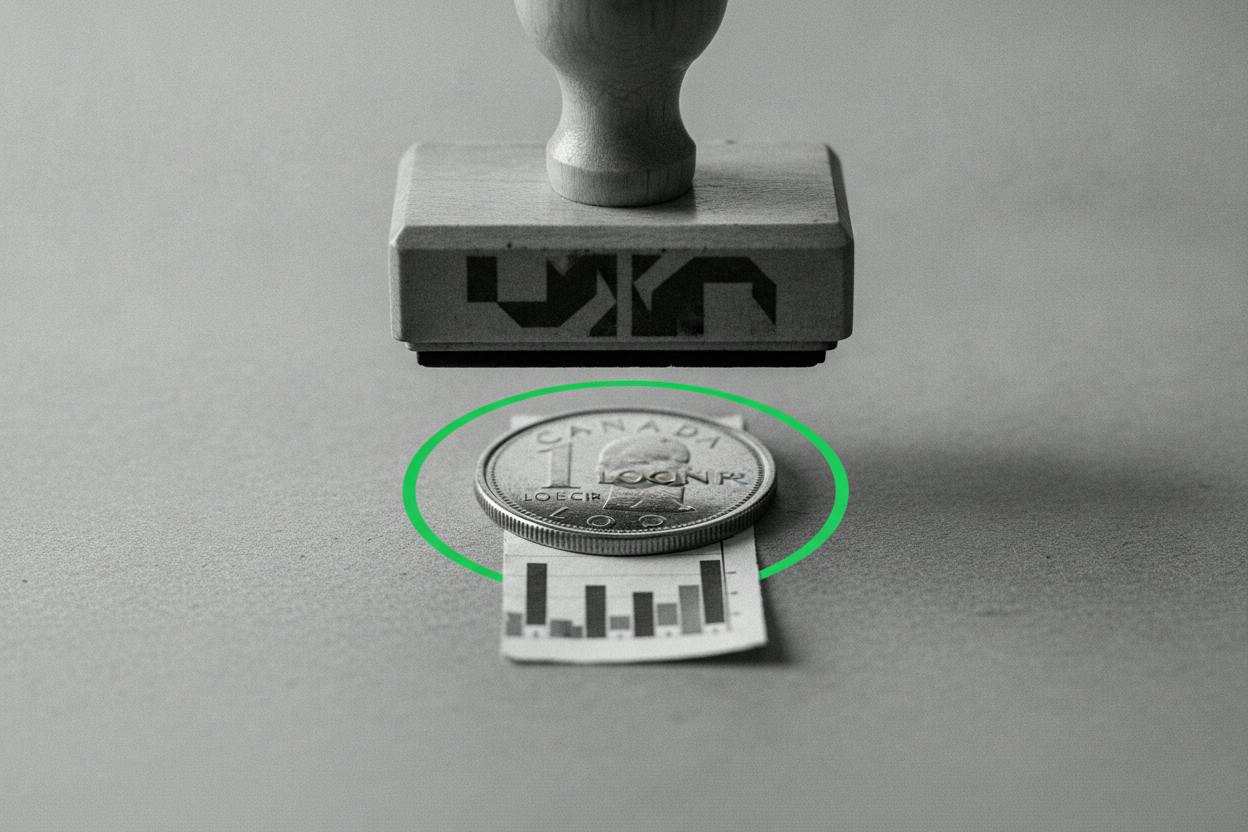
The Canadian dollar took a pause on Monday after a seven-day winning streak, steadying near 1.4010 per US dollar. The loonie, as Canada's currency is commonly known, had been climbing steadily as investors adjusted their expectations for interest rates on both sides of the border.
Now, all eyes are on this week's monetary policy meetings. The U.S. Federal Reserve and the Bank of Canada (BoC) are both set to announce their latest rate decisions, and the outcomes could determine the currency's next move.
What's driving the loonie's recent run?
The Canadian dollar's rally has been fueled less by a single data point and more by a shift in how markets view the path of interest rates. Over the past week, traders have increasingly bet that the Bank of Canada will raise its benchmark rate again, which would widen the gap between Canadian and U.S. rates and make Canadian assets more attractive.
According to market pricing, there is now about an 80% chance that the BoC hikes its policy rate to 2.50% on Wednesday. That expectation has been building for weeks, supported by strong domestic data and rising oil prices, which tend to benefit Canada's commodity-heavy economy.
However, much of that expected move is already reflected in the currency's price. When markets have fully priced in a rate hike, the exchange rate often reacts more to the central bank's statement than to the decision itself. Investors will be listening closely for any hints about future moves—whether the BoC signals more hikes to come or suggests it may pause.
The Fed's role in the equation
The Federal Reserve's decision, due a day after the BoC's, is equally important. The Fed has been aggressively raising rates to combat inflation, but recent data showing cooling price pressures has led some investors to speculate that the pace of hikes might slow.
If the Fed sounds less hawkish than expected, the U.S. dollar could weaken, which would give the loonie additional support. Conversely, a more aggressive tone from the Fed could strengthen the greenback and put pressure on the Canadian dollar.
The interplay between the two central banks is crucial. A rate hike by the BoC, combined with a more cautious Fed, would likely push the loonie below the 1.40 level. But if the Fed surprises with a more hawkish stance, the currency could give back some of its recent gains.
What it means for investors
For everyday investors, currency movements can have a direct impact on portfolios. A stronger Canadian dollar means that U.S. investments—when converted back to Canadian dollars—are worth less. Conversely, a weaker loonie boosts the value of U.S. holdings.
For those planning cross-border travel or purchases, the exchange rate matters too. A loonie near 1.40 means it takes about C$1.40 to buy one U.S. dollar, which is still relatively weak compared to historical averages.
Investors should also watch the broader market context. The loonie's recent strength has been partly tied to rising oil prices, as Canada is a major oil exporter. However, tariff threats may cap Canadian dollar gains even if the BoC delivers a hike, as trade uncertainties could weigh on the currency.
Additionally, the dollar slipped as oil and Treasury yields cooled ahead of this central bank week, suggesting that markets are in a wait-and-see mode.
What to watch next
The key events are the BoC announcement on Wednesday and the Fed's decision on Thursday. Traders will parse the accompanying statements for clues about the future path of rates. Any hint that the BoC might pause after this hike could trigger a pullback in the loonie, while a signal of more hikes could extend the rally.
For the Fed, the focus will be on whether policymakers acknowledge any slowdown in inflation and whether they signal a slower pace of tightening. That could have implications for the U.S. dollar and, by extension, the Canadian dollar.
Beyond the central banks, investors will also keep an eye on oil prices and economic data. Canadian retail sales rebounded in August, which helped lift rate-hike odds, but price gains may drive September figures. Strong data could reinforce the case for further BoC tightening.
In the meantime, the loonie's pause near 1.4010 suggests that the market is balanced, with the next move likely to be determined by the central banks' words rather than their actions.