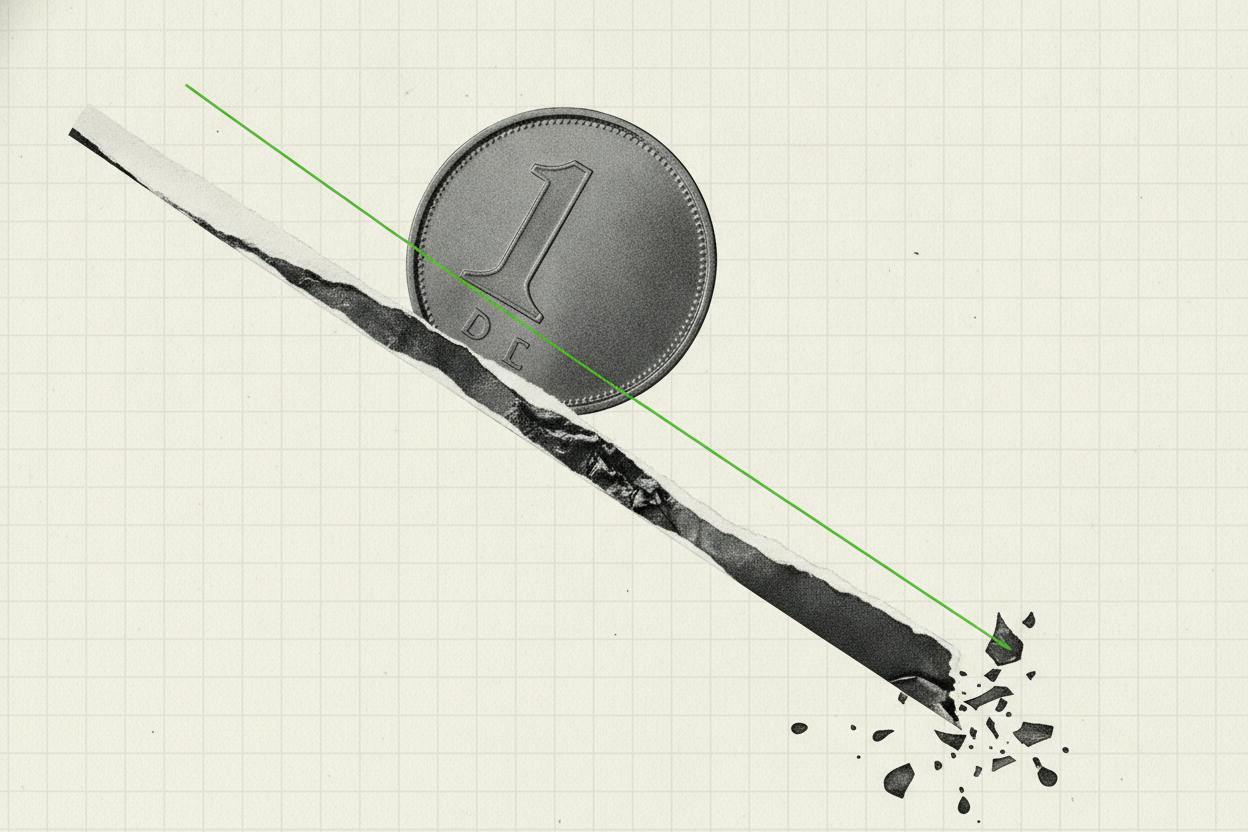
The Canadian dollar touched its weakest level in 19 months on Tuesday, extending a 10-day losing streak as falling oil prices and a widening interest-rate gap between the US and Canada weighed on the currency. The loonie traded at about 1.4380 per US dollar, its lowest since April 2026.
The move underscores the pressure on Canada's export-driven economy from both commodity markets and monetary policy divergence. For everyday investors, a weaker loonie has ripple effects—from the cost of imported goods to the returns on foreign investments.
Why the loonie is falling
Oil is one of Canada's most important exports, so when crude prices drop, the country's export revenues and the foreign currency inflows that support the loonie tend to weaken. US crude fell about 3% to roughly $80.92 a barrel on expectations of increased global supply. That slide directly reduces the value of Canada's oil sales in international markets.
At the same time, US interest rates have remained higher than Canada's. That gap makes US assets—like Treasury bonds and dollar-denominated deposits—more attractive to global investors, pulling capital toward the US and lifting the greenback. The yield on the 10-year US government bond has stayed above its Canadian equivalent, a dynamic that typically favors the US dollar.
The combination of these two forces—cheaper oil and a wider rate differential—has been a persistent drag on the loonie. The 10-day decline is the longest such streak in recent memory, reflecting sustained selling pressure rather than a single shock.
What a weaker loonie means for investors
For Canadian investors, a falling loonie cuts both ways. On the one hand, it makes imported goods more expensive, which can feed into inflation and erode purchasing power. On the other hand, it boosts the value of foreign investments when converted back into Canadian dollars. For example, US stocks or bonds held by Canadians become worth more in loonie terms as the exchange rate worsens.
For those with US-dollar exposure, the trend has been favorable. But for Canadians planning to travel abroad or buy imported products, the weaker currency means higher costs.
The Bank of Canada has been under pressure to cut interest rates as the economy cools. Recent data on retail spending and inflation have given policymakers room to pause, but a persistently weak currency could complicate that calculus. A softer loonie can import inflation, making it harder for the central bank to ease policy aggressively.
Investors will be watching upcoming economic data and central bank communications for clues. If the Bank of Canada signals a more dovish stance than the Federal Reserve, the rate gap could widen further, putting more downward pressure on the loonie. Conversely, any rebound in oil prices or a shift in Fed expectations could help the currency stabilize.
Broader market context
The loonie's slide is part of a broader trend of dollar strength. Other currencies, including the Australian dollar and the Indian rupee, have also felt the impact of a firmer greenback. The US dollar has been buoyed by resilient economic data and expectations that the Fed will keep rates higher for longer.
For Canada, the currency's weakness is a double-edged sword. It makes exports more competitive, which could support the manufacturing and energy sectors. But it also raises the cost of servicing dollar-denominated debt and increases the price of imported goods, which could weigh on consumer spending.
As the loonie hovers near multi-year lows, investors will be watching whether the trend continues or reverses. Key factors include oil price movements, the path of US and Canadian interest rates, and any shifts in global risk sentiment.
For now, the 19-month low serves as a reminder of how interconnected currency markets, commodity prices, and interest rates are—and how those forces can affect the financial well-being of ordinary investors.