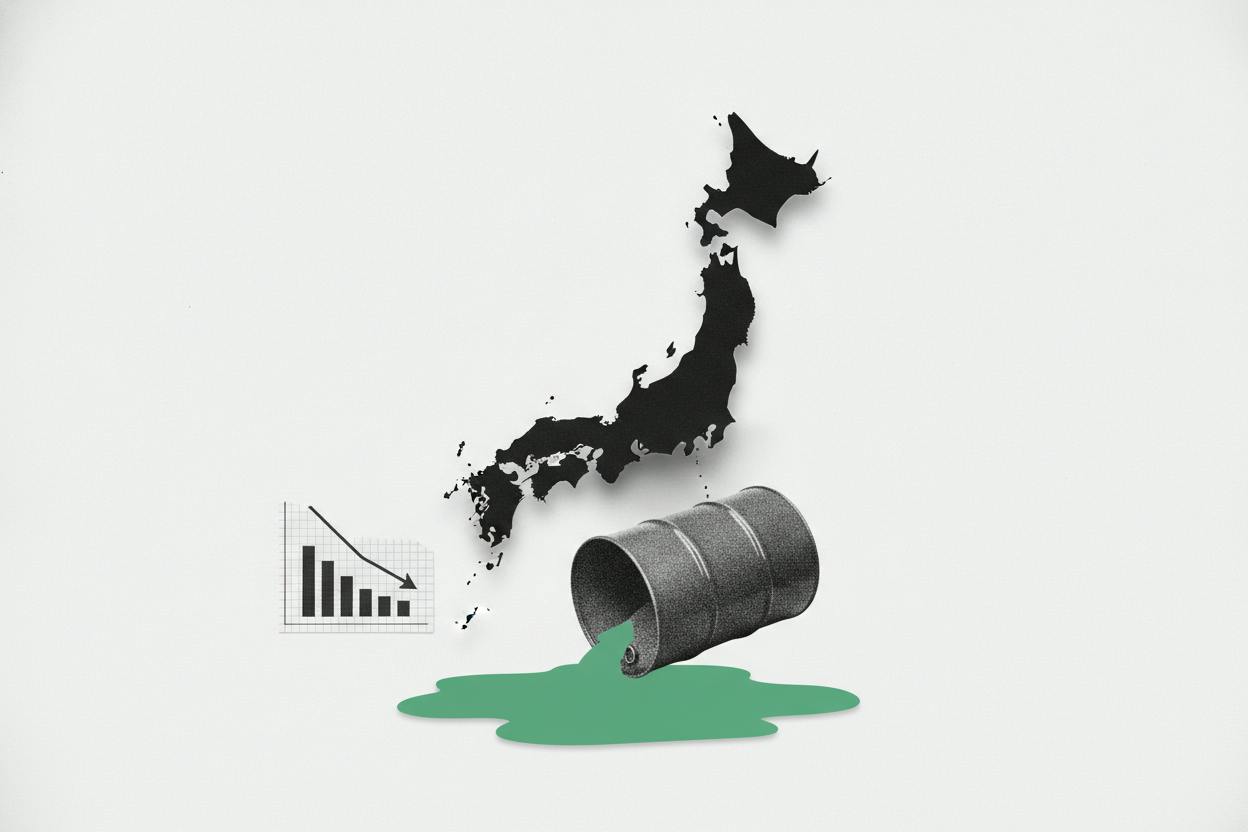
Japan's government bond yields slid to two-week lows on Tuesday as a sharp drop in oil prices eased inflation worries, even as the country's stock market staged a brief rally. The benchmark 10-year Japanese government bond (JGB) yield fell 7 basis points to 2.715%, while yields on longer-dated bonds—20-, 30-, and 40-year maturities—also declined, according to Reuters.
The trigger was crude oil, which fell more than 3% to a three-month low. Japan imports nearly all of its energy, so cheaper oil can quickly feed into lower inflation expectations. That matters because the inflation outlook heavily influences how far the Bank of Japan (BoJ) can raise interest rates.
What the bond move tells us
Takayuki Miyajima, a strategist at Sony Financial Group, described the yield drop as reflecting "a retreat in inflation concerns" tied to oil. The clearest signal wasn't the 10-year yield at 2.715% but the 2-year JGB, which dipped to 1.8%. That maturity is tightly linked to where investors think the BoJ can set policy rates.
When oil prices fall sharply, markets tend to price in less near-term inflation, which reduces the "tightening premium" baked into short-dated yields. That often pulls longer yields down too, as investors adjust their expectations for future rate hikes.
This isn't the first time foreign flows have influenced Japan's bond market. In October, foreign buying pulled yields lower, and the current move shows how sensitive JGBs are to global commodity prices.
Equities tell a different story
While bonds rallied, Japan's Nikkei 225 index briefly jumped 5% before paring gains. Reuters linked the burst to a renewed AI narrative after a recent slump in tech stocks. That divergence—bonds pricing in cooler inflation while stocks cheer AI optimism—shows how different forces are at play.
Globally, pressure on short-term rates wasn't fading. Shorter-dated US Treasury yields rose overnight, and futures markets were close to pricing a quarter-point Federal Reserve rate hike in December, according to CME FedWatch. That suggests Japan's bond move was less about global tightening and more about a local energy-driven inflation pulse cooling off.
What it means for investors
For everyday investors, the key takeaway is that oil prices can move central bank expectations, and that has ripple effects across markets. If the BoJ sees inflation easing, it may be less aggressive in raising rates, which supports bond prices but could weaken the yen.
The catch is cross-border: if US short-term yields stay firm because traders still expect a December Fed hike, the gap between US and Japanese rates can remain wide. That backdrop often keeps pressure on the yen, and a weaker currency tends to help Japan's overseas earners more than businesses that rely mainly on domestic demand.
For those watching global markets, this is a reminder that AI stock jitters can push investors toward bonds, but here it was oil, not tech, driving the bond move. Meanwhile, cheaper oil is also lifting other markets—Indian stocks rose on foreign inflows and cheaper oil, and rubber futures slid as the commodity's decline rippled through supply chains.
Investors should watch whether oil stays low and whether the BoJ signals any shift in its policy stance. If inflation expectations continue to cool, Japanese bonds could see further gains, but the yen's fate will depend on how the Fed acts in December.