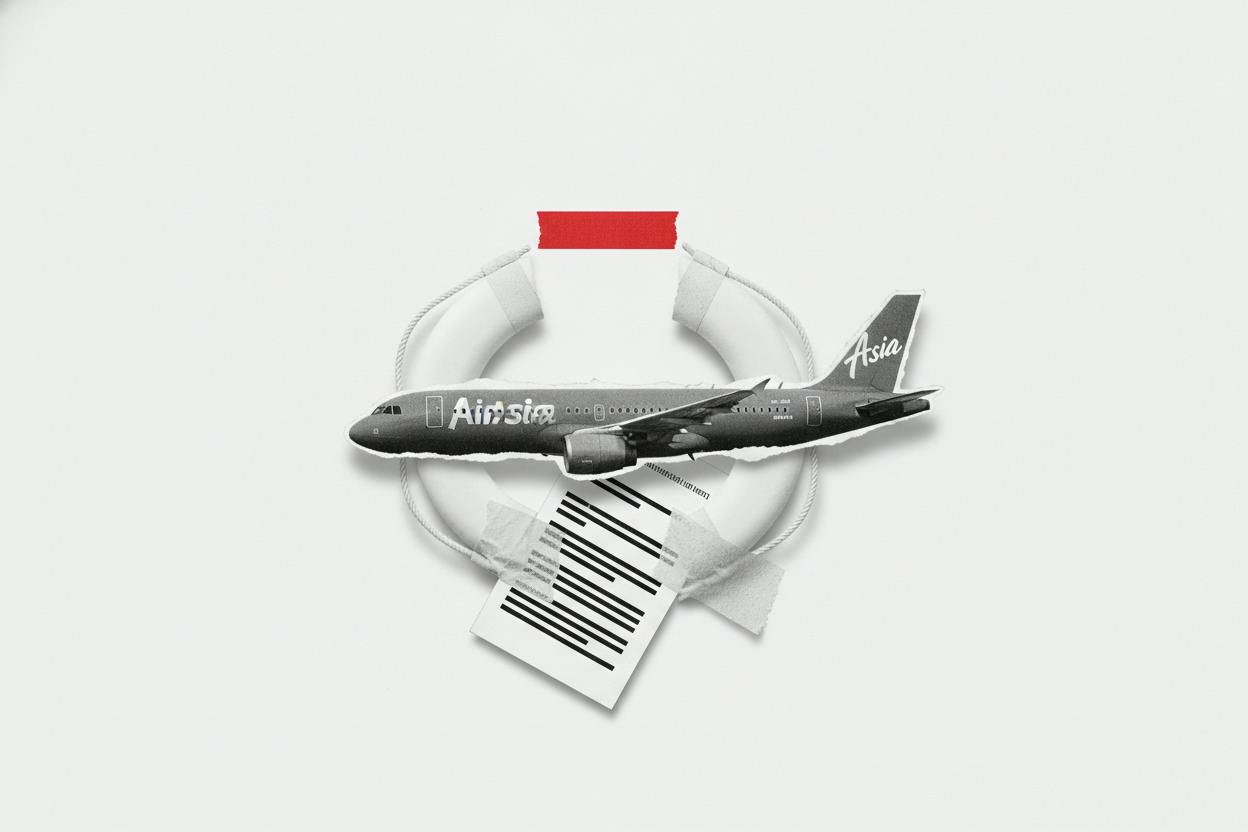
Malaysia's finance ministry has moved to clarify that it has not promised AirAsia any form of bailout, even as the budget airline grapples with losses driven by rising fuel costs. In a written parliamentary reply, the ministry said it is monitoring the airline's performance but has not committed to guarantees, loans, or injections of public funds.
The clarification follows a Reuters report that AirAsia had been in talks with government officials about possible support. Co-founder Tony Fernandes described those discussions as centering on industry-wide costs—such as airport charges and jet fuel—rather than a cash rescue for the airline.
Fuel costs and Middle East tensions
AirAsia has blamed its recent quarterly losses on higher fuel prices, which have been pushed up by tensions in the Middle East. Jet fuel is typically one of the largest expenses for any airline, and sharp increases can quickly erode profits, especially for budget carriers that operate on thin margins.
The finance ministry said it is tracking airlines' performance amid these pressures. That suggests the government is keeping a close eye on the sector, but it has stopped short of offering financial support.
This is not the first time AirAsia has faced financial turbulence. The airline, part of Capital A, has weathered previous crises, including the pandemic, when travel demand collapsed. But the current challenge is different: demand is strong, yet costs are rising.
What this means for investors
For investors, the key takeaway is that AirAsia should not expect a government lifeline. That removes a layer of uncertainty—or hope—depending on how you view it. Without a bailout, the airline will need to manage its costs and find other ways to shore up its finances.
The government's stance also signals that it is not willing to use taxpayer money to support a private company, even one that is a well-known national brand. This is consistent with how many governments approach struggling airlines, though some have stepped in during extraordinary circumstances, such as the pandemic.
For the broader Malaysian market, the news adds to a mixed picture. The country's economy has shown resilience, with Q3 growth cooling to 5.3%, supported by services and exports. But rising fuel costs and global uncertainties could weigh on corporate earnings.
Investors in airline stocks, or in funds that hold them, should watch how AirAsia manages its fuel exposure. Airlines often use hedging to lock in fuel prices, but those strategies can be costly and don't always pay off. The company's ability to pass on higher costs to passengers through ticket prices will also be a factor.
The situation is not unique to AirAsia. Airlines worldwide are feeling the pinch from higher fuel prices. For example, Delta's Q4 outlook lifted US airline hopes, but fuel costs loom for the industry. Similarly, American Airlines has reshuffled leadership to close a profit gap with rivals, partly due to cost pressures.
What to watch next
Investors will be watching for any further statements from the Malaysian government or AirAsia about the talks. The airline's next earnings report will also be closely scrutinized to see if fuel costs continue to weigh on results.
Another key indicator is the price of oil. If Middle East tensions ease, fuel prices could fall, providing some relief to airlines. Conversely, any escalation could push costs higher.
For now, the message from Malaysia's finance ministry is clear: AirAsia is on its own. That may be a tough pill for the airline, but it also removes ambiguity for investors who were wondering whether a bailout might be coming.
As always, it's wise to keep an eye on the broader market context. Malaysia stocks slipped 1% as Q3 growth cooled, reflecting investor caution. The airline's fate is just one piece of that larger puzzle.