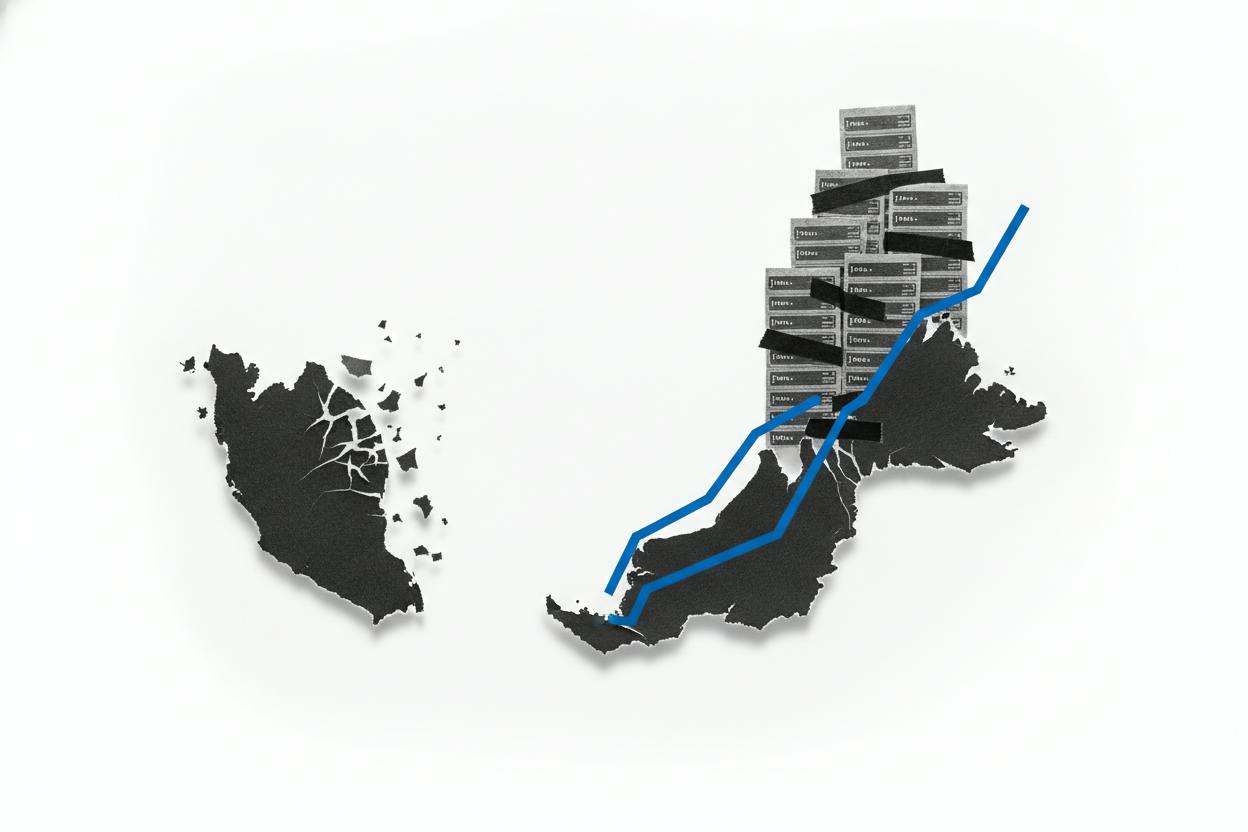
Malaysia's economy expanded 5.3% in the third quarter compared with a year earlier, a slight cooling from the 6% growth recorded in the previous three months. The advance estimate from the Department of Statistics Malaysia (DOSM) shows that while the pace has moderated, the underlying drivers are shifting toward technology and services, helping to cushion a sharp decline in the mining sector.
Broad-based growth, with one weak spot
According to DOSM, growth was broad-based, with every major sector expanding except mining and quarrying, which contracted by 4.9%. Services, the largest part of the economy, rose 5.4%, while manufacturing climbed 7.5%. Construction also grew 6%, with DOSM pointing to data-center projects as a key driver.
The manufacturing surge is particularly notable. Malaysia is a major hub for semiconductor assembly and testing, and global demand for chips used in artificial intelligence (AI) infrastructure has been strong. As companies worldwide build out data centers and AI capabilities, Malaysian exports of electronics and related components have benefited.
This shift matters because it suggests Malaysia can maintain growth even when commodity-linked activity softens. Mining and quarrying, which includes oil and gas extraction, has been a traditional pillar of the economy, but its recent decline is being offset by the strength in higher-tech sectors.
Why the mining drop isn't a red flag
In previous cycles, a 4.9% contraction in mining might have raised concerns about overall output. But the current mix of growth tells a different story. When AI-related investment lifts chip exports, the benefits often spread beyond the factory gate. Large data-center and electronics supply-chain projects also pull in local construction, utilities, transport, and business services, creating a ripple effect across the economy.
That diversification is a key reason why policymakers have remained relatively steady. Malaysia's central bank has held its policy rate at 2.75% since May last year, and the government recently nudged up its 2026 growth forecast toward the top of its 4.8%–5.3% range.
For investors watching Malaysia's rates and currency, a more diversified growth engine can change the policy debate. If services and export manufacturing keep carrying activity, there is typically less pressure on the central bank to cut rates as a quick fix when resource output dips. That could support the ringgit and keep bond yields stable.
What it means for investors
For everyday investors, the key takeaway is that Malaysia's economy is becoming less dependent on commodities and more tied to global technology trends. That has both upsides and risks. On the one hand, AI-driven demand for chips and data centers could continue to support growth. On the other, a slowdown in global tech spending could hit Malaysia harder than in the past.
Investors with exposure to Malaysian equities or funds may want to watch how the AI cycle evolves. The country's role in the semiconductor supply chain is well established, and the recent growth in construction tied to data centers suggests that trend is still building. But as with any export-driven economy, external demand is a crucial variable.
The central bank's steady hand also signals confidence in the economy's resilience. By holding rates at 2.75%, it is betting that growth can continue without needing stimulus. If the services and manufacturing momentum persists, that bet looks reasonable. If global tech demand falters, the policy stance may need to shift.
For now, the data points to an economy that is adapting to a new growth model—one where AI and digital infrastructure play a starring role, even as traditional resource extraction fades. That is a story worth watching for anyone with a stake in Malaysia's economic future.