Bank of England Governor Andrew Bailey has offered a cautious note of reassurance on inflation, saying that the recent surge in UK energy bills does not appear to be feeding through into other prices as aggressively as some had feared. Speaking at an Institute of International Finance event in Bangkok, held alongside the IMF and World Bank annual meetings, Bailey acknowledged that “second-round effects” from energy costs—such as companies raising prices across the board or workers demanding bigger pay increases—look muted so far, though he stressed it is too early to be certain.
Bailey’s comments come as many economists still expect the Bank of England to raise interest rates at its next policy meeting, despite the central bank having held rates steady since the US-Iran war began in February. The Monetary Policy Committee voted 6-3 last month to keep Bank Rate at 3.75%, even as Bailey called August’s 3.1% inflation rate “enormously frustrating.”
Why energy price spillover matters
When energy prices jump, the immediate effect is higher bills for households and businesses. But the bigger worry for central banks is whether that shock becomes embedded in the broader economy. If companies start raising prices across the board to protect margins, or workers push for wage increases to offset higher living costs, inflation can become self-sustaining—even after the original energy shock fades.
Bailey suggested that, so far, that dynamic is not playing out strongly in the UK. He said many firms are focused on cutting costs and are struggling to pass higher energy bills on to customers. That can limit how a shock turns into broader inflation, but it also means businesses are absorbing the pain, which could weigh on profits and hiring.
The governor’s remarks echo a theme seen in other economies, where diesel prices are showing up everywhere else but have yet to trigger a broad wage-price spiral. In the UK, the picture is complicated by a tight labour market and the fact that inflation has remained stubbornly above the Bank’s 2% target.
Bond markets are doing the heavy lifting
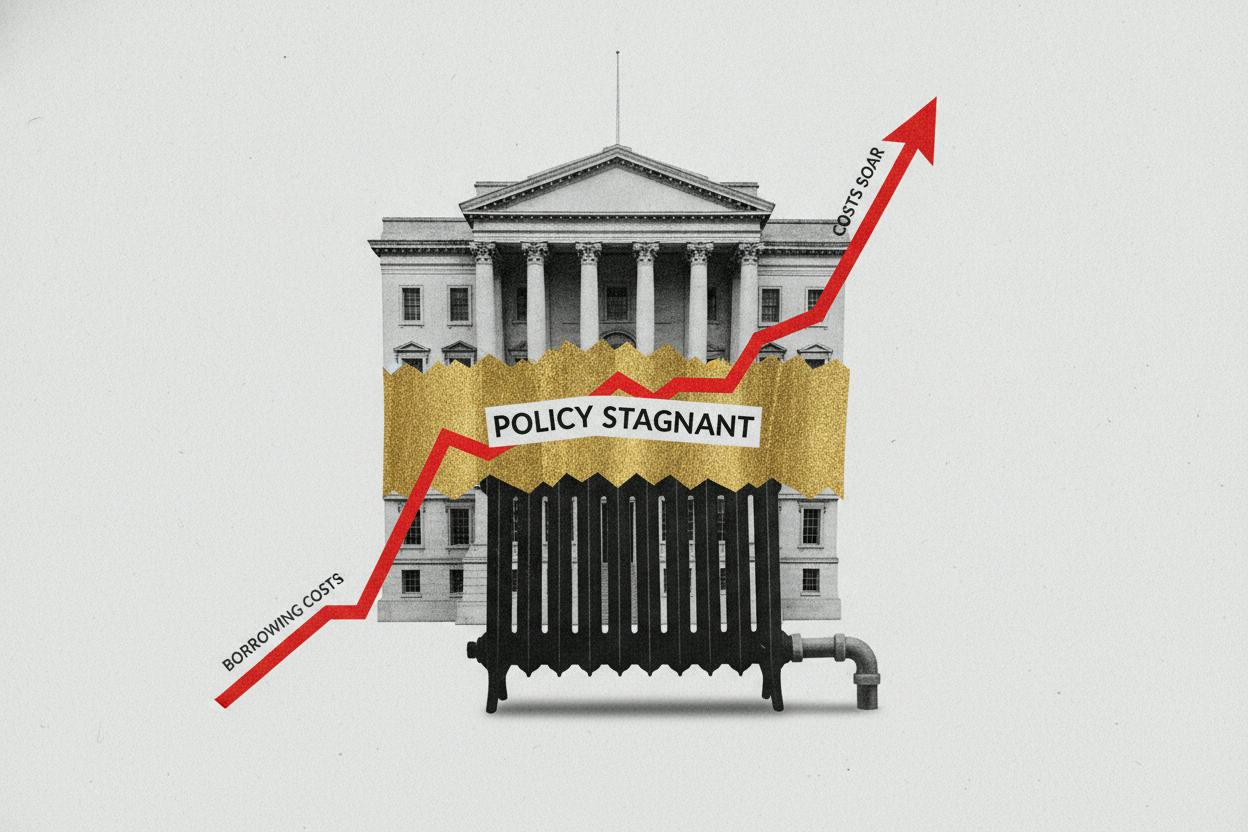
Even if the Bank of England holds off on a rate hike, financial conditions have already tightened on their own. Bailey noted that sharp moves in British government bonds pushed some yields to their highest since 1998. That is a reminder that borrowing costs can rise even before the central bank changes its key rate.
For households, the key isn’t only what the Bank of England decides next month, but what bond markets have already done. Many fixed-rate mortgages are priced off government bond yields and interest-rate swaps—contracts banks use to manage rate risk. When those benchmarks jump, lenders’ funding and hedging costs rise too.
That’s why home-loan offers can get more expensive before—or even without—an official rate hike. It also means people refinancing after a fixed deal ends, or applying for a new loan, can face higher quotes and tighter affordability even if policymakers decide to wait for clearer evidence that energy costs are feeding through into wages and prices.
What it means for investors
For investors, Bailey’s comments suggest the Bank of England is in a wait-and-see mode, but the market is already pricing in tighter conditions. The recent rise in bond yields has been a global theme, with stocks rotating from tech to defensives as producer prices jump in other economies. In the UK, the focus will be on upcoming inflation and wage data to see whether Bailey’s optimism is justified.
If energy price spillover remains limited, the Bank might be able to keep rates on hold for longer, which would be supportive for equities and property. But if inflation proves stickier, a rate hike could come sooner than expected, which would hit bond prices and could weigh on growth-sensitive sectors.
Bailey also pointed to a more resilient economy, with August data showing the strongest year-on-year growth since October 2022. That resilience gives the Bank room to act if needed, but it also means the economy can absorb higher rates without tipping into recession.
For now, the message is one of caution: energy prices are a concern, but the Bank is not yet seeing the broad-based price and wage increases that would force its hand. Investors should watch for any signs of that changing, as it would have significant implications for UK interest rates, the pound, and the stock market.