Wholesale inflation came in hotter than expected in September, and one fuel is doing much of the pushing. The Producer Price Index (PPI), which tracks what businesses pay for goods and services before they reach consumers, pointed to energy — and diesel in particular — as a major driver of the increase, according to Reuters.
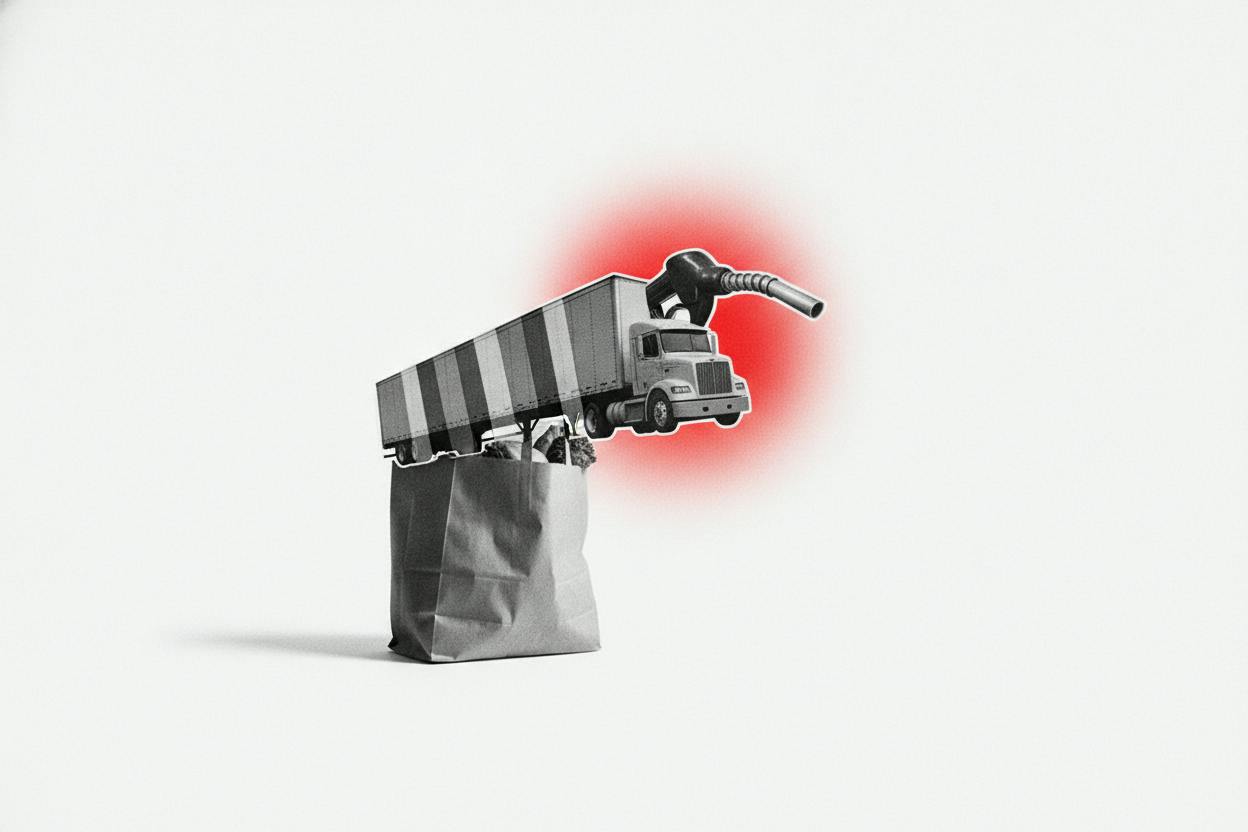
The signal matters because diesel doesn't just sit in a truck's tank. It powers the movement of goods across the country, so when its price climbs, the cost of getting almost anything from a farm to a warehouse to a store shelf climbs with it.
Why diesel is the fuel to watch
Oxford Economics, a research firm, has called diesel “the workhorse fuel of the economy.” That's not an exaggeration. Most US freight — the trucks that haul food, building materials, retail goods and industrial inputs — runs on diesel. Rail and air freight rely on it too, and farmers burn it in tractors and combines.
When diesel prices more than doubled over the past year, shipping got pricier fast. The PPI gauge for truck transportation of freight rose 19% from a year earlier, a striking move for an index that typically drifts by a few percentage points. That increase is a direct pass-through of fuel costs into the price of moving goods.
For everyday investors, the takeaway is that diesel is a kind of hidden tax on the economy. It shows up in the cost of a loaf of bread, a package delivered to your door, and the raw materials a manufacturer buys. Those costs eventually reach consumers, which is why economists watch diesel as closely as they watch crude oil.
From the pump to the grocery aisle
The September PPI report suggested that higher freight and food costs are filtering through the pipeline. Food prices are especially sensitive to diesel because agriculture is fuel-intensive at every stage: planting, harvesting, processing and distribution. When diesel is expensive, the whole chain gets more expensive.
This is the classic pattern of energy-driven inflation. It starts with a spike in a commodity, moves into transportation and production costs, and then — with a lag — shows up in the prices consumers pay. The PPI is designed to catch that middle stage, which is why it's often seen as an early warning signal for the Consumer Price Index (CPI).
The broader backdrop matters too. Energy costs have been volatile, and investors have been watching how much of the inflation story is about fuel versus underlying demand. Recent market action has reflected that tension: stocks have rotated from tech into defensives as producer prices jumped, and producer inflation jumped in September on surging energy costs. Higher fuel bills also raise the bar for corporate earnings, a theme captured in the S&P 500 nearing 8,000 as yields and oil climb.
What it means for investors
For ordinary investors, a diesel-driven inflation reading is a reminder that energy is not just a sector bet — it's a cost that runs through the entire economy. That has a few practical implications:
- Transportation and logistics companies face higher fuel bills, though many pass costs on through surcharges. How much they can pass through depends on the strength of demand and the competitiveness of their routes.
- Consumer staples and food producers may see margin pressure if they can't raise prices fast enough to offset freight costs. Companies with strong brands often have more pricing power.
- Energy producers and refiners can benefit from higher diesel cracks — the profit margin from turning crude into diesel — though commodity prices are notoriously volatile.
- Inflation-sensitive assets like bonds may react if the data keeps central banks cautious about cutting interest rates. Higher-for-longer rates tend to pressure growth stocks and support value and dividend payers.
It's also worth remembering that one month of PPI data is not a trend. Energy prices can reverse quickly, and the pass-through to consumer prices is neither automatic nor immediate. But when diesel is the driver, the effects tend to be broad rather than contained.
What investors will watch next is whether these freight and food cost pressures persist into the coming months — and whether they start showing up more clearly in consumer inflation. If they do, the debate over how much room central banks have to ease policy could shift again, with ripple effects across stocks, bonds and the dollar.
For now, the message from September's PPI is simple: the price of moving things is rising, and that cost rarely stays in one place.