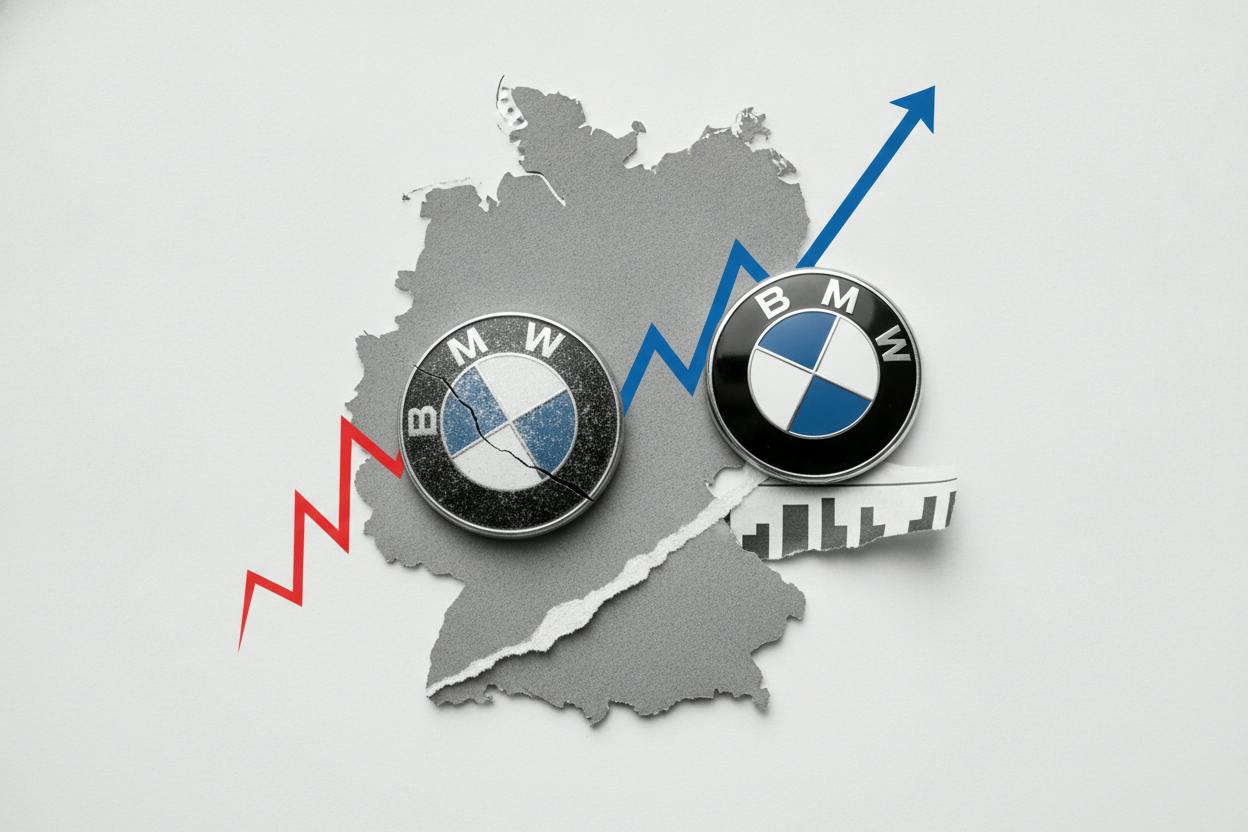
German stocks managed to close higher on Tuesday, even as one of the country's most iconic automakers delivered a sobering update. Mercedes-Benz trimmed its 2026 financial outlook, pointing to tougher conditions in China and higher-than-expected costs in the fourth quarter. Yet the broader market shrugged off the warning, helped by a brighter signal from another big carmaker.
Mercedes-Benz's warning: a China story
Mercedes-Benz's revised guidance is essentially a reflection of what's happening in the world's largest auto market. The company now expects its cars division to achieve an adjusted return on sales of just 2% to 3% in 2026, down from its previous target of 3% to 5%. Return on sales is a key profitability measure that shows how much profit a company keeps from each euro of revenue. A lower range signals that Mercedes expects to earn less on each vehicle it sells.
The company also said group operating profit, measured as earnings before interest and taxes (EBIT), is now expected to be roughly flat compared with the prior year. That's a notable downgrade from its earlier expectation of "significant" growth. The main culprits: intensifying competition and weaker demand in China, along with higher costs expected in the final quarter of the year.
China has long been a profit engine for German luxury carmakers, but the landscape has shifted. Local electric-vehicle makers have gained ground with aggressive pricing and new technology, squeezing foreign brands. For Mercedes, this means it may have to spend more on discounts and marketing to hold its position, which eats into margins.
Porsche provides a counterweight
While Mercedes' news was downbeat, investors found encouragement from another German automaker. Porsche AG reaffirmed its 2026 revenue outlook of €35 billion to €36 billion, and its shares rose 4.14% on the day. That reassurance helped lift sentiment across the sector and, by extension, the DAX, Germany's benchmark stock index.
Porsche's decision to hold its revenue target suggests that, at least for now, the luxury sports car maker sees a more stable path ahead. The contrast between the two companies highlights that not all German automakers are facing the same headwinds, even if the broader industry is dealing with a challenging global environment.
What it means for investors
For everyday investors, the key takeaway is that company-specific news can move individual stocks, but the overall market often looks at the bigger picture. The DAX's rise despite Mercedes' warning shows that investors are weighing multiple factors, not just one company's outlook.
Mercedes' downgrade is a reminder that the auto industry is in a period of transition. The shift to electric vehicles, rising competition from Chinese brands, and uncertain global demand are all putting pressure on traditional carmakers' profit margins. Companies that can adapt quickly may fare better, but those that rely heavily on the Chinese market could continue to face headwinds.
For those holding German stocks or funds that track the DAX, it's worth noting that the index includes a mix of industries, from automakers to software firms to industrial giants. A single company's profit warning doesn't necessarily spell doom for the entire index, as Tuesday's session showed.
Investors should also keep an eye on how other automakers and suppliers respond to the same pressures. If more companies follow Mercedes' lead and cut guidance, that could signal a broader slowdown in the sector. Conversely, if others like Porsche can hold their ground, it may suggest the challenges are more company-specific.
Looking ahead
Mercedes-Benz's next earnings report will be closely watched for more details on how it plans to navigate the China slowdown and manage costs. The company's ability to hit its revised targets will depend on how quickly it can adjust its strategy in a market that has become far more competitive.
For now, the market's reaction suggests that investors are taking a measured view. The DAX's resilience, even in the face of a major automaker's downgrade, underscores the importance of diversification. While one stock may stumble, others can pick up the slack.
As always, it's wise to focus on long-term trends rather than short-term noise. The auto industry is evolving, and companies that invest in the right technologies and markets today are likely to be the winners tomorrow.