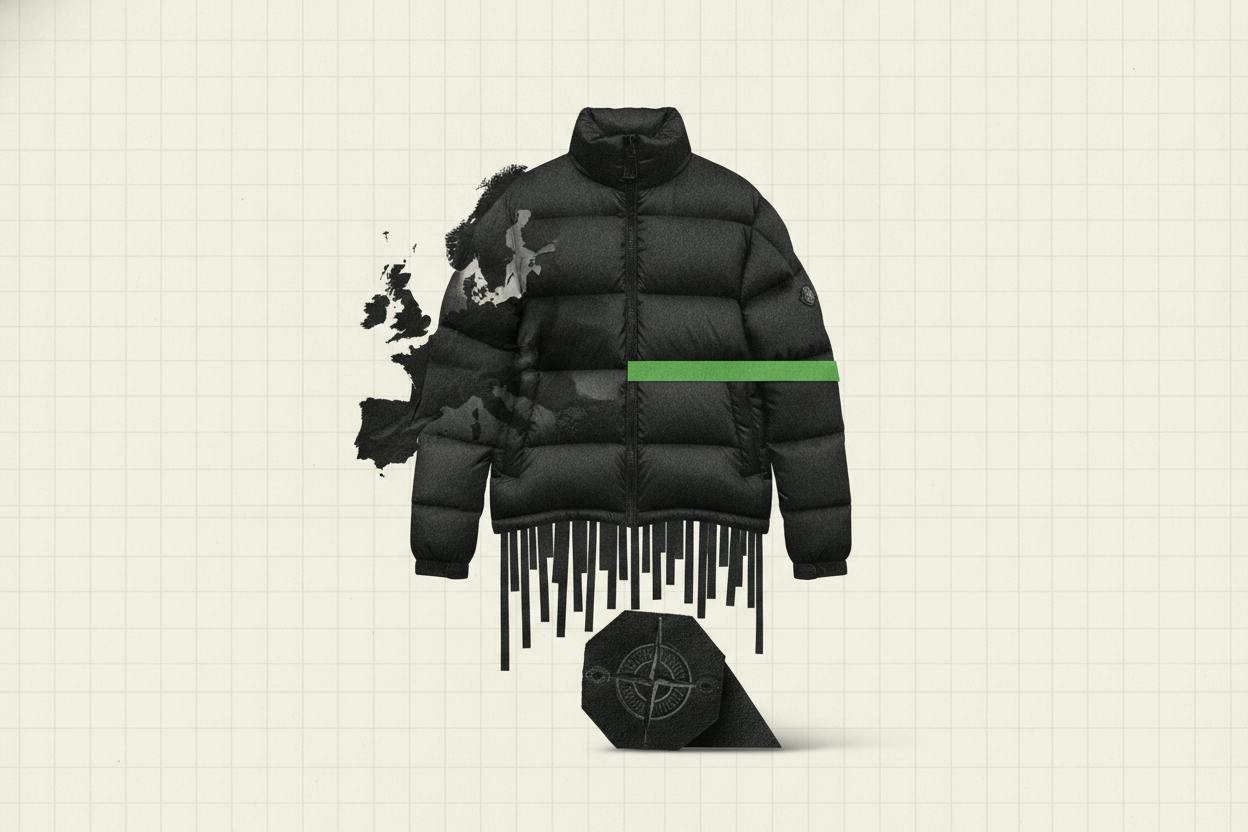
Italian luxury outerwear group Moncler reported third-quarter revenue of €606 million, edging past analyst expectations even as demand in Europe cooled for its flagship brand. The result, roughly flat at constant exchange rates, beat the company-compiled consensus of €597 million, offering a glimmer of stability in a luxury sector that has been grappling with uneven global demand.
A tale of two brands
The headline number masked a clear divergence beneath the surface. The core Moncler brand, known for its quilted down jackets and ski-chic aesthetic, saw sales slip 1% overall. The weakness was most pronounced in Europe, where revenue dropped 8%, a decline management attributed to softer spending by tourists. In contrast, the Americas posted a 2% gain, while Asia delivered mid single-digit growth, underscoring how regional travel patterns and consumer confidence continue to shape luxury spending.
Meanwhile, Stone Island, the streetwear label Moncler acquired in 2021, proved a bright spot, growing 5% in the quarter. That growth helped offset the core brand's stumble and kept group sales steady, even as regional demand diverged sharply.
It's worth noting that the third quarter is a relatively quiet period for Moncler, which generates the bulk of its sales in the fourth quarter, when colder weather and the holiday season drive outerwear purchases. That makes the Q3 numbers a useful gauge of underlying momentum, but not the full picture for the year.
What's behind the European slowdown?
The 8% drop in Europe for the core Moncler brand points to a broader trend: tourist flows have become less predictable, and some shoppers are pulling back on discretionary spending as inflation and economic uncertainty linger. Luxury goods, which are highly sensitive to consumer confidence and travel patterns, have seen demand soften in parts of Europe after a post-pandemic boom.
Moncler's experience echoes what other luxury players have reported. For instance, Puig beat its Q3 sales forecast recently, helped by strength in its makeup brands, while EssilorLuxottica saw shares surge on better-than-expected Ray-Ban sales. These mixed results highlight how the luxury sector is not moving in lockstep, with some categories and regions outperforming others.
For Moncler, the resilience in Asia and the Americas suggests that its brand remains strong in key growth markets, even as European tourism normalizes. The company's ability to grow Stone Island also shows the value of its multi-brand strategy, which gives it exposure to different consumer segments.
What it means for investors
For everyday investors, Moncler's Q3 report offers a few takeaways. First, beating expectations is a positive sign, but the flat overall growth and the European dip suggest the luxury environment remains challenging. Investors should watch whether the core brand can regain momentum in Europe during the crucial fourth quarter, when holiday shopping and winter weather typically drive sales.
Second, the divergence between regions and brands underscores the importance of diversification. Moncler's Stone Island acquisition is paying off, helping to cushion the blow from a softer core brand. That's a reminder that companies with multiple revenue streams can be more resilient in uneven markets.
Finally, the broader luxury sector is sending mixed signals. While some names like Super Micro are benefiting from tech-driven demand, luxury goods are more tied to consumer sentiment and travel. As inflation eases and central banks consider rate cuts, spending on high-end items could recover, but that's far from guaranteed.
Moncler's shares will likely react to the details, but for long-term investors, the key question is whether the company can sustain growth in Asia and the Americas while stabilizing Europe. The Q3 numbers suggest it's holding up, but the real test comes in the months ahead.