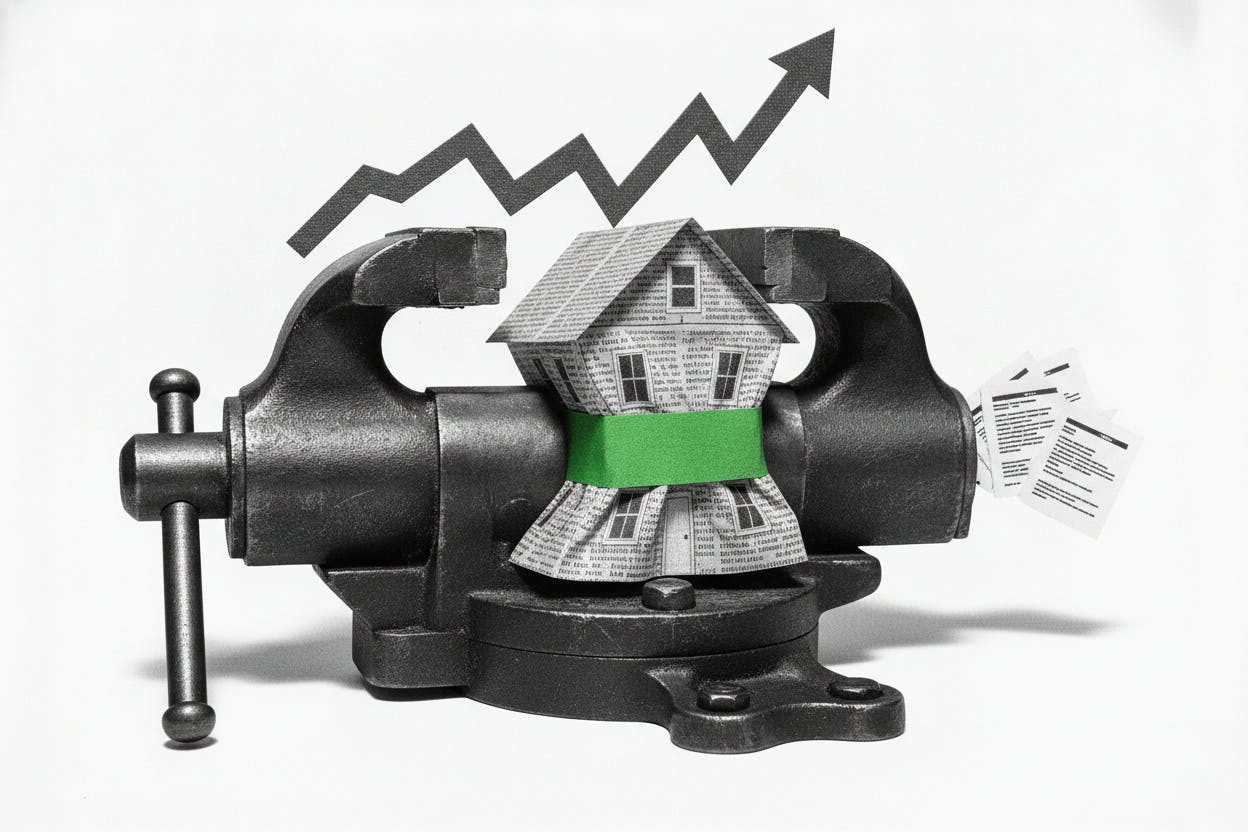
US mortgage demand cooled again last week, as higher borrowing costs continued to push buyers and homeowners to the sidelines. According to the Mortgage Bankers Association (MBA), applications fell 1% in the week ended August 21st, following a 0.4% decline the previous week. The average 30-year fixed mortgage rate inched up to 6.78%.
The back-to-back declines suggest the housing market is still losing momentum rather than settling into a stable range. MBA economist Joel Kan noted that rates have risen about 20 basis points over the past two months, a move that has discouraged many homeowners from refinancing. Indeed, refinance applications dropped 2% in the latest week.
Why mortgage rates are moving up
Mortgage rates don't move in lockstep with the Federal Reserve's benchmark interest rate, but they tend to track the yield on 10-year Treasury bonds. When investors expect higher inflation or stronger economic growth, bond yields rise, and mortgage rates follow. Over the past couple of months, a mix of resilient economic data and concerns about government borrowing have pushed long-term yields higher.
For everyday borrowers, the difference between a 6.5% and a 6.78% rate might seem small, but it adds up. On a $300,000 loan, a 28-basis-point increase translates into roughly $50 more per month in principal and interest. That can be enough to tip the scales for a family deciding whether to buy a home or refinance an existing one.
The housing market has been particularly sensitive to rate moves because home prices remain elevated in many parts of the country. Higher rates reduce purchasing power, meaning buyers can afford less house for the same monthly payment. That dynamic has kept many potential first-time buyers on the fence.
What this means for the broader economy
The housing sector is a key driver of economic activity, so a slowdown in mortgage demand can have ripple effects. Fewer home purchases mean less spending on furniture, appliances, and moving services. A drop in refinancing also means households have less extra cash to spend, since refinancing often lowers monthly payments.
That said, the overall economy has shown resilience. Stock markets have been edging higher recently, and other sectors are holding up. But if mortgage rates stay elevated, the housing market could remain a drag on growth.
Investors are also watching how the Fed responds. While the central bank doesn't directly set mortgage rates, its policy stance influences the broader interest-rate environment. If inflation continues to cool, the Fed may eventually cut its benchmark rate, which could help bring mortgage rates down. But that's not guaranteed, and the timing remains uncertain.
What it means for investors
For investors, the mortgage data is a useful gauge of consumer sentiment and housing market health. A sustained decline in applications could signal weaker home sales in the coming months, which might affect homebuilders, real estate investment trusts (REITs), and companies tied to home improvement.
However, it's important to remember that one week's data doesn't set a trend. The MBA's weekly survey is volatile and can be influenced by holidays, weather, and other temporary factors. Still, the fact that applications have now fallen for two straight weeks suggests the recent rate uptick is having a real impact.
For homeowners considering a refinance, the math is simple: if your current rate is significantly lower than today's 6.78%, refinancing may not make sense. But if you have a higher-rate loan from a few years ago, it might still be worth checking with a lender to see if you can save.
For prospective buyers, the advice is more nuanced. Waiting for rates to drop could mean facing more competition if the market heats up again. But buying at a higher rate locks in a larger monthly payment for years. There's no one-size-fits-all answer, and personal circumstances matter more than market forecasts.
The road ahead
Looking forward, investors will be watching upcoming economic data, especially inflation reports and jobs numbers, for clues about where rates are headed. If inflation stays sticky, rates could climb further, putting more pressure on the housing market. If inflation cools, rates might ease, giving buyers and refinancers a reason to return.
For now, the message from the latest MBA data is clear: higher rates are keeping many people on the sidelines. Whether that changes depends on the broader economic picture, which remains uncertain.