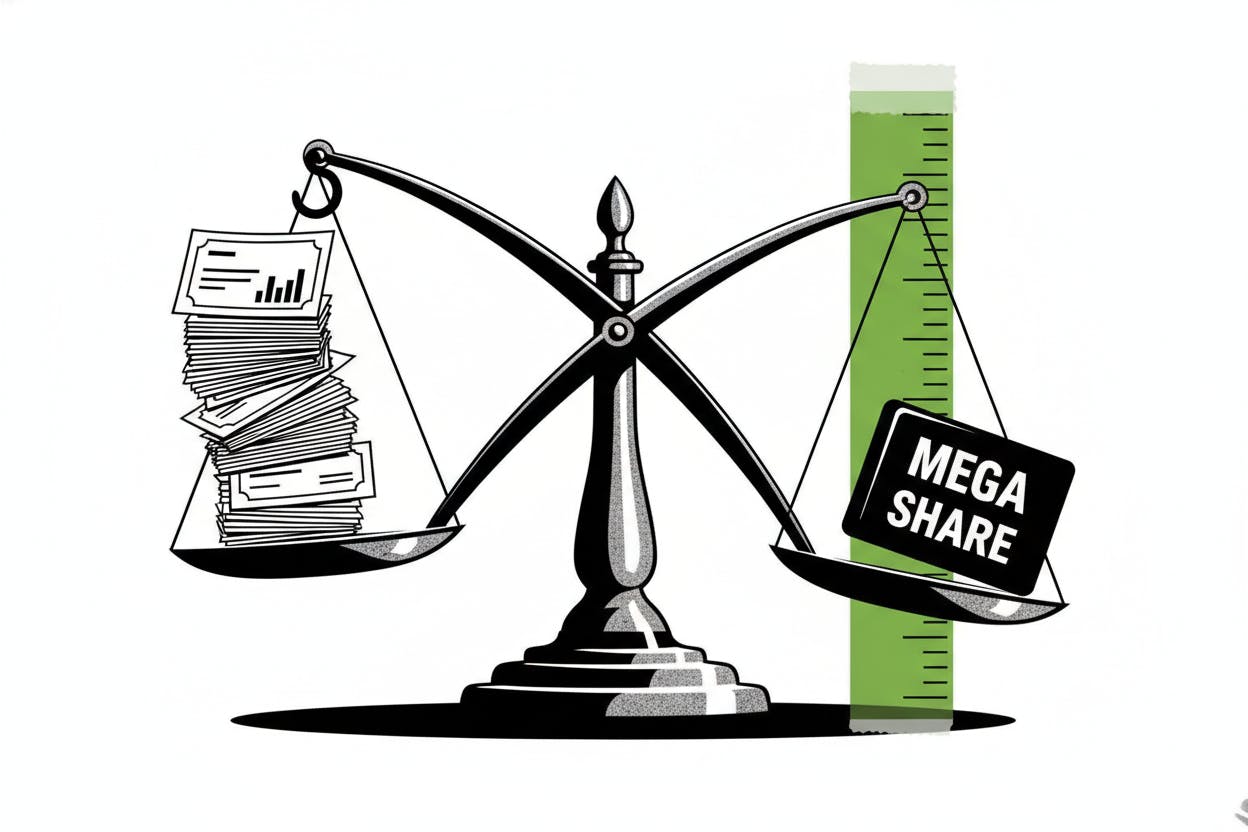
Chief executives at America's largest companies took home a record average of $22.8 million in 2025, a 21% jump from the prior year, according to new data from the AFL-CIO, the federation of labor unions. The figure marks the highest average since the group began tracking CEO pay in the 1990s, and it underscores a shift in how boards are structuring top-executive compensation.
The AFL-CIO points to a growing trend: compensation committees are increasingly citing Elon Musk's outsized Tesla pay package as a benchmark when proposing unusually large, one-off equity grants for other executives. These "mega-equity" plans award big blocks of stock if long-term performance targets are met, tying pay to results rather than annual bonuses or salary bumps.
What's driving the surge?
Big CEO packages are nothing new, but the shape is changing. Traditionally, executive pay has been a mix of salary, annual bonuses, and stock options that vest over a few years. Mega-equity plans are different: they are larger, longer-term, and often structured as a single, massive grant that pays out only if the company hits specific goals—such as stock price milestones or operational targets.
Musk's Tesla package, which was approved by shareholders and later upheld by a Delaware court, is the most prominent example. It was valued at tens of billions of dollars and tied entirely to Tesla's market value and operational milestones. While Musk's plan is extreme, boards are now using it as a reference point to justify their own mega-grants, arguing that these payouts are performance-based and align executives with shareholder interests.
Reuters reports that compensation committees are explicitly citing Musk's plan when they pitch these large, one-off awards. The logic: if Tesla can reward its CEO with a massive, performance-contingent package, other companies can do the same for their leaders—provided the targets are ambitious.
The debate over CEO pay
The AFL-CIO's data has reignited a long-running debate about income inequality and corporate governance. Critics argue that mega-packages are excessive, even when tied to performance, because they can dilute shareholder value and widen the gap between executives and ordinary workers. Supporters counter that such plans are necessary to attract and retain top talent, and that they only pay off if the company actually performs.
The 21% jump in average pay is notable because it outpaces the broader market's gains. The S&P 500 has risen over the past year, but not by that much, suggesting that boards are becoming more generous—or more willing to take big swings on performance-based rewards.
For everyday investors, the trend raises questions about how much of a company's profits are going to the top versus being reinvested or returned to shareholders. It also highlights the importance of understanding executive compensation when evaluating a stock. A company that grants a huge equity package may see its earnings per share diluted over time, even if the CEO delivers on targets.
What it means for investors
If you own shares in an S&P 500 company, you're indirectly paying for these packages. Mega-equity grants are typically issued as new shares, which can dilute existing shareholders' stakes. However, if the performance targets are met, the stock price may rise enough to offset that dilution—so the net effect depends on whether the CEO actually delivers.
Investors should also watch for "say-on-pay" votes, which give shareholders a non-binding voice on executive compensation. While these votes are rarely binding, a strong "no" can pressure boards to reconsider. The AFL-CIO's data is often used by activist investors and pension funds to push for changes.
Looking ahead, the trend toward mega-equity plans is likely to continue, especially as more companies adopt them. But it's not without risks. If a company sets targets that are too easy, executives can reap huge rewards without creating real value. If targets are too hard, the plan may fail to motivate—or the CEO may leave.
For now, the record $22.8 million average is a reminder that executive pay is climbing, and that the Musk effect is reshaping norms across corporate America. As one compensation consultant put it, "Musk has reset the ceiling." Whether that's good for investors depends on whether the pay is truly tied to performance—and whether the performance is sustainable.