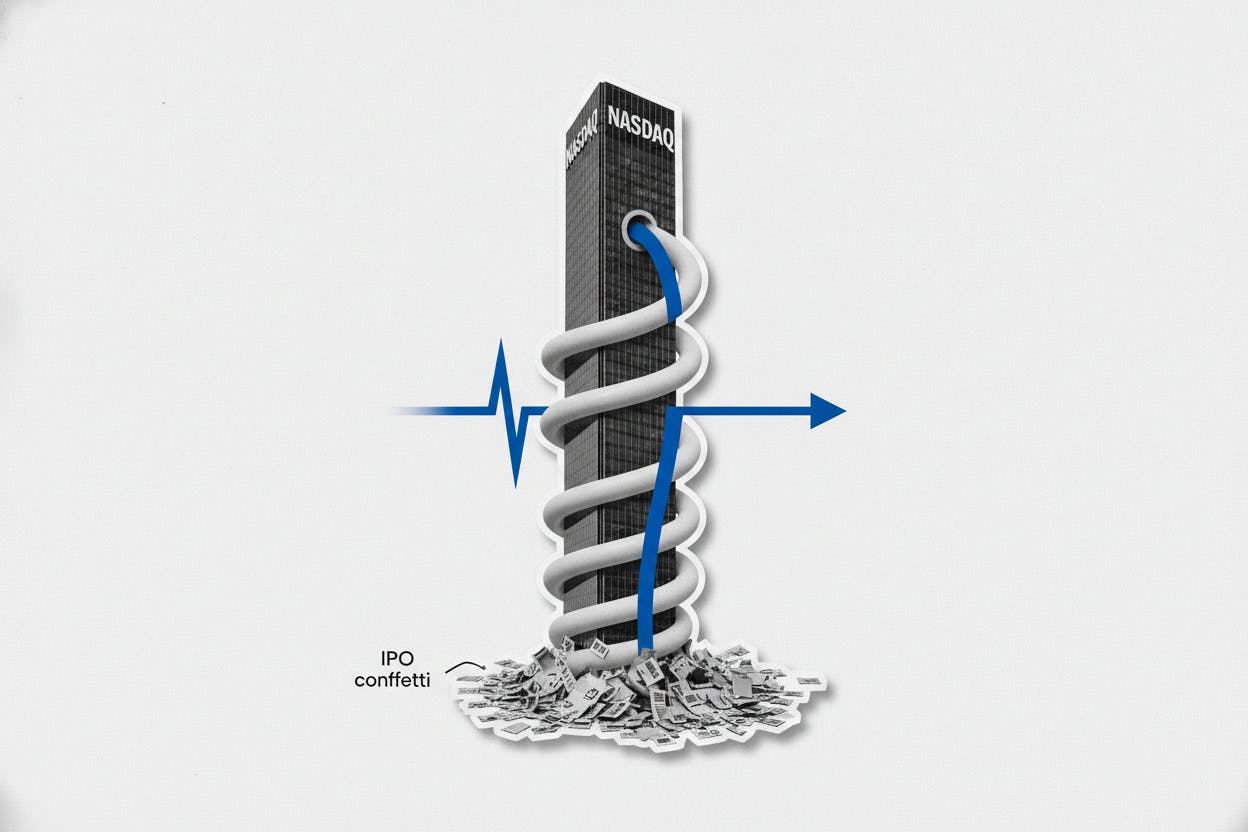
Nasdaq reported second-quarter net income of $507 million, up from the same period last year, as a wave of high-profile initial public offerings and turbulent markets kept traders active on its exchanges. The exchange operator also benefited from sustained demand for its market-data and analytics services, which provide real-time pricing and trading intelligence to financial institutions worldwide.
IPO Boom and Market Volatility Drive Revenue
The company's earnings were lifted by a busy quarter for new listings, including several large IPOs that generated listing fees and trading commissions. Volatile markets, driven by shifting interest-rate expectations and geopolitical tensions, encouraged more frequent trading by institutional and retail investors alike, boosting transaction-based revenue.
Nasdaq's market-services segment, which includes its stock exchange and related trading infrastructure, saw higher volumes as uncertainty over inflation and central bank policy kept markets on edge. The company also reported growth in its solutions business, which provides technology and data products to exchanges, brokers, and asset managers.
Data Services Remain a Key Profit Driver
Beyond trading, Nasdaq's market-data business continued to perform well. Financial firms rely on the exchange's proprietary data feeds to price securities, manage risk, and execute algorithmic trading strategies. This recurring revenue stream has become increasingly important for exchange operators, as it is less tied to day-to-day market activity and provides a stable earnings base.
The strong results echo trends seen at other exchange operators and financial infrastructure firms, which have benefited from elevated market activity and growing demand for data and analytics. For context, BNP Paribas recently beat profit forecasts on record equity trading, highlighting the broader strength in trading-related revenue across the financial sector.
What It Means for Investors
Nasdaq's earnings report underscores how exchange operators can profit from market uncertainty. When volatility rises, trading volumes typically increase, generating more fee income for exchanges. At the same time, the growing reliance on data services provides a more predictable revenue stream that can cushion downturns in trading activity.
For everyday investors, the results offer a window into the health of the broader capital markets. A busy IPO pipeline suggests that companies are confident enough in market conditions to go public, while strong trading volumes indicate active participation by both institutional and retail investors. However, investors should be aware that exchange earnings can be cyclical—if market volatility subsides or IPO activity slows, revenue from those sources could decline.
Nasdaq's performance also highlights the importance of diversification within the exchange business model. The company's mix of transaction-based and subscription-based revenue helps it navigate different market environments. Other firms in the financial infrastructure space, such as Jupiter Fund Management, have also benefited from increased market activity and investor inflows.
Broader Market Context
The second quarter saw a number of large IPOs, including several in the technology and healthcare sectors, which helped drive listing fees for Nasdaq. At the same time, markets were buffeted by shifting expectations for interest rates, as the Federal Reserve signaled it would keep rates higher for longer to combat inflation. This uncertainty kept traders on edge and boosted volumes.
Looking ahead, Nasdaq's performance will likely continue to be influenced by the pace of IPOs, the direction of interest rates, and overall market volatility. The company is also investing in new technologies, including artificial intelligence and cloud-based data services, to expand its offerings and attract new customers.
For investors tracking the broader market, Nasdaq's results provide a useful barometer of activity in the financial system. When exchanges are busy, it often signals that capital is flowing and that investors are actively positioning their portfolios. Conversely, a slowdown in trading or listings could indicate caution or uncertainty.
In summary, Nasdaq's $507 million quarterly profit reflects a favorable environment for exchange operators, driven by strong IPO activity, volatile markets, and robust demand for data services. While these tailwinds may not persist indefinitely, the company's diversified business model positions it to weather shifts in market conditions.