Spanish utility Naturgy has lifted its full-year earnings outlook after its regulated power and gas distribution networks delivered strong first-half results, even as softer conditions in energy markets weighed on other parts of the business.
The company now expects full-year EBITDA to exceed €5.5 billion, up from its previous guidance. The revision comes after first-half EBITDA rose 4.5% to €2.98 billion, driven by a 13.2% jump in earnings from its distribution networks.
Why Regulated Networks Matter
Naturgy is one of Spain's largest gas and electricity utilities, with operations spanning generation, supply and distribution. Its distribution networks — the pipelines and power lines that deliver energy to homes and businesses — are regulated businesses. That means the returns they earn are largely set by regulators, not by volatile energy prices or market competition.
In the first half, those regulated returns got a boost. In Spain, higher regulator-set payments for electricity grids lifted earnings. In Latin America, where Naturgy also operates, tariff updates in countries such as Chile and Panama added further support. Together, those factors pushed distribution network EBITDA sharply higher.
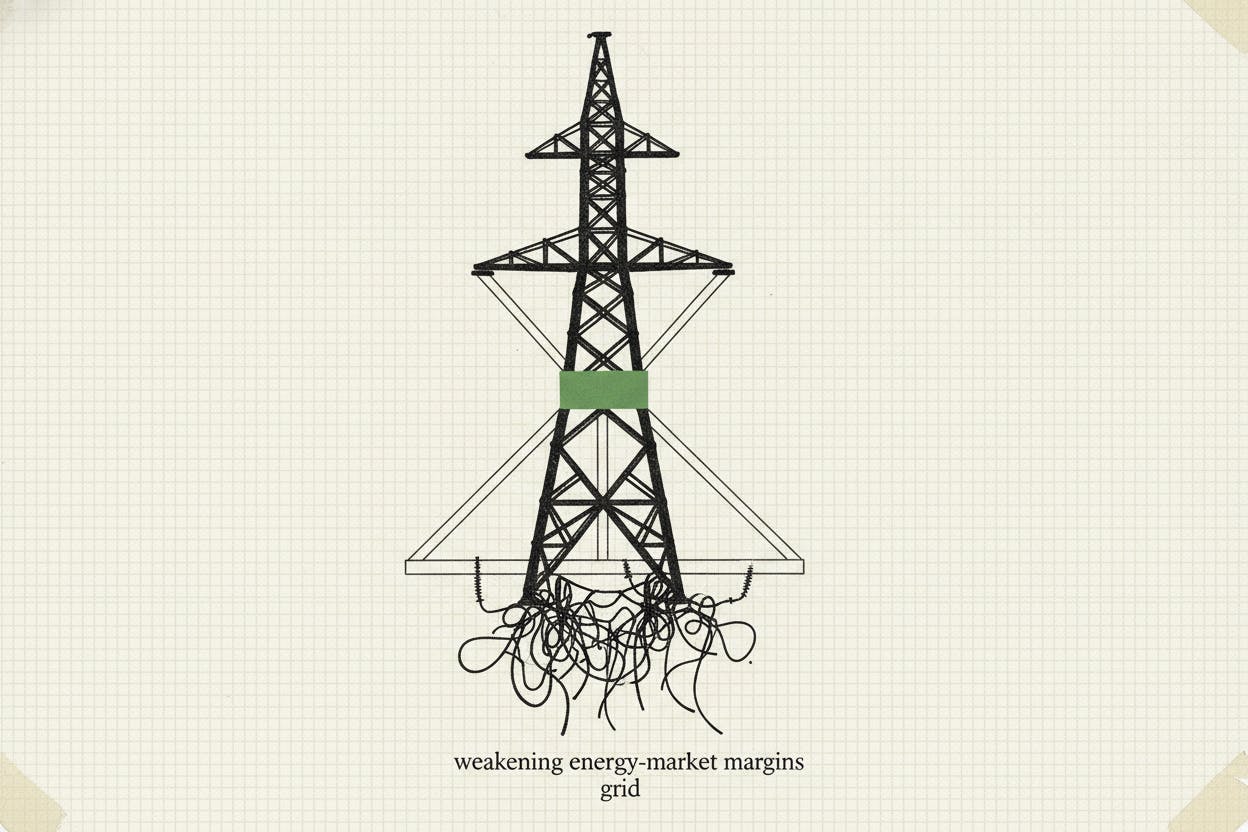
That stability is a key reason Naturgy could raise its full-year forecast even as energy-market margins softened. When wholesale power and gas prices fall or become less predictable, unregulated parts of a utility's business — like energy trading or supply — can suffer. But regulated networks keep generating steady, predictable income.
What It Means for Investors
For everyday investors, Naturgy's update highlights a broader lesson about utility stocks. Companies with large regulated asset bases — such as power grids, gas pipelines or water networks — tend to offer more stable earnings than those that rely purely on selling energy into competitive markets. That stability can make them attractive holdings in uncertain economic times, especially when interest rates are high and growth stocks are under pressure.
Naturgy also guided for at least 3% growth in underlying profit for the full year, suggesting management sees the regulated networks continuing to deliver. The company's ability to raise its EBITDA forecast while maintaining that profit growth target signals confidence in the resilience of its business model.
Investors should note, however, that regulated returns are not guaranteed forever. Regulators can change the formulas that determine how much utilities can earn, and political pressure to keep energy bills low can squeeze those returns. Naturgy's Latin American operations also carry currency and political risk, as seen in past volatility in countries like Argentina.
Broader Market Context
Naturgy's results come at a time when energy markets globally have been under pressure. After a period of high volatility following the invasion of Ukraine, European gas prices have fallen back, squeezing margins for utilities that had benefited from the spike. Meanwhile, interest rates have risen sharply, increasing the cost of debt for capital-intensive businesses like utilities.
In that environment, companies with strong regulated networks have been better positioned than those that rely on merchant power generation or trading. Naturgy's update echoes a trend seen across the European utility sector, where grid operators have often outperformed pure generators.
For investors tracking the sector, the key question is whether regulators will continue to support network investment. Many European governments are pushing for massive spending on grid upgrades to support the energy transition, which could provide a tailwind for companies like Naturgy. But higher borrowing costs and political pressure on bills could offset some of that benefit.
Naturgy's revised guidance suggests, for now, the balance is working in its favour.