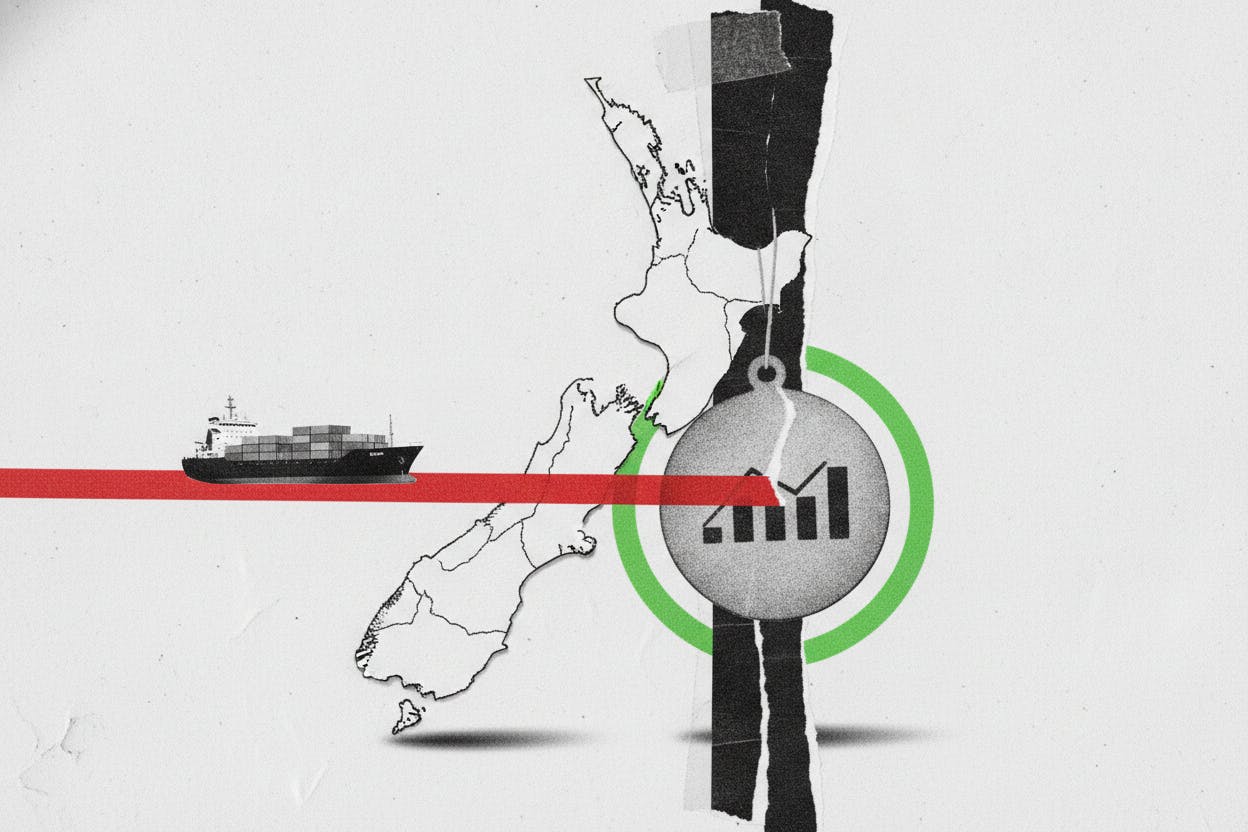
New Zealand stocks edged lower on Tuesday as investors juggled two unsettling developments: a renewed threat to Middle East shipping from Iran-aligned Houthi forces and a hotter-than-expected local inflation reading that complicates the central bank's next move.
The S&P/NZX 50 index fell 0.29%, reflecting a cautious mood that has spread across global markets. The decline came as traders absorbed news that Houthi militants have threatened to impose a naval blockade on Saudi Arabia, a move that could disrupt one of the world's most critical energy shipping lanes and push oil prices higher. At the same time, New Zealand's June-quarter inflation came in at 4.1%, well above the Reserve Bank's target range and signaling that price pressures remain stubbornly entrenched.
Geopolitical jitters hit trade-sensitive economy
The Houthi threat, reported by Reuters, adds a fresh layer of uncertainty to global energy markets. The group, which controls large parts of Yemen, has previously targeted Saudi oil infrastructure and shipping in the Red Sea. A blockade would risk choking off crude flows through the Bab el-Mandeb strait, a chokepoint for oil tankers heading to Europe and Asia.
For a small, open economy like New Zealand, the stakes are high. The country relies heavily on imported fuel and exports goods like dairy, meat, and timber. Any disruption to global shipping lanes can quickly translate into higher freight costs and fuel prices, squeezing margins for exporters and raising costs for consumers. That dynamic is especially painful when inflation is already running hot.
Oil prices have already been volatile in recent weeks, with Brent crude hovering near $90 a barrel amid a series of supply scares. The Houthi threat adds to that pressure, and markets are watching closely for any signs of escalation. If the situation worsens, it could push energy costs even higher, feeding through to broader inflation and potentially slowing economic growth.
Inflation stays sticky at 4.1%
On the domestic front, the June-quarter inflation print of 4.1% was a reminder that the battle against rising prices is far from over. While that figure is down from the peaks of 2022 and 2023, it remains well above the Reserve Bank of New Zealand's (RBNZ) target of 1-3%. The central bank has held its official cash rate at 5.5% since May 2023, and the latest data suggests it may need to keep rates higher for longer to bring inflation fully under control.
Higher interest rates have already cooled the housing market and dampened consumer spending, but the inflation report shows that price pressures are still bubbling beneath the surface. Fuel costs, in particular, have been a major driver, and any further spike in oil prices could make the RBNZ's job even harder.
For everyday investors, the combination of geopolitical risk and sticky inflation creates a tricky environment. Bond yields have been climbing as markets price in a higher-for-longer rate outlook, and that has weighed on growth-oriented stocks. Defensive sectors like utilities and healthcare have held up better, but the overall mood is cautious.
What it means for investors
The dual headwinds of Middle East tensions and persistent inflation are likely to keep New Zealand stocks under pressure in the near term. Trade-sensitive sectors such as transportation, energy, and agriculture could face the most volatility, as any disruption to shipping or fuel costs would hit them directly.
Investors should also keep an eye on the RBNZ's next policy meeting. If inflation remains stubborn, the central bank may signal that rate cuts are further away than previously expected. That would be a headwind for stocks that rely on cheap borrowing, such as real estate and consumer discretionary names.
On the flip side, higher oil prices could benefit energy producers, though New Zealand's energy sector is relatively small compared to other markets. Global investors are also watching the situation in the Middle East closely, and any de-escalation could provide a relief rally.
For now, the message from the market is clear: uncertainty is back, and investors are pricing in a wider range of outcomes. Staying diversified and focusing on quality companies with strong balance sheets remains a sensible approach in this environment.



