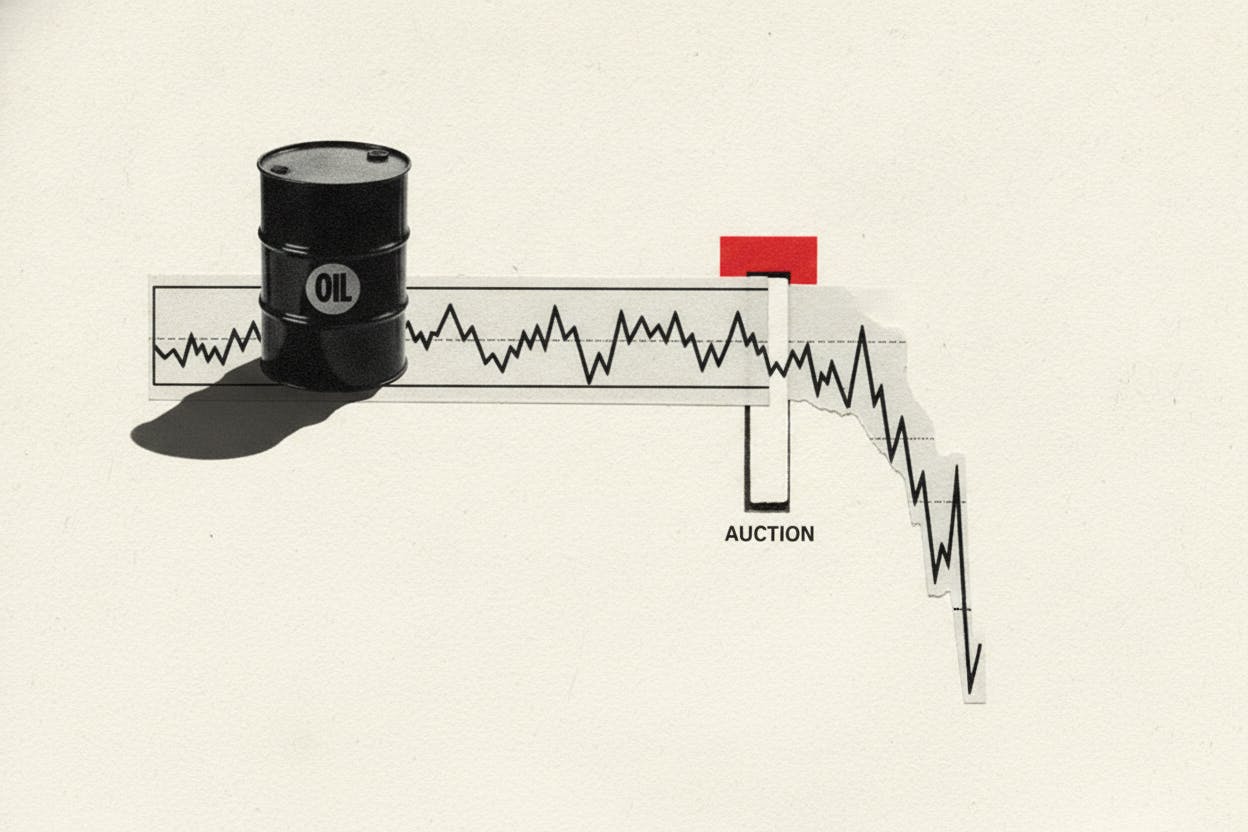
India's benchmark Nifty 50 index had a turbulent Tuesday, swinging from a modest decline to a much sharper drop and back again, as the new closing auction mechanism combined with rising oil prices to create an unusually messy expiry day.
The index was already sliding with Brent crude trading near $100 a barrel, but the real drama came in the final minutes. The closing auction, which now sets the official closing price, briefly indicated a 1.8% drop before the index settled 0.61% lower. That's a stark contrast to the 0.58% decline seen earlier in the session.
What is the closing auction?
The National Stock Exchange introduced the closing auction session (CAS) on August 3rd. In a closing auction, buy and sell orders are collected over a short window—typically the last few minutes of trading—and then matched at a single price that clears the most orders. This price becomes the official closing price for the day.
Before this change, the closing price was simply the last traded price, which could be influenced by a single large order. The auction was designed to make closing prices more transparent and less prone to manipulation. However, it has also introduced new dynamics, especially on expiry days when options and futures contracts settle.
On expiry days, traders often rush to close or roll over positions, leading to heavy volume in the final minutes. With the auction now in play, that activity is concentrated into a shorter window, and if participation is thin—meaning fewer orders are placed—the auction price can swing more dramatically than the regular session would suggest.
Oil's role in the volatility
Adding to the pressure was oil. Brent crude rose 1.4% to $98.4 a barrel after Yemen's Iran-aligned Houthi forces said they attacked Saudi energy facilities. For India, a major oil importer, higher crude prices mean higher import costs, which can widen the trade deficit and put upward pressure on inflation. That, in turn, complicates the central bank's policy decisions, as it balances supporting growth against controlling prices.
The oil spike was a key reason the Nifty was already in negative territory. But the closing auction's thin participation amplified the move, turning a routine decline into a brief scare.
What it means for investors
For everyday investors, the takeaway is that closing prices on expiry days can be more volatile than usual. The auction mechanism is still new, and market participants are adjusting. Thin participation can lead to larger price swings, which may not reflect the true value of the index or individual stocks.
This is not the first time the auction has caused confusion. Options traders have already seen chaotic moves, and turnover has dropped as participants adapt. The auction also interacts with other events, such as MSCI rebalancing, which can cause large flows at the close.
Investors should be cautious about reading too much into the final minutes of trading on expiry days. The indicative drop of 1.8% was not the final outcome, and the index closed much closer to its earlier levels. This suggests that the auction's price discovery is still evolving, and that thin liquidity can exaggerate moves.
For those with long-term portfolios, these short-term swings are unlikely to matter much. But for traders who use closing prices for settlement or benchmarking, it's worth being aware of the added volatility.
Looking ahead
The NSE may need to tweak the auction rules if volatility persists, but for now, investors should expect more of the same on expiry days. Oil prices remain a wildcard, and any further escalation in the Middle East could keep crude elevated, adding to India's import bill and pressuring the rupee.
As the market digests these changes, the key is to stay informed and not overreact to intraday swings. The Nifty's close of 0.61% lower is a far cry from the 1.8% drop the auction briefly suggested, and that gap is a reminder that the closing auction is still finding its footing.



