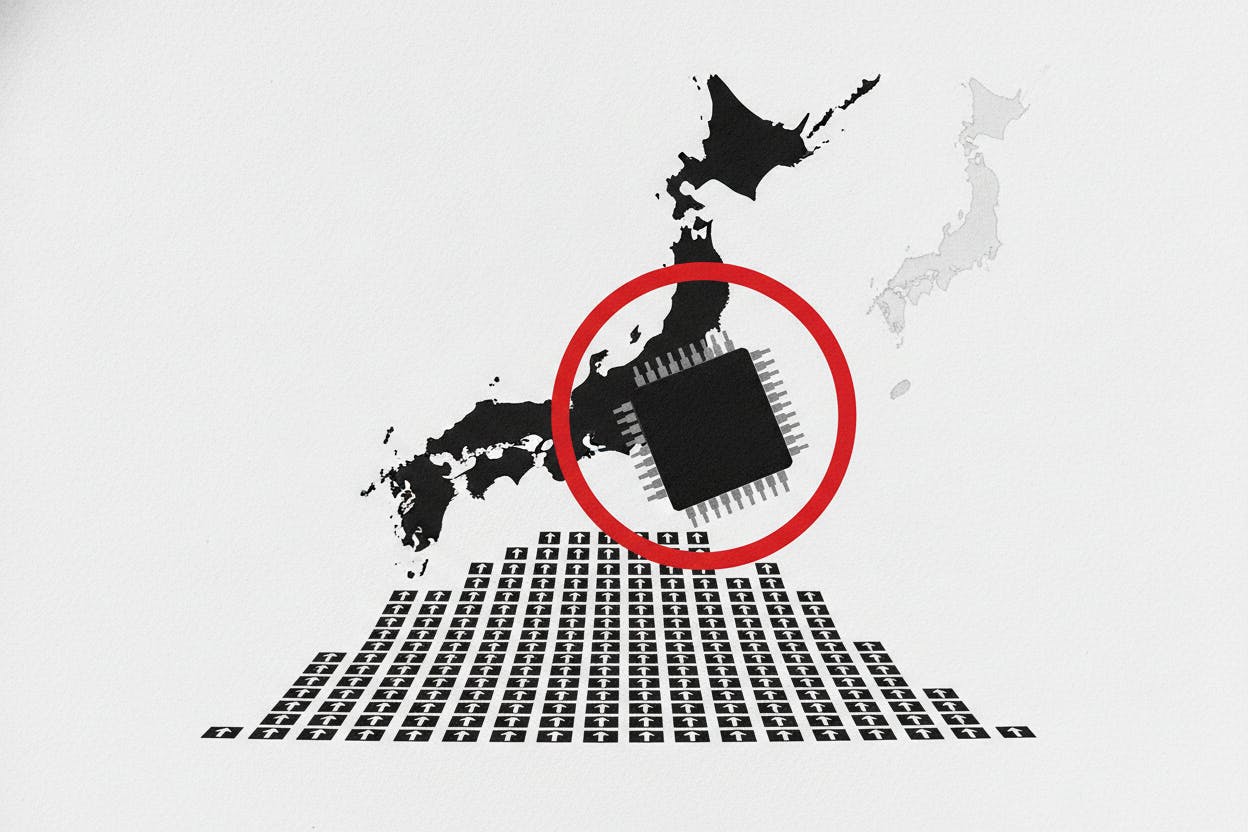
Japan's benchmark Nikkei 225 index slipped 1.35% on Tuesday, pulled lower by a selloff in semiconductor stocks that rippled from South Korea. The decline came after Samsung Electronics, the world's largest memory chip maker, saw its shares drop more than 5% despite forecasting a massive jump in quarterly operating profit.
The move highlights how the Nikkei, which has a heavy weighting in technology and chip-related companies, can be vulnerable when sentiment turns against the semiconductor sector. The broader TOPIX index, which includes a wider range of industries, held up much better, supported by gains in banks and other so-called value stocks.
What Happened in the Chip Sector
Samsung Electronics said it expects a nearly 19-fold surge in operating profit for the second quarter, driven by strong demand for memory chips used in artificial intelligence applications. But that guidance fell short of what some investors had already priced in, leading to a sharp selloff in the stock.
The disappointment quickly spread across the region. In Japan, memory chip maker Kioxia plunged 10.86%, while chip-equipment makers Advantest and Tokyo Electron fell 0.64% and 1.85%, respectively. These companies are key suppliers to the global semiconductor industry, and their fortunes are closely tied to demand for chips used in everything from smartphones to data centers.
For context, the semiconductor sector has been a major driver of Japanese stock market gains over the past year, as investors bet on a sustained boom in AI-related spending. But the sector is also notoriously cyclical, and even good news can sometimes trigger profit-taking if expectations have run too high.
Why the TOPIX Held Up Better
The TOPIX index, which tracks all stocks listed on the Tokyo Stock Exchange's first section, fell only modestly compared with the Nikkei. That's because it includes a broader mix of companies, including banks, insurers, and other financial firms that have been benefiting from rising interest rates in Japan.
Japan's central bank has been gradually tightening monetary policy, and higher rates tend to boost bank profits by widening the spread between what they pay on deposits and earn on loans. That has made financial stocks a popular alternative to the tech-heavy names that dominate the Nikkei.
Investors have also been rotating into value stocks—companies that trade at relatively low prices compared with their earnings or book value—as the economic outlook improves. This rotation has helped cushion the broader market against sharp declines in any single sector.
What It Means for Investors
For everyday investors, Tuesday's action is a reminder that even strong earnings reports can sometimes disappoint if the market's expectations have become too optimistic. Samsung's profit surge was impressive by any measure, but it wasn't enough to satisfy investors who had already baked in an even bigger number.
This dynamic is especially common in the semiconductor industry, where demand can swing wildly based on trends in AI, cloud computing, and consumer electronics. When a company like Samsung issues guidance, investors are not just looking at the headline number—they are parsing every detail for clues about future growth.
The divergence between the Nikkei and the TOPIX also underscores the importance of diversification. A portfolio that is heavily concentrated in tech stocks may see big gains during a rally, but it can also suffer sharp losses when sentiment turns. Including exposure to other sectors, such as financials or industrials, can help smooth out the ride.
Looking ahead, investors will be watching for further earnings reports from chip companies, as well as any updates on trade tensions or export controls that could affect the industry. The broader market will also be keeping an eye on Japan's wage growth and inflation data, which could influence the central bank's next policy moves.
For more on related market moves, see our coverage of chip stocks powering the Nasdaq higher and Japan's slowing real wage growth.