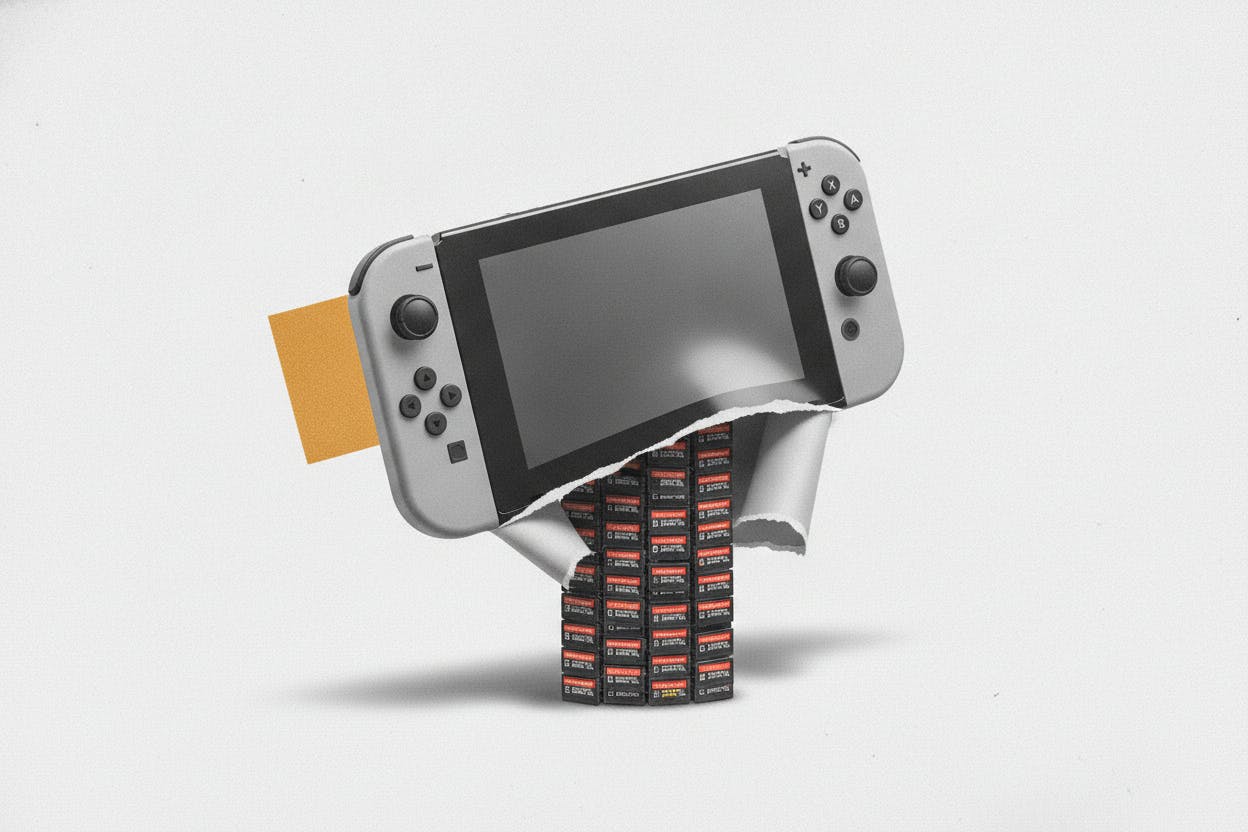
Nintendo's latest quarterly results show that a video game company can still post higher profits even when its flagship hardware is losing momentum. For the three months ended June 30, the Kyoto-based company reported profit attributable to owners of 147.4 billion yen ($1.0 billion), up from 96 billion yen a year earlier. That gain came despite a 34.4% year-on-year drop in Switch 2 unit sales, which fell to 3.8 million units.
Hardware slump, software strength
The Switch 2, which launched in June 2025, sold 3.8 million units in the quarter, while the original Switch added 660,000 units. Combined hardware sales were down sharply, and net sales fell 9.5% to 517.8 billion yen. But the company's software business picked up the slack: Switch 2 game unit sales rose 9.2% to 9.5 million, and Switch game unit sales climbed 38.6% to 33.8 million.
That shift matters because games typically carry much higher profit margins than consoles. Hardware sales often generate thin margins, while software—especially digital downloads and add-on content—can be highly profitable. So even with fewer consoles moving, a strong lineup of games can keep the bottom line healthy.
Tariff refund and unchanged forecast
Nintendo also benefited from a one-time refund related to US tariffs, which helped offset the hardware decline. The company kept its full-year forecast unchanged, suggesting management sees the current quarter's performance as broadly in line with expectations.
For everyday investors, the key takeaway is that Nintendo's business is becoming less dependent on selling new consoles and more reliant on the games people play on them. That's a common evolution for gaming companies as a platform matures—after the initial rush of hardware purchases, the focus shifts to keeping players engaged and spending on software.
What it means for investors
Nintendo's results echo a broader theme in the gaming industry: the real money often comes from software, not hardware. Companies like SoftBank and Kokusai Electric have also shown how profits can diverge from headline sales figures, though for very different reasons.
For investors, the important thing is to look beyond the headline sales number. A drop in hardware sales can be alarming, but if software sales are growing and margins are expanding, the company may still be in good shape. Nintendo's decision to keep its full-year guidance unchanged suggests that management is comfortable with the current trajectory.
That said, the reliance on a US tariff refund is worth noting. That's a one-time benefit, not a recurring source of income. Investors should watch whether Nintendo can sustain its profit growth without such tailwinds in the coming quarters.
Looking ahead
The next big test for Nintendo will be the holiday season, when the Switch 2's game lineup typically gets a major boost. The company's ability to convert its installed base of consoles into software sales will be crucial. If the trend of rising software sales continues, Nintendo could keep delivering solid profits even as hardware sales plateau.
For now, the message from Nintendo's latest quarter is clear: a company can win even when its consoles slow down, as long as the games keep selling.