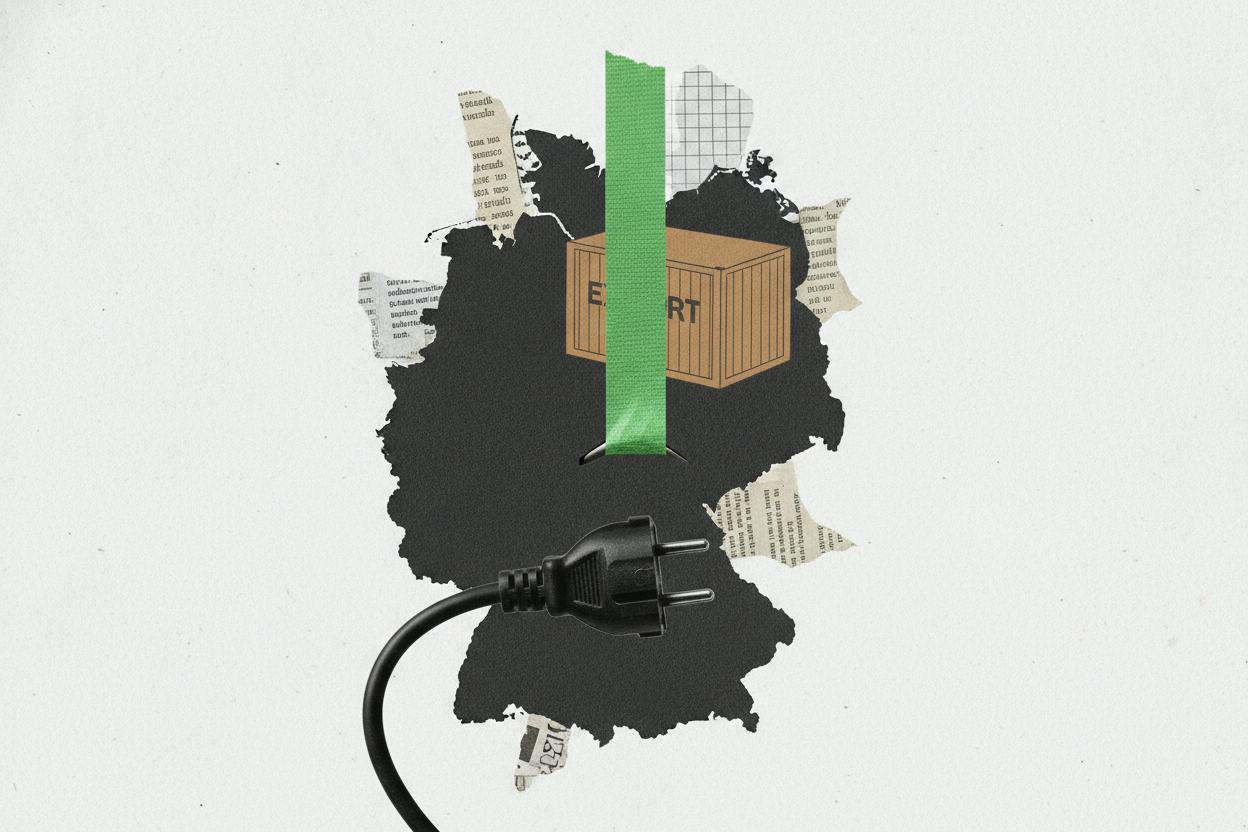
Germany's economic outlook for 2026 just got a significant boost. The German Economic Institute (IW), a prominent research group, raised its growth forecast to nearly 1.2% from a previous 0.4% projection made in May. The upgrade, reported by Reuters on Sunday, reflects a stronger-than-expected first half of the year, driven by robust exports and increased government spending.
For everyday investors, this is a notable shift for Europe's largest economy, which has struggled with sluggish growth in recent years. A healthier German economy can have ripple effects across the continent and beyond, influencing corporate earnings, stock markets, and even the value of the euro.
What's behind the upgrade?
The IW's revised forecast points to two main engines: exports and government spending. German manufacturers, known for their engineering and automotive prowess, have seen demand pick up from global markets. At the same time, public sector outlays—whether on infrastructure, defense, or social programs—have provided a domestic stimulus.
This combination helped the economy grow faster than expected in the first half of 2026. The IW's May forecast of 0.4% now looks overly cautious, and the institute has adjusted its numbers to reflect the improved momentum.
However, the IW is not entirely optimistic about the rest of the year. The institute warns that high energy prices and weak investment could cool things down later in 2026. Energy costs remain a persistent challenge for German industry, which is energy-intensive. Meanwhile, businesses appear hesitant to commit to new capital spending, possibly due to uncertainty about future demand or policy direction.
Context: Germany's economic struggles
Germany has been the laggard among major advanced economies in recent years. The country faced a manufacturing slump, an energy crisis triggered by the loss of Russian gas supplies, and a slowdown in key export markets like China. The China slump has hit German automakers particularly hard, as seen in Volkswagen's recent profit warning.
Despite these headwinds, the IW's upgrade suggests that the worst may be over. But the institute's caution about the second half of 2026 highlights the fragility of the recovery. High energy prices, which have been a drag on industrial competitiveness, are not expected to ease significantly. And weak investment—both in equipment and construction—could limit the economy's ability to sustain growth.
What it means for investors
For investors, the revised forecast is a mixed signal. On one hand, a stronger German economy could boost corporate profits, particularly for exporters and industrial firms. It might also support European stock markets, as Germany is a heavyweight in indices like the DAX and the broader Euro Stoxx 50.
On the other hand, the IW's warning about energy prices and investment suggests that the recovery could lose steam. Investors should watch for signs of weakening in the second half, such as declining factory orders or a slowdown in export growth. The energy sector remains a wildcard, as gas price outlook can shift quickly, affecting both costs for manufacturers and profits for energy companies.
For those with exposure to European equities, the upgrade is a positive development, but it's not a reason to become complacent. The German economy still faces structural challenges, including an aging workforce, bureaucratic hurdles, and the transition to greener energy. These long-term issues could cap growth even if the short-term outlook improves.
Broader economic backdrop
The IW's upgrade comes at a time when the European Central Bank (ECB) is navigating its own policy path. With inflation moderating but still above target, the ECB has been cautious about cutting interest rates. A stronger German economy could give the ECB more room to consider rate cuts, which would be a tailwind for stocks and bonds. However, if energy prices spike again, inflation could reignite, forcing the ECB to keep rates higher for longer.
Investors should also consider the global context. The US economy has been resilient, but other regions, like China, are struggling. Germany's export sector is sensitive to global demand, so any slowdown in major trading partners could undermine the IW's forecast. The FTSE upgrade for Vietnam is a reminder that emerging markets are attracting attention, but Germany's fate is more tied to developed economies.
Bottom line
The IW's upgrade to nearly 1.2% growth for 2026 is a welcome sign for Germany, but it comes with caveats. The first half of the year was strong, but the second half could be more challenging due to energy costs and weak investment. For investors, this means staying alert to economic data releases and corporate earnings reports that could signal whether the momentum is sustainable.
As always, it's important to remember that forecasts are just estimates. The IW's own revision shows how quickly outlooks can change. Diversification and a long-term perspective remain key strategies for navigating economic uncertainty.