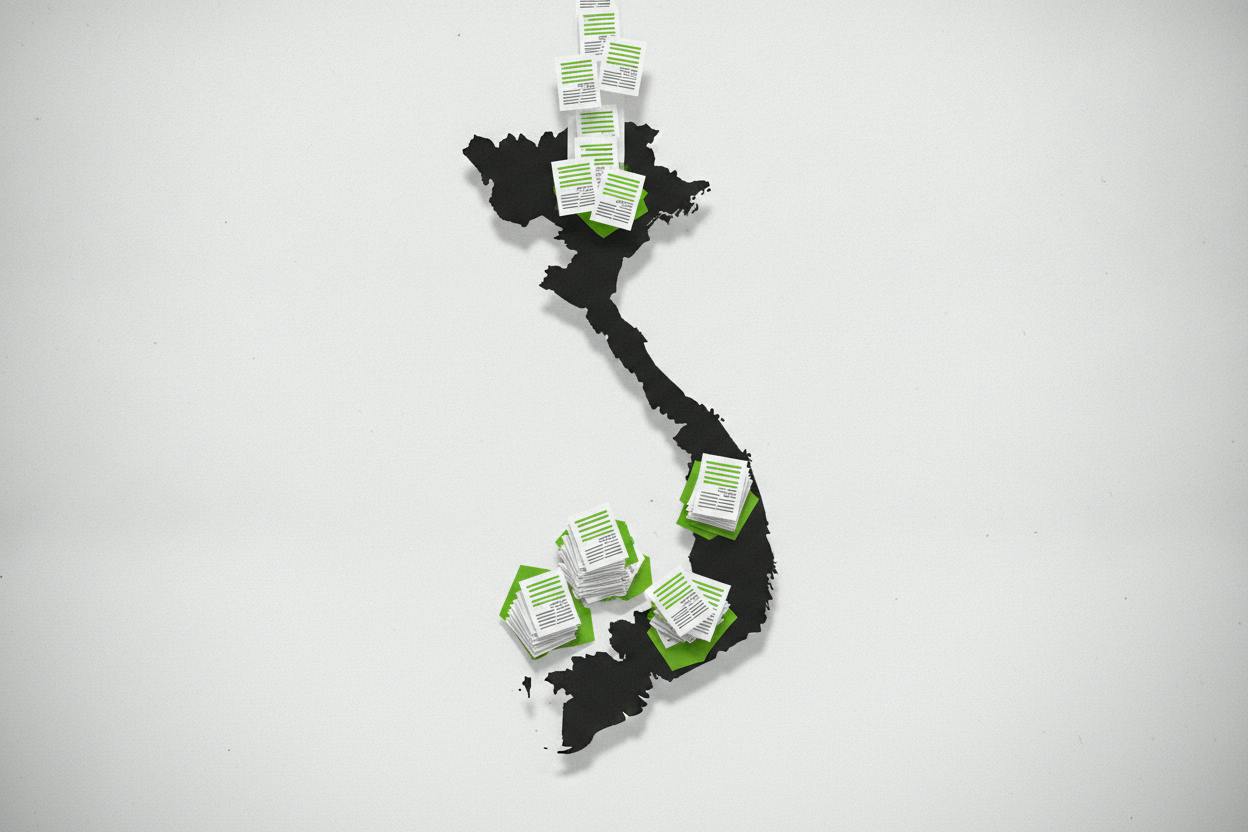
Foreign investors are circling back to Vietnamese equities ahead of a long-awaited index change. FTSE Russell is expected to announce on Monday that it will reclassify Vietnam from a frontier market to a secondary emerging market, a status that could eventually channel billions of dollars into the country's stock exchange.
The index provider has previously estimated that the upgrade could draw up to $6 billion into Vietnamese shares over time. That figure reflects the buying that typically follows when a country joins a widely tracked benchmark, as fund managers who mirror those indexes are compelled—or at least strongly encouraged—to hold the newly included stocks.
What an index upgrade means
Index providers like FTSE Russell and MSCI classify countries into tiers—developed, emerging, and frontier—based on factors such as market size, liquidity, and accessibility for foreign investors. Vietnam has long been considered a frontier market, a category that includes smaller, less developed exchanges. An upgrade to emerging market status is a signal that the country's financial infrastructure has matured enough to handle larger, more sophisticated investment flows.
For everyday investors, the practical effect is indirect but real. When a country is added to an emerging market index, global funds that track those benchmarks—such as exchange-traded funds (ETFs) and mutual funds—must buy shares of the newly included companies. That demand can lift stock prices and improve liquidity, which benefits anyone already holding those stocks or investing in funds with exposure to the region.
The upgrade is not a single event, however. FTSE Russell has said the transition will occur in four stages through 2027, meaning the influx of capital is designed to arrive gradually rather than in one sudden wave. This staggered approach helps avoid market disruption and gives fund managers time to adjust their portfolios.
Why investors are taking another look
The prospect of index-driven buying has already sparked renewed interest in Vietnamese stocks. Foreign investors have been returning to the market in recent weeks, positioning themselves ahead of the official reclassification. The buying is partly "calendar-driven," as investors anticipate the specific dates when index changes will take effect, rather than making broad bets on the country's economic fundamentals.
Vietnam's stock market has grown rapidly over the past decade, driven by a young population, a manufacturing boom, and increasing integration into global supply chains. The country has also benefited from companies shifting production away from China, a trend that has accelerated in recent years. For global investors, Vietnam offers exposure to a fast-growing economy that is still relatively under-owned compared to larger emerging markets.
Still, the upgrade is not without risks. Vietnam's market has faced challenges, including limited foreign ownership caps in some sectors and occasional regulatory hurdles. These issues have historically kept some global funds on the sidelines, and they could temper the scale of inflows even after the upgrade.
What it means for investors
For investors who already hold Vietnamese stocks or funds with Vietnamese exposure, the upgrade could provide a tailwind. The gradual nature of the transition means that buying pressure will be spread out, which could support prices over the next few years rather than causing a short-term spike.
For those considering new investments, the key takeaway is that index upgrades are a process, not a one-day event. The $6 billion estimate is a long-term projection, not a guaranteed windfall. Investors should also be aware that the upgrade may already be partially priced in, as foreign money has been flowing into the market in anticipation of the announcement.
The broader context matters too. Vietnam's upgrade comes at a time when global investors are reassessing their exposure to emerging markets, with many central banks, including the U.S. Federal Reserve, signaling a shift in monetary policy. As rate expectations change, capital flows to emerging markets can be volatile, and Vietnam will not be immune to those swings.
For now, the FTSE Russell decision is a milestone for Vietnam's financial development. It signals that the country has taken meaningful steps to open its markets to foreign capital, even if the full benefits will take years to materialize. As the transition unfolds, investors will be watching closely to see whether the promised inflows actually arrive—and whether Vietnam can build on its momentum to attract even more international interest.