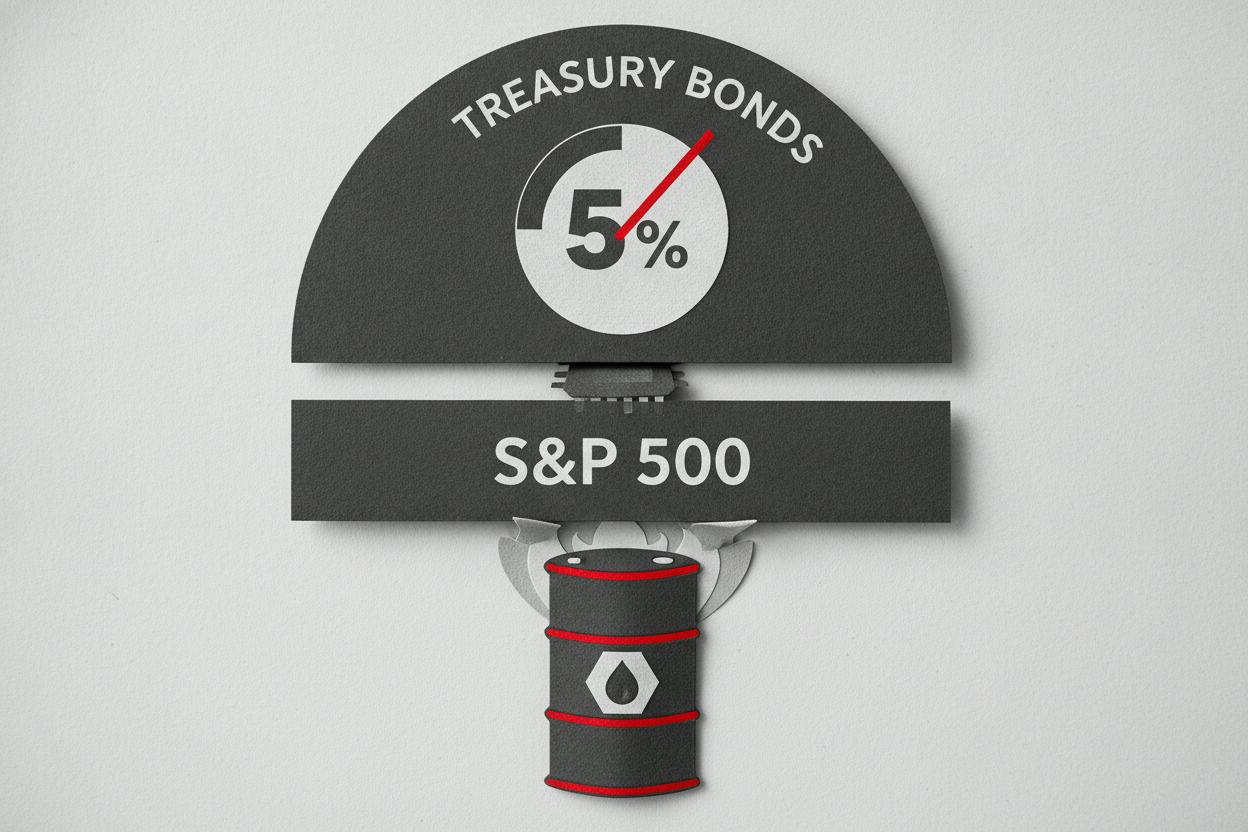
US stocks are heading into next week facing a three-way test: 10-year Treasury yields near 5%, oil around $100 a barrel, and renewed debate over whether AI development should slow. The S&P 500 sits about 2% below its mid-August record, leaving investors to weigh how these forces might shape the market's direction.
The three forces at play
Rates: 10-year yields near 5%
Ten-year Treasury yields are hovering near 5%, a level not seen in years. Higher yields matter because they raise the “risk-free” return investors can get from government bonds. When bonds pay more, future corporate profits are worth less in today’s dollars, which can pressure stock valuations—especially for growth stocks that rely on earnings far in the future.
Oil: around $100 a barrel
Oil prices are near $100, keeping the inflation story alive. Higher energy costs push up transport and production expenses, which can feed into consumer prices. That complicates the Federal Reserve’s job: it wants to bring inflation down, but rising oil prices make that harder.
AI: the debate over pace
There’s renewed debate about whether AI development should slow. Some argue for caution, citing risks like energy demand and job displacement, while others see AI as a key driver of productivity and corporate profits. This debate matters because AI has been a major force behind recent stock market gains, especially in tech.
What the Fed’s move means
The Federal Reserve recently raised interest rates for the first time in three years. Investors are still parsing that decision and, more importantly, what comes next. The central bank’s path will influence everything from mortgage rates to corporate borrowing costs.
Higher rates are designed to cool the economy and curb inflation, but they also make borrowing more expensive for companies and consumers. That can slow growth and weigh on corporate earnings. For investors, the key question is whether the Fed will pause, hike again, or eventually cut rates—and when.
In a related note, Japan's central bank also raised rates to its highest level since 1995, showing that tightening is a global theme. Meanwhile, the IMF has urged Australia's central bank to keep rates high as AI power demand fuels inflation.
What it means for investors
For everyday investors, this three-way test means more volatility could be ahead. When yields are high, bonds become more competitive with stocks, and some money may shift out of equities. When oil is expensive, it can squeeze profit margins for companies that rely on energy, and it can hit consumers’ wallets, potentially slowing spending.
The AI debate adds another layer. If investors believe AI growth will slow, tech stocks—which have led the market—could lose some of their shine. On the other hand, if AI continues to expand, it could support earnings and justify current valuations.
It’s also worth noting that fuel costs and higher rates are now the main worry for jet lessors, a sign that these pressures are rippling through specific industries. And UK retail sales beat forecasts in August despite the fuel cost squeeze, showing that consumers can sometimes surprise.
What to watch next
Investors will be watching several things in the coming weeks:
- Any signals from the Fed about future rate moves, especially in speeches and economic data.
- Whether oil prices stay near $100 or retreat, and how that affects inflation expectations.
- Earnings reports from major companies, particularly in tech, to see how they’re handling higher costs and rates.
- Any news on AI regulation or corporate spending on AI, which could shift sentiment.
The bottom line: stocks are in a delicate spot. The market is close to its record, but the combination of high yields, pricey oil, and an AI debate creates uncertainty. For long-term investors, the best approach is often to stay diversified and avoid making big bets based on short-term moves. As always, it’s about time in the market, not timing the market.