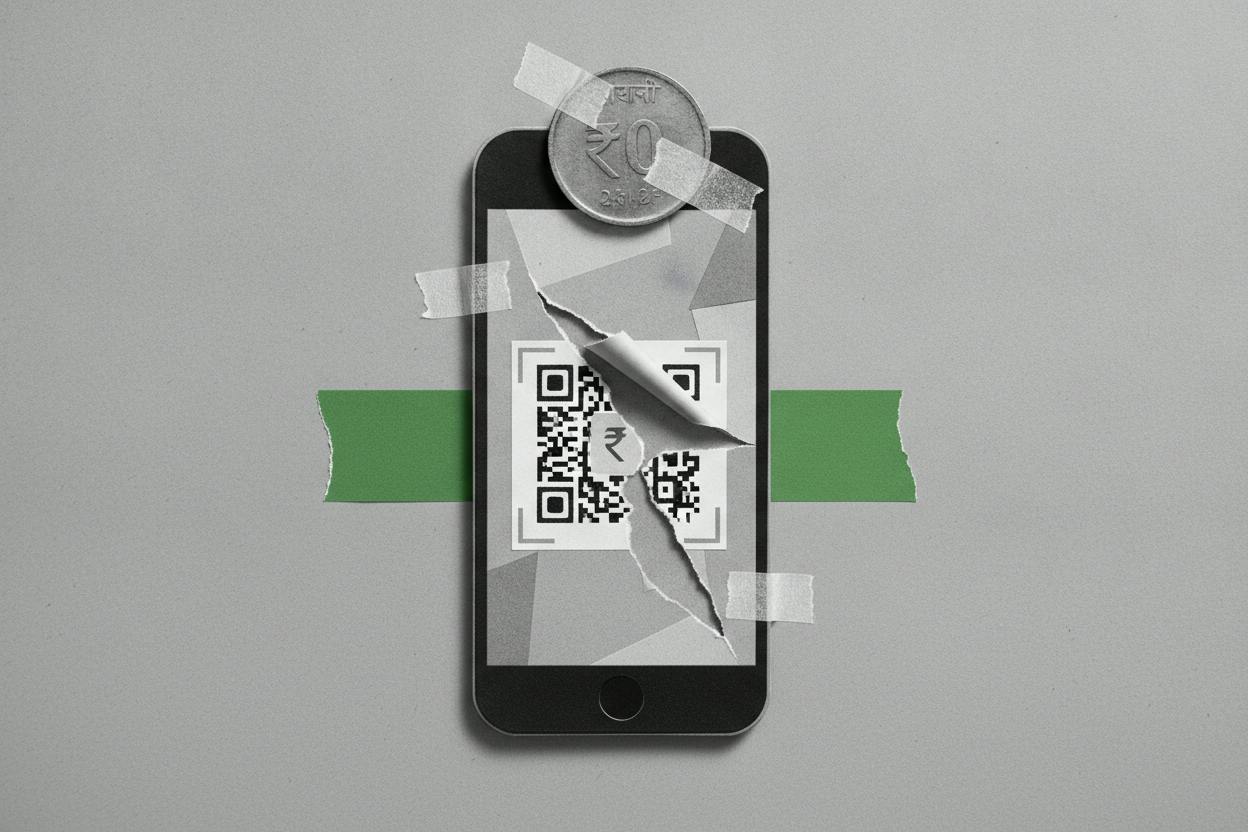
Shares of India's leading digital payments companies fell on Tuesday after the National Payments Corporation of India (NPCI) postponed a planned fee on larger merchant transactions made through the Unified Payments Interface (UPI). The delay, which comes with no new implementation date, removes a near-term revenue opportunity that investors had been counting on.
Paytm, Pine Labs, and MobiKwik all slid in trading, reflecting disappointment that the 0.4% charge on merchant UPI payments above 2,000 rupees will not take effect as originally scheduled. The fee had been set to start on October 15th, but NPCI has now pushed it back indefinitely.
What is UPI and why does this fee matter?
UPI is the real-time payment system that allows millions of Indians to transfer money directly from their bank accounts to merchants and individuals using just a smartphone. It has become the backbone of digital payments in the country, handling billions of transactions each month.
For most users, UPI is free. Merchants also have not had to pay fees on UPI transactions, which has helped drive its explosive adoption. But in September, NPCI announced it would introduce a 0.4% fee on merchant UPI payments above 2,000 rupees, a move designed to create a new revenue stream for payment companies that have struggled to monetize the platform.
The fee was seen as a positive for companies like Paytm, Pine Labs, and MobiKwik, which process a large volume of UPI transactions. By charging merchants on higher-value purchases, these firms could earn a cut on every transaction, boosting their bottom lines.
Why the delay hurts
The postponement means that revenue boost will not arrive as soon as expected. Investors had priced in the fee as a near-term catalyst for payments stocks, and the lack of a new start date creates uncertainty about when—or if—the fee will ever be implemented.
NPCI has not given a reason for the delay, but such postponements are not uncommon in India's regulatory landscape. The central bank and NPCI have historically been cautious about introducing fees that could slow down UPI adoption, especially in a country where digital payments are still growing.
For the companies involved, the delay is a reminder of how dependent they are on regulatory decisions. UPI is a public infrastructure, and the rules governing it are set by NPCI and the Reserve Bank of India, not by the private firms that build services on top of it.
What it means for investors
For everyday investors, the key takeaway is that payments stocks are sensitive to regulatory changes. The fee delay is a setback, but it does not change the long-term growth story of digital payments in India. UPI transaction volumes continue to rise, and the shift from cash to digital is still in its early stages.
However, the delay highlights the challenge these companies face in turning their massive user bases into profits. Without the merchant fee, they will need to rely on other revenue sources, such as lending, insurance, and other financial services.
Investors should also note that the broader market context matters. Indian equities have been under pressure recently, with the Nifty slipping as global factors like the Federal Reserve's hawkish stance weigh on sentiment. The payments sector is not immune to these broader trends.
As always, it's important to focus on the fundamentals of each company rather than reacting to short-term news. The fee delay is a single event, and its impact will depend on how quickly NPCI revisits the issue and how well these firms adapt.
For now, the market has spoken: the delay is a negative for payments stocks. But for long-term investors, the bigger picture remains intact—India's digital payments revolution is far from over.