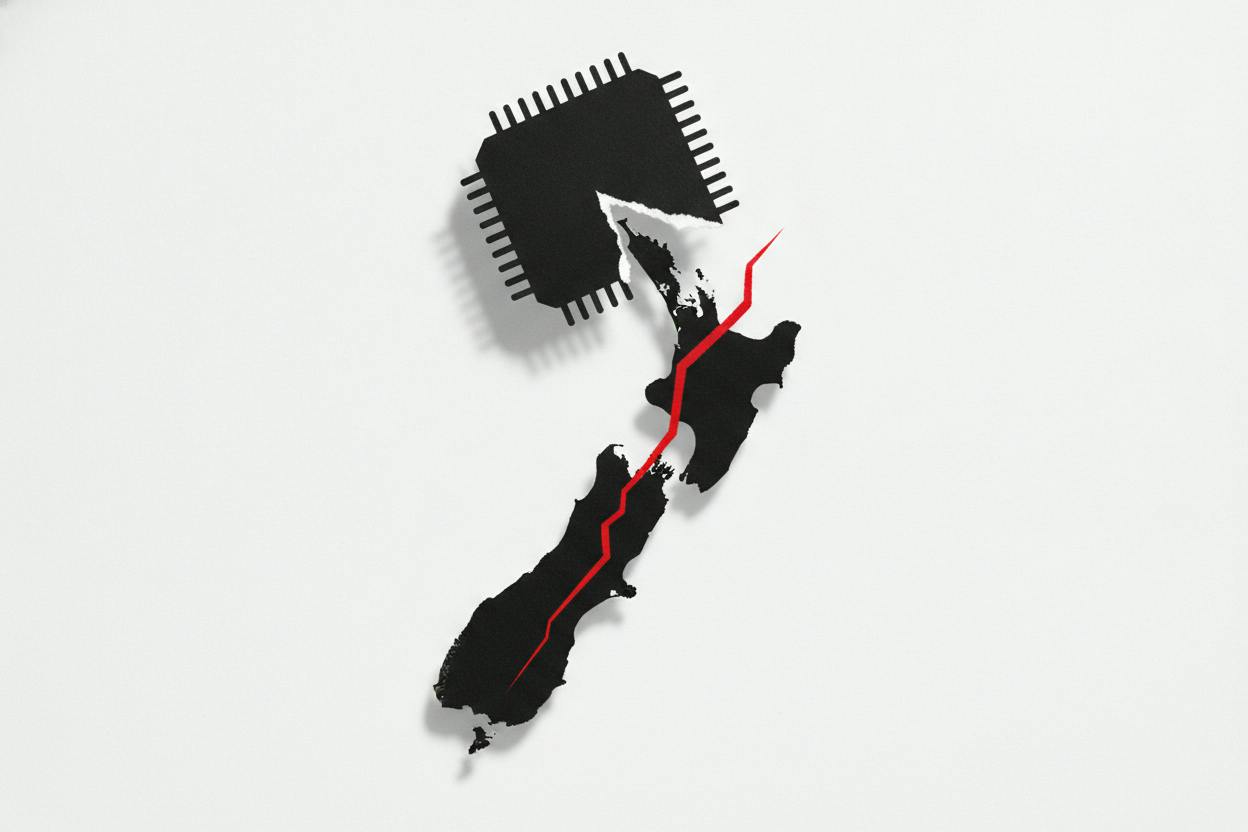
New Zealand stocks slipped on Monday as global markets absorbed the shock of Nvidia CEO Jensen Huang's departure, a move that has rattled investor confidence in the AI boom. The S&P/NZX 50 fell 0.6%, with sentiment driven more by offshore tech news than local headlines.
What happened
Nvidia, the world's most valuable chipmaker and a bellwether for artificial intelligence optimism, announced that its long-time CEO is stepping down. The news sent ripples through global markets, and New Zealand's benchmark index was not immune.
Investment bank Oppenheimer warned that Huang's exit could be a "material, potentially thesis-changing event" for Nvidia. The concern is that his departure might trigger a "brain drain"—where key talent follows the CEO out the door—and slow the company's innovation pace.
For investors, this is a classic case of key-person risk. Nvidia's stock is priced for extraordinary future growth, with investors paying a premium for profits they expect years down the line. Any uncertainty about the product roadmap or leadership stability can quickly deflate that premium.
Why it matters for growth stocks
When a company's competitive edge is largely intangible—leadership, talent, and execution speed—a departure at the top can change how confident investors feel about the next few years, not just the next quarter. If traders start to believe that employees could follow a celebrated CEO out the door, they tend to demand a higher "equity risk premium," meaning they require more compensation for owning the stock.
In practice, that often shows up as valuation multiple compression: the market pays less for each dollar of expected future profit until the succession plan looks credible. For Nvidia, which has become synonymous with AI-driven growth, this shift in risk appetite can ripple into distant markets like New Zealand when global investors pull back from paying up for growth.
The reaction in New Zealand was relatively muted compared to other markets. In Asia, Taiwan's chip stocks rallied 11% weekly despite the Nvidia news, and South Korea's KOSPI rose 2.4% as chip stocks shrugged off the worries. Meanwhile, Nvidia's CEO exit rattled AI stocks and lifted the dollar as markets steadied.
Local data adds to the picture
Back home, New Zealand's own economic data painted a mixed picture. A survey gauge of factory activity cooled in October, suggesting manufacturing momentum is slowing. Housing data also showed prices and sales still under pressure, keeping the property market in the doldrums.
These local headwinds, combined with the offshore tech jitters, created a cautious tone on the NZX. Investors are now weighing whether the Nvidia news is a one-off event or a sign of broader fragility in high-growth sectors.
What it means for investors
For everyday investors, the key takeaway is that CEO exits can hit growth-stock valuations even before any actual business results change. If you own shares in companies that rely on a charismatic leader or a fast-moving innovation culture, it's worth paying attention to succession plans.
But it's also important to keep perspective. Not every CEO departure spells disaster. Companies with deep management benches and clear strategies often navigate transitions smoothly. The market's initial reaction can be emotional, and valuations may recover once the succession plan is clarified.
For New Zealand investors, the Nvidia news is a reminder that global tech sentiment can influence local markets, even when the direct connection seems thin. As Australia and New Zealand gear up for a busy week of earnings, local results may take a back seat to offshore headlines.
In the coming days, watch for how Nvidia's board handles the transition and whether other AI-linked stocks follow suit. If the market sees a credible plan, the sell-off could be short-lived. If not, the "brain drain" worry could persist, keeping pressure on growth stocks worldwide.