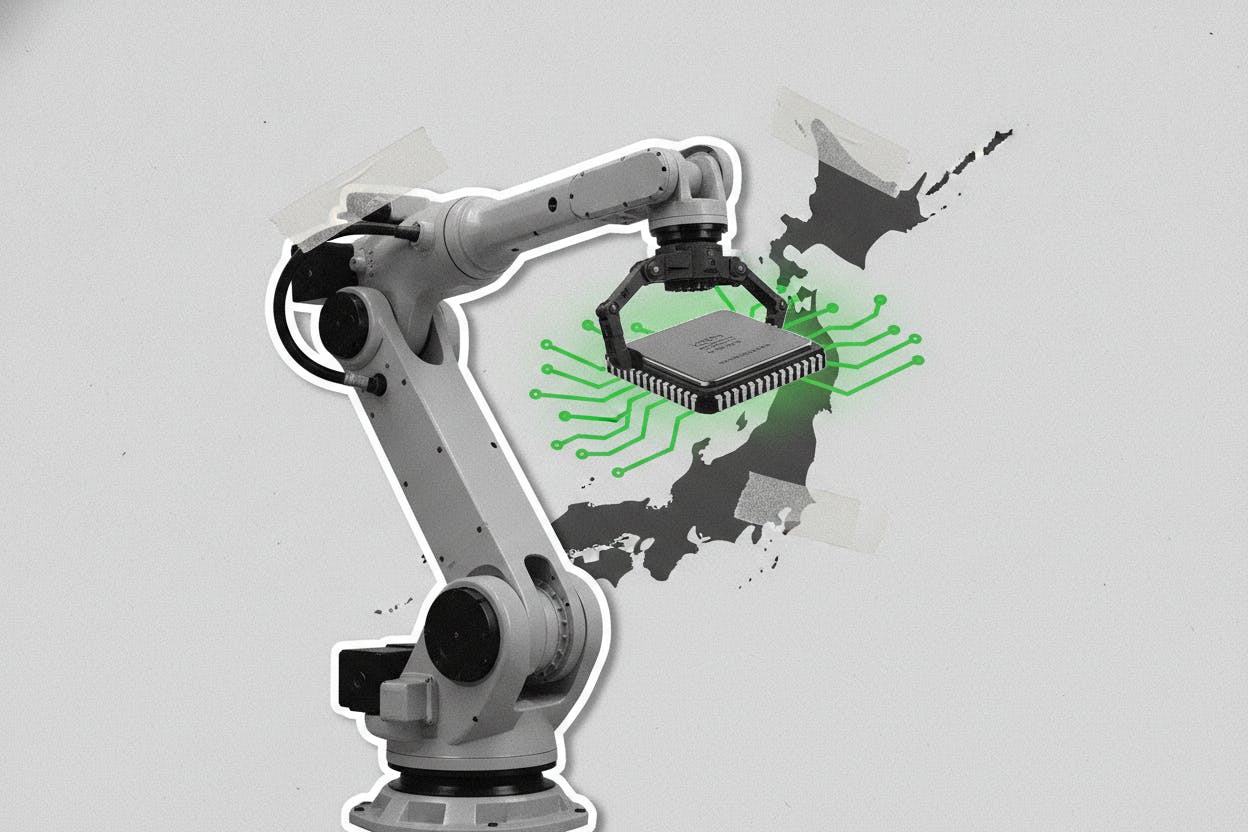
Nvidia is turning its attention from data centers to factory floors. At a media event in Tokyo on Thursday, CEO Jensen Huang announced new partnerships with two of Japan's leading industrial automation companies, Fanuc and Yaskawa Electric, to develop what the company calls 'physical AI' — systems that can perceive and act in the real world, not just generate text or images.
The move signals Nvidia's ambition to extend its dominance in artificial intelligence chips into robotics, a sector where Japan has long been a global leader. The company is betting that factories will need the same kind of full technology stack used in data centers: powerful chips, networking gear, and software tools to train and run AI models on robots.
What Is Physical AI?
Physical AI refers to machines that can understand their environment and take actions in it — think autonomous robots that can navigate a warehouse, pick up objects, or operate machinery without human guidance. Unlike generative AI, which produces text, images, or code, physical AI requires real-time sensing and decision-making.
Nvidia's push into this area builds on its existing work in autonomous vehicles and industrial automation. The company's chips are already used in some robots, but the new partnerships aim to create a more integrated platform that makes it easier for manufacturers to deploy AI-powered robots at scale.
Japan's Industrial Giants Sign On
Fanuc and Yaskawa are household names in factory automation. Fanuc is one of the world's largest makers of industrial robots and computer numerical control (CNC) systems, while Yaskawa is a leading supplier of servo motors, drives, and robots. Both companies have been exploring how to incorporate AI into their products to make them smarter and more flexible.
By partnering with Nvidia, they gain access to the chipmaker's advanced AI hardware and software ecosystem, including the CUDA platform and tools for training neural networks. For Nvidia, the partnerships provide a foothold in Japan's massive manufacturing sector, which is increasingly looking to automate to address labor shortages and boost productivity.
Japan's factory output has been volatile recently, with data showing a 2.1% decline in May, signaling a fragile recovery. The country's industrial base is under pressure from an aging workforce and competition from Chinese rivals like BYD, which has set its sights on overtaking Toyota globally. Automation and AI are seen as key to maintaining Japan's competitive edge.
A Massive Chip Order
Adding to the significance of the Tokyo event, a government-backed buyer announced plans to order 27,500 of Nvidia's upcoming Rubin chips. The Rubin architecture is Nvidia's next-generation AI chip design, expected to succeed the current Blackwell series. While Nvidia has not disclosed full specifications, the chips are designed to handle the most demanding AI workloads, including training large language models and running real-time inference for robotics.
The size of the order — tens of thousands of units — underscores the scale of Japan's ambitions in AI. The government has been actively promoting AI adoption as part of its economic strategy, and this purchase appears to be part of a broader push to build domestic AI infrastructure.
Nvidia has faced challenges in Asia before. The company recently slashed its list of approved AI chip buyers in Asia by more than half amid tighter US export controls on China. Japan, however, remains a key ally and a stable market for Nvidia's most advanced products.
What It Means for Investors
For everyday investors, Nvidia's robotics push represents a potential new growth avenue beyond its core data center business. The company's revenue has soared over the past two years thanks to demand for AI chips from cloud providers and tech giants, but that market could eventually mature. Robotics offers a way to diversify into industrial applications with long-term potential.
That said, robotics is a different ballgame. Industrial customers are often slower to adopt new technology and more price-sensitive than hyperscale data center operators. Nvidia will also face competition from established players like Intel and AMD, as well as specialized robotics chipmakers. The partnerships with Fanuc and Yaskawa give Nvidia credibility, but turning that into meaningful revenue will take time.
Investors should also watch how Nvidia's broader ecosystem evolves. The company recently launched an AI agent for circuit board design in partnership with Cadence, and it has been investing heavily in software tools that make it easier for developers to build AI applications. If Nvidia can replicate its data center success in the factory, it could open up a multi-billion-dollar market.
For now, the Tokyo announcements are a signal of intent. Nvidia is not just a chip company — it wants to be the platform for all AI, whether in the cloud, on the road, or on the factory floor. Japan's robot makers are the latest test of that vision.