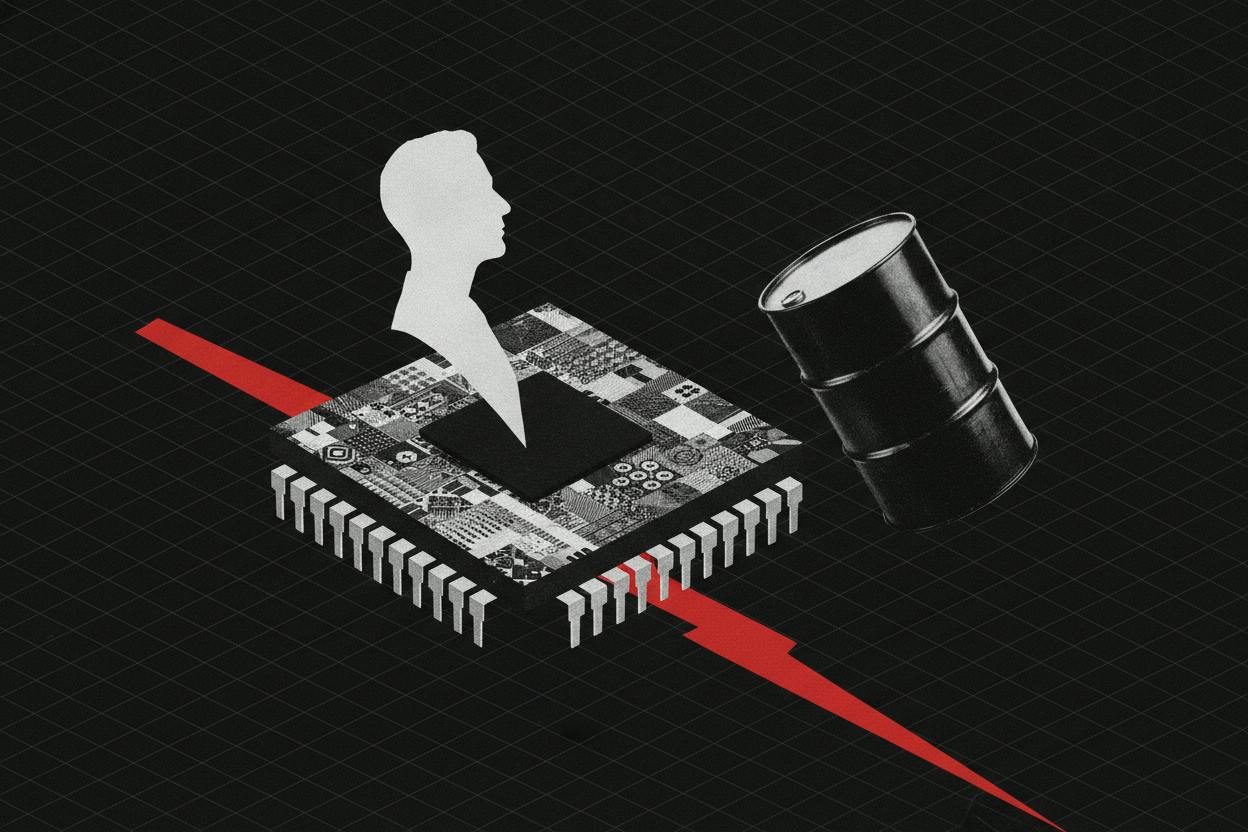
US stock futures pointed lower on Thursday, as a sharp premarket drop in Nvidia shares and rising oil prices added to investor anxiety ahead of Friday's producer price index (PPI) report. Nvidia fell 8.5% in premarket trading amid concerns about the leadership of CEO Jensen Huang, while Brent crude climbed 1.4% after President Donald Trump said the US “doesn’t need a deal with Iran.”
The moves come after a week of hotter-than-expected inflation data, which had already put markets on edge. The combination of a megacap tech wobble and higher energy prices is a reminder that the path to lower interest rates may be bumpier than many hoped.
Why Nvidia's slide matters
Nvidia has become the centerpiece of the AI trade, with investors pouring money into the company on expectations of explosive growth in data-center chips and AI infrastructure. That growth story relies heavily on the credibility of its leadership, particularly CEO Jensen Huang, who is seen as the visionary driving the company's strategy.
When questions arise about leadership stability, investors often reassess what is known as “key-person risk.” This is the risk that a company's fortunes are tied too closely to one individual. In Nvidia's case, Huang is not just a manager but the public face of the AI boom. Any doubt about his role can quickly translate into a higher “equity risk premium” – the extra return investors demand to hold a stock given the added uncertainty. That premium can compress valuations even before any actual change in business fundamentals.
The selling pressure spilled into other AI and data-center names, a sign that many traders treat the sector as one big bundle. Instead of picking individual winners, many investors hold AI exposure through broad tech funds, sector baskets, or derivatives. That means a headline about Nvidia can mechanically drag down related stocks, even if their own prospects haven't changed.
As we noted in our earlier coverage, Nvidia leadership worries have already dragged Canadian futures lower, and the impact has rippled across Asian markets, with Asia stocks slipping as Nvidia's dip rattles tech shares. The pattern is familiar: when the market's biggest AI proxy stumbles, the whole theme feels the tremors.
Oil prices add to inflation concerns
Meanwhile, Brent crude rose 1.4% after President Trump's comments on Iran revived worries about supply disruptions. Higher oil prices feed directly into inflation, as energy costs affect everything from transportation to manufacturing. For investors, this is a double-edged sword: it can boost energy stocks, but it also makes it harder for the Federal Reserve to cut interest rates.
Friday's producer price index (PPI) will be closely watched. PPI measures the prices that businesses pay for goods and services, and it often foreshadows consumer inflation. If PPI comes in hot, it could reinforce the view that inflation is sticky, prompting the Fed to keep rates higher for longer. That would be a headwind for stocks, especially high-valuation tech names that are sensitive to interest rates.
The recent inflation data has already shifted expectations. Earlier this week, a hotter-than-expected consumer price index (CPI) report led traders to dial back bets on rate cuts. Now, with oil climbing, the risk is that PPI adds more fuel to the fire.
What it means for investors
For everyday investors, the key takeaway is that markets are in a fragile state. A single headline about a CEO can move the entire tech sector, and a small uptick in oil can change the outlook for interest rates. This is a reminder that diversification matters – putting all your eggs in one basket, whether it's AI stocks or any other hot theme, can be risky.
If you hold broad index funds, you're already exposed to Nvidia's swings, since it's a major component of the S&P 500 and Nasdaq 100. But you're also exposed to energy stocks, which may benefit from higher oil prices. The net effect on your portfolio depends on how these forces balance out.
It's also worth noting that leadership worries at Nvidia are not new. The company has faced questions about its reliance on Huang before, and so far, it has continued to deliver strong results. But the market's reaction shows how quickly sentiment can shift when a key figure's future is in doubt.
As we've seen in China tech stocks sliding on Nvidia chip fears, the ripple effects can cross borders and sectors. And with Chinese firms stockpiling Nvidia chips abroad, the geopolitical dimension adds another layer of uncertainty.
For now, investors will be watching Friday's PPI report and any further developments on Nvidia's leadership. Until then, expect volatility to remain elevated.