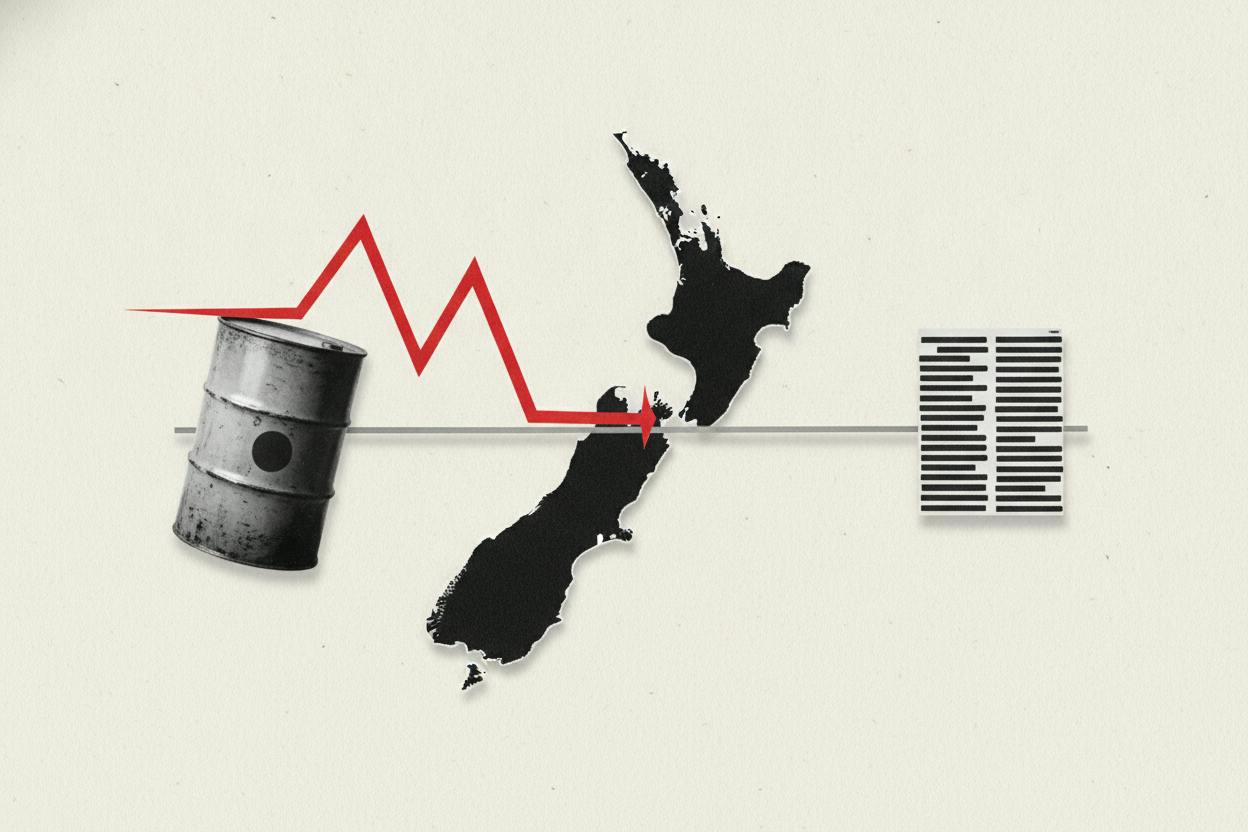
New Zealand's benchmark share index closed virtually unchanged on Tuesday, as a jump in global oil prices above $101 a barrel offset an otherwise upbeat mood from Wall Street's prior rally. The S&P/NZX 50 finished at 13,684.04, essentially flat on the day.
Brent crude, the international oil benchmark, rose to $101.60, driven by concerns that a storm threatening the Gulf of Mexico could disrupt energy infrastructure, and by ongoing Middle East tensions that keep supply risks elevated. The move echoed a broader trend seen in recent sessions, with oil prices climbing toward the $100 mark as Gulf storm threats and geopolitical uncertainty weigh on markets.
What's driving the market?
The tug-of-war in New Zealand shares reflected two competing forces. On one hand, investors took heart from a strong session on Wall Street, where major indices rallied on optimism about the global economy. On the other, higher oil prices stoke fears of renewed inflation, which could prompt central banks to keep interest rates higher for longer.
For everyday investors, the oil price matters because it feeds directly into the cost of petrol, heating, and many goods. When crude climbs, it can squeeze household budgets and corporate profit margins, and it complicates the inflation picture that central banks are trying to bring under control.
At home, data from Westpac, one of New Zealand's biggest banks, offered a mixed signal. Its card spending figures showed per-person spending rose 1.4% in September and was up 7.7% from a year earlier. That suggests consumer demand has remained resilient even as higher fuel prices threaten to eat into disposable income. Strong spending can support economic growth, but if it persists alongside high inflation, it may also keep pressure on the Reserve Bank to maintain restrictive policy.
Infratil's data center mark-down
One notable mover was Infratil, the New Zealand infrastructure investor. The company said an independent valuation had cut the value of its roughly 49.7% stake in Australian data center operator CDC Data Centres by AU$45 million, to AU$9.17 billion from AU$9.21 billion.
The mark-down came despite progress in signing new customers and adding capacity. The reason, Infratil said, was higher forecast interest costs, which outweighed the operational improvements.
This is a classic example of how interest rates affect the valuation of long-duration assets. Data centers require massive upfront investment in buildings, cooling systems, and power infrastructure, and they generate most of their cash flows years into the future. When interest rates rise, the discount rate used to calculate the present value of those future cash flows also rises, reducing the current worth of the asset. Higher financing costs also eat into the expected returns.
For investors watching Infratil, the message is that shifts in the interest-rate and funding backdrop can drive headline valuation marks just as much as day-to-day operating progress. It's a reminder that in a high-rate environment, even companies with strong operational momentum can see their asset values marked down.
What it means for investors
The flat close on the NZX 50 suggests investors are in a wait-and-see mode, balancing the positive signals from global markets against the headwinds of higher energy costs and persistent inflation.
For those with money in New Zealand equities, the key takeaway is that oil prices and interest rates remain the twin forces to watch. A sustained move above $100 a barrel could feed into higher inflation, potentially delaying rate cuts and keeping borrowing costs elevated. That would weigh on growth-sensitive stocks and on long-duration assets like infrastructure and technology.
On the other hand, if oil prices retreat and inflation cools, the outlook could brighten. The resilience in consumer spending, as shown by Westpac's data, is a positive sign that the economy is not collapsing under the weight of higher prices.
As always, diversification and a long-term perspective are important. Markets are likely to remain volatile as investors digest the interplay between energy prices, central bank policy, and economic data. Keeping an eye on these macro factors can help you understand the forces moving your investments, even if day-to-day moves are often noise.