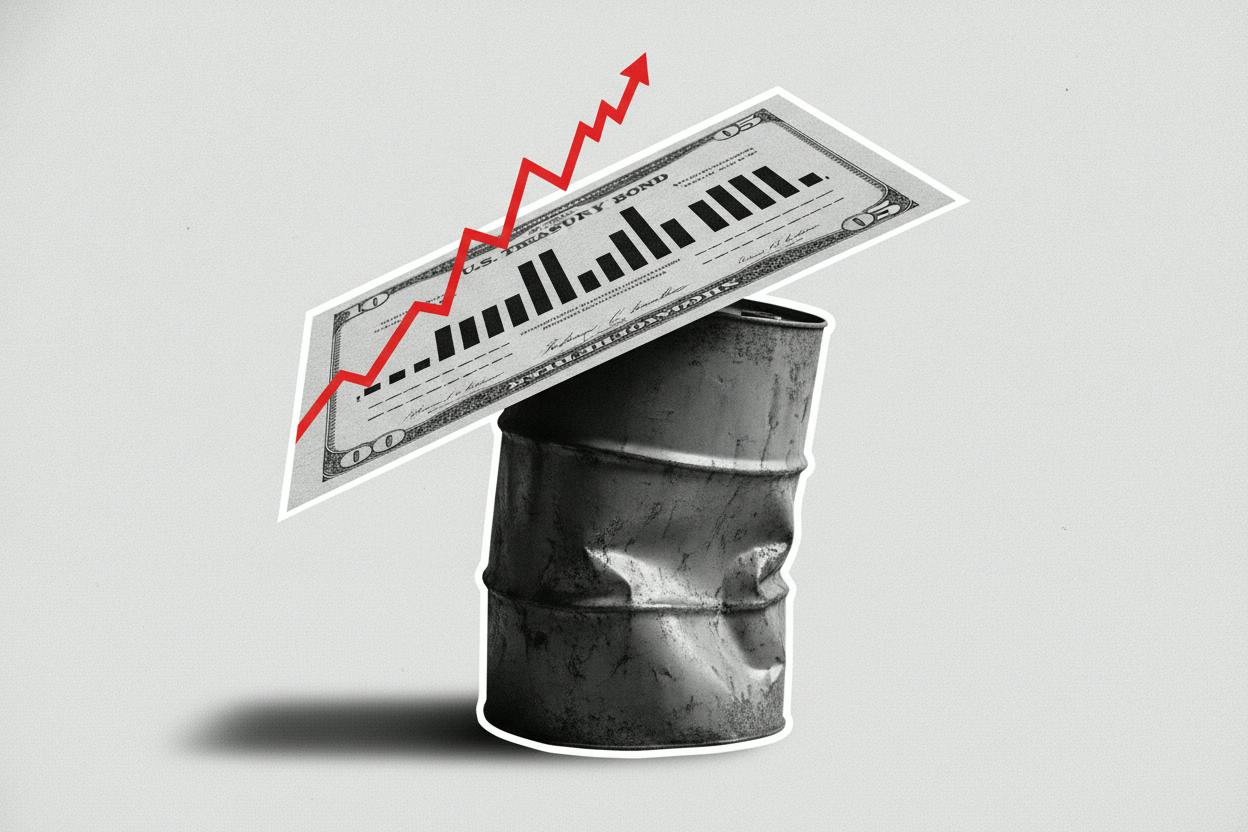
Oil prices pushed higher in Asian trading, with Brent crude topping $101 a barrel, while US borrowing costs continued their upward march. The 10-year Treasury yield ticked up to 5.307%, a level not seen in decades, and the combination left global stock markets and the euro looking wobbly.
The moves reflect two powerful forces pulling investors in opposite directions. On one hand, oil is being lifted by near-term supply concerns, including a storm tracking toward North American producing regions and fresh tensions around Red Sea shipping. On the other, longer-dated US yields have been grinding higher since late August, hitting multi-decade highs earlier this week, and that is putting pressure on risk assets worldwide.
Why oil is climbing
Brent crude's rise above $101 is notable because it comes even as major oil trader Vitol pointed to heavy recent tanker flows out of the Middle East, suggesting that physical supply is not particularly tight right now. Instead, the market is focusing on potential disruptions. A storm heading toward oil-producing areas in North America could threaten output, while ongoing tensions around Red Sea shipping raise the risk of supply chain delays.
These worries are enough to keep a risk premium in the price, even if actual barrels are still flowing. For everyday investors, higher oil prices often translate into higher costs at the pump and, eventually, higher prices for goods that depend on transportation. That can feed into inflation, which is something central banks are watching closely.
The bond yield backdrop
The bigger headache for markets is the relentless rise in long-term US Treasury yields. The 10-year yield hitting 5.307% is a significant psychological milestone, as it approaches levels not seen since the early 2000s. Yields have been climbing since late August, driven by a combination of strong economic data, concerns about government borrowing, and expectations that the Federal Reserve will keep interest rates higher for longer.
Higher yields matter because they set the tone for borrowing costs across the economy. They make it more expensive for companies to finance expansion, for consumers to take out mortgages, and for governments to service debt. They also make bonds more attractive relative to stocks, which can pull money out of equity markets.
As stocks have struggled under the weight of these yields, the euro has also weakened. A stronger dollar, which often accompanies rising US yields, tends to weigh on other currencies, and the euro is no exception.
What it means for investors
For ordinary investors, the combination of high oil prices and high bond yields creates a tricky environment. Higher oil can push inflation up, which might prompt central banks to keep rates elevated. Higher yields, meanwhile, can hurt stock valuations, especially for growth companies that promise profits far in the future.
That said, not all sectors are affected equally. Energy companies often benefit from higher crude prices, while sectors like technology and consumer discretionary can be more sensitive to rising yields. Recent market action has shown that when yields ease, stocks can quickly rebound, so the direction of yields is a key thing to watch.
Investors should also keep an eye on how these forces play out in other regions. Emerging Asian stocks have already slipped as oil tops $100 and US yields stay high, and New Zealand shares have been flat under the same pressures. The ripple effects are global.
Looking ahead
The near-term path for markets will likely depend on two things: whether oil prices can hold above $100, and whether Treasury yields continue to climb or finally take a breather. Any sign that the storm in North America is weakening, or that Red Sea tensions are easing, could take some heat out of oil. On the rates side, upcoming economic data and Treasury auctions will be closely watched for clues.
For now, the message from markets is clear: higher oil and higher yields are a tough combination for stocks and currencies. Investors would do well to stay diversified and keep an eye on these two forces as they shape the investment landscape in the weeks ahead.