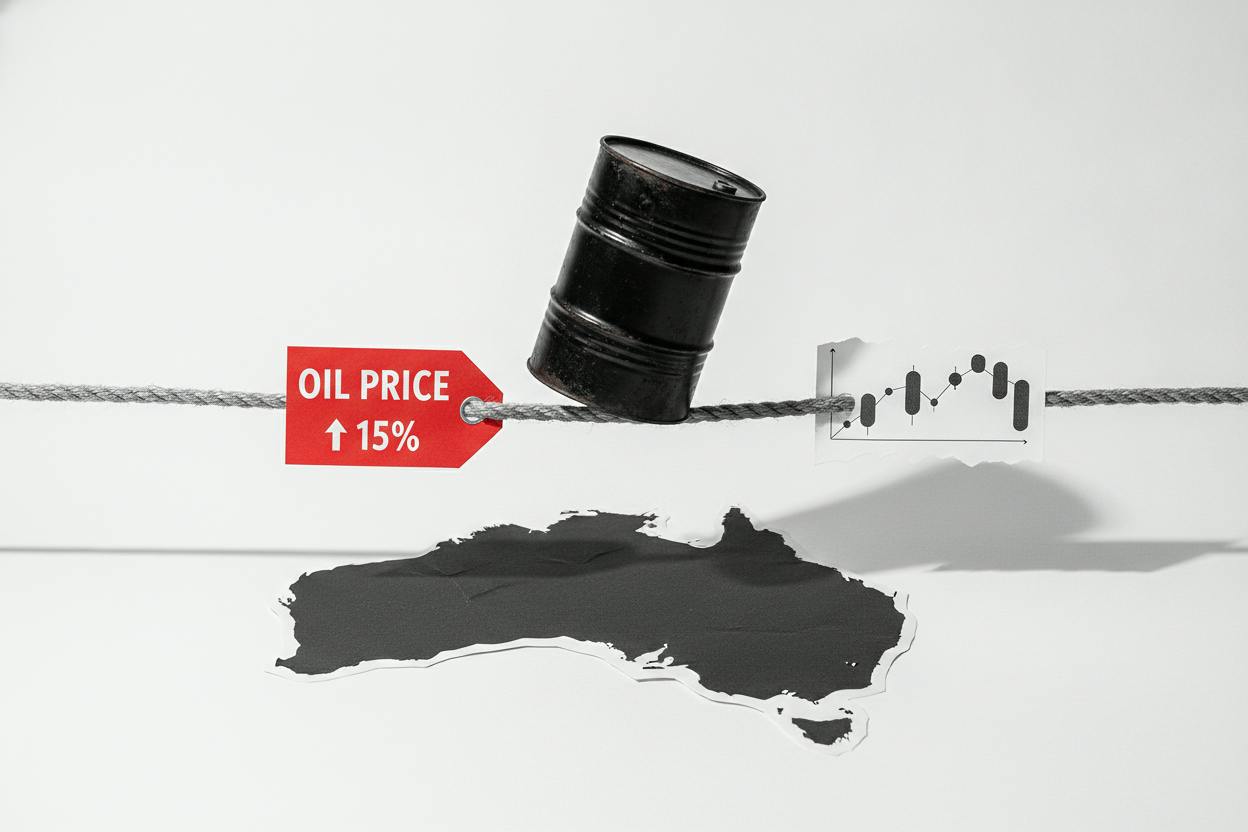
Australian shares ended the session little changed, with the S&P/ASX 200 closing at 8,727.70, as a sharp deterioration in local business activity offset the optimism from fresh record highs on Wall Street. Brent crude hovered near $101 a barrel, adding to the mixed picture for investors.
The flat finish masked a tug-of-war between global tailwinds and domestic headwinds. In the US, major indexes climbed again, extending their recent run. But at home, the Australian Industry Group (Ai Group) reported a broad weakening in September conditions, with its activity and sales gauge plunging 28.5 points to -31 and its employment reading falling to -15.6.
What's behind the numbers
The Ai Group survey is a widely watched gauge of manufacturing and services activity. A reading below zero signals contraction, and the sharp drop suggests that businesses are feeling the pinch from weak demand, high costs, labor shortages, and general uncertainty. That combination often leads companies to slow hiring and delay investment, which can weigh on economic growth and corporate earnings.
Despite the gloomy survey, some brighter data and company news helped balance the market. Energy stocks likely benefited from the elevated oil price, as oil topping $101 lifts earnings expectations for producers and sellers into global markets. Meanwhile, the Australian dollar and kiwi dollar steadied as the global bond selloff took a breather, providing some relief for importers and consumers.
What it means for investors
Flat index days can still be revealing when different parts of the market are moving in opposite directions. Higher oil prices can boost resource and energy companies that sell into global markets, but a steep drop in local activity, plus weaker hiring intentions, is the kind of signal analysts often fold into forward profit estimates for banks, retailers, and other businesses tied to Australian demand.
When those forces hit at once, the index can look calm even as the "under the hood" winners and losers change. That's why the next clues may show up first in earnings upgrades and downgrades—and in the gap between domestically exposed cyclicals and globally exposed miners—rather than in the ASX 200 level itself.
For everyday investors, the key takeaway is that the market's calm surface can hide significant shifts in the outlook for different sectors. If local demand continues to soften, companies that rely on Australian consumers and businesses may face pressure on their profit forecasts. On the other hand, energy and resource firms could benefit from sustained high oil prices, as seen in the recent strength in that area.
Investors should also keep an eye on global factors. The record highs on Wall Street suggest that international investors remain optimistic, but emerging Asia stocks have slipped as oil tops $100 and US yields stay high, highlighting the delicate balance. Higher oil prices can feed into inflation, which may prompt central banks to keep interest rates higher for longer, a headwind for growth stocks.
In Australia, the focus will likely shift to upcoming economic data and corporate earnings reports. The Ai Group's weak reading raises the stakes for other indicators, such as retail sales and employment figures, which could confirm or contradict the survey's message. If the softness persists, analysts may start trimming profit forecasts for domestic-facing companies, which could eventually weigh on the broader market.
For now, the ASX 200's flat close at 8,727.70 reflects a market caught between global optimism and local caution. Investors would do well to watch the divergence between sectors, as it often provides earlier signals than the index itself.