Shell, one of the world's largest energy companies, released its third-quarter 2026 trading update on [date], giving investors a preview of what to expect when full results are published. The headline numbers were production guidance within expected ranges, but the more notable item was a warning that operating cash flow will take a roughly $2.50 billion hit tied to Germany's BEHG program.
For everyday investors, this update matters because it shows how a single regulatory payment can distort a quarter's cash picture, even when the underlying business is running smoothly.
What Shell guided for Q3 2026
Shell uses these quarterly updates to set expectations for key operational metrics before releasing full financials. For the third quarter, the company guided for upstream production of 1,735 to 1,835 thousand barrels of oil equivalent per day (KBOE/D). That range reflects the company's oil and gas extraction activities, which are the core of its business.
In addition, Shell guided for integrated gas production of 740 to 780 thousand barrels of oil equivalent per day, and liquefied natural gas (LNG) liquefaction volumes of 7.2 to 7.6 million metric tons. These figures indicate how much gas Shell is producing and converting into LNG for export, a key growth area for the company.
The update also flagged about $0.3 billion of exploration write-offs, along with some non-cash asset impairment charges and reversals. These are accounting adjustments that can affect reported profit but do not involve actual cash leaving the company. They highlight how reported earnings can move even when day-to-day operations are steady.
The German BEHG cash hit
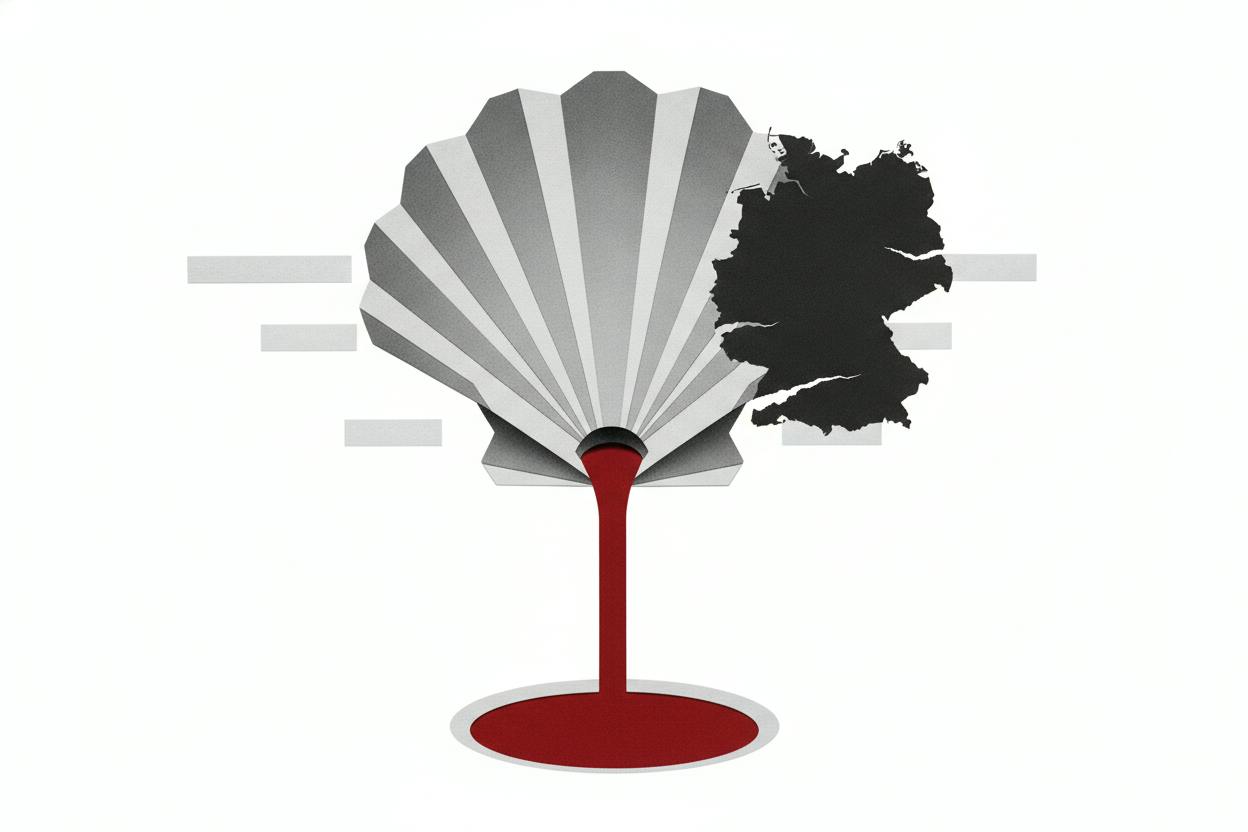
The bigger talking point is cash. Shell said cash flow from operations, excluding working-capital swings, will include about a $2.50 billion outflow related to Germany's BEHG. BEHG stands for Brennstoffemissionshandelsgesetz, Germany's national emissions trading system for fuels. It is a regulatory mechanism that puts a price on carbon emissions from fuels like gasoline, diesel, and heating oil.
For Shell, this means a large, one-off payment to the German government, likely related to its fuel sales in the country. The payment lands in operating cash flow, so even if production and margins come in within guidance, the quarter's headline cash generation can look weaker because of this single item.
This is not a reflection of operational performance. It is a timing issue, but it can still affect how investors and analysts view the quarter's cash generation.
What it means for investors
For markets, the $2.50 billion BEHG payment could muddy Q3 cash comparisons. A quarter can be operationally "in range" and still disappoint on cash screens if a large, quarter-specific payment lands in operating cash flow. That is the setup Shell is signaling: the BEHG outflow hits cash generation immediately, while the production and refining guidance speaks more to underlying activity.
The practical consequence is that Q3 2026 may look optically weaker in cash-flow-based models than in volume- or margin-based ones. This could widen the gap between how Shell's quarter reads versus peers that do not have a similar item. For example, other European oil majors may not face the same German carbon-cost payment in the same quarter, making Shell's cash numbers look less favorable by comparison.
Analyst focus will likely shift to whether they treat the BEHG charge as timing-related noise when estimating Shell's run-rate cash generation. If they do, the impact on valuation could be limited. If they do not, the stock might face some pressure on cash-flow metrics.
For ordinary investors, the key takeaway is that quarterly updates can contain items that are not part of the day-to-day business. A large one-off payment like this does not change the company's long-term prospects, but it can affect short-term cash flow and reported results. It is worth watching how Shell's management explains the BEHG payment in the full earnings call, and whether they signal any similar payments in future quarters.
Shell's update comes amid a broader energy market that has seen oil prices climb toward $100 due to supply concerns. Higher oil prices generally benefit Shell's upstream business, but the German carbon payment is a reminder that regulatory costs can offset some of those gains.
Investors should also keep an eye on how Shell's cash flow compares to its dividend and buyback commitments. The company has been returning cash to shareholders, and a large one-off outflow could temporarily reduce the cash available for those returns, though Shell has not indicated any change to its capital return plans.
Overall, this update is a reminder that even the largest energy companies face quarterly volatility from non-operational items. For those holding Shell shares, the BEHG payment is likely a one-time event, but it is worth understanding how it affects the quarter's numbers.