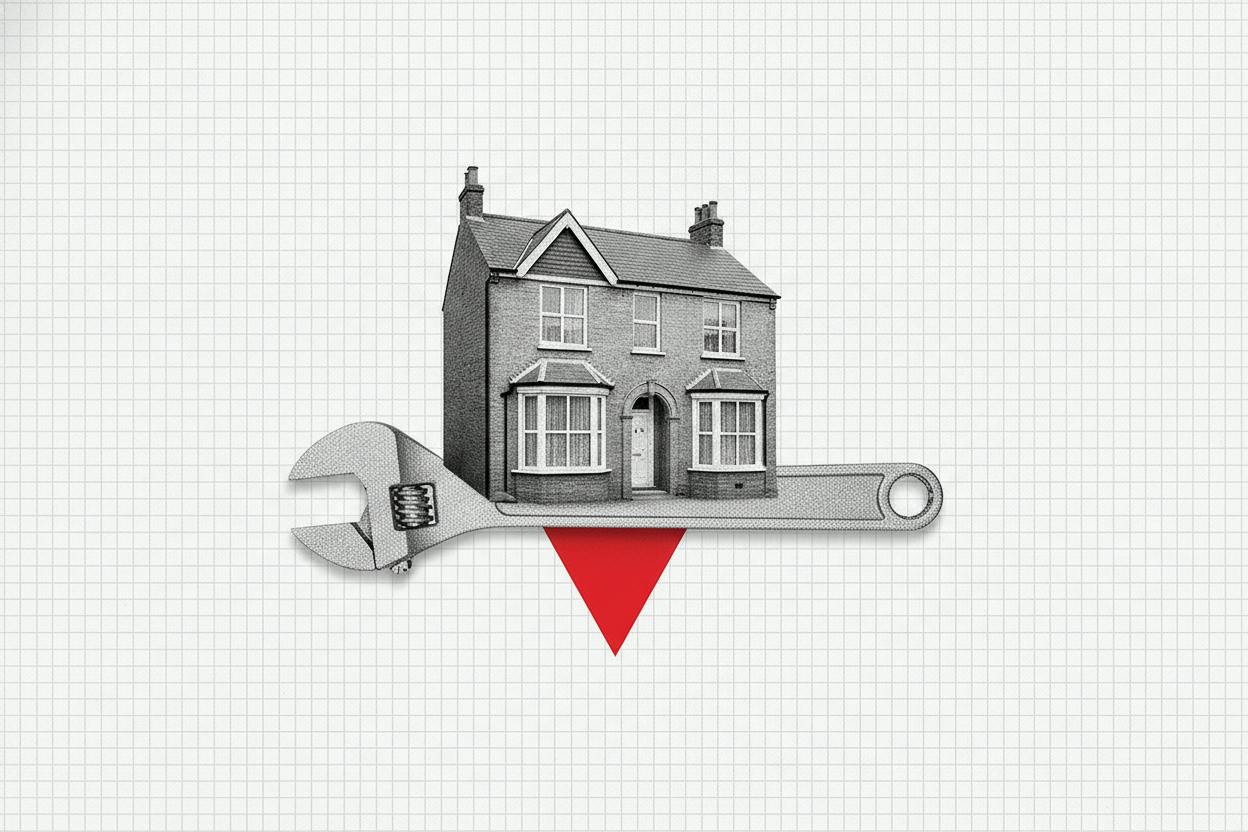
UK house prices hit a standstill in September, as rising mortgage costs continued to squeeze affordability and keep potential buyers on the sidelines. Data from Lloyds Banking Group, one of the country's largest mortgage lenders, showed prices were unchanged both month-on-month and year-on-year.
The flat reading was slightly softer than economists had expected, and it underscores a broader trend: affordability, rather than demand, is now the main force shaping the housing market.
What the data shows
Lloyds' house price index, which tracks the value of homes it lends against, recorded no movement in September compared with August. On an annual basis, prices were also flat, marking a pause after August saw the first year-on-year decline since 2023.
Over the past three months, prices have slipped 0.2%, a sign that the market is cooling gradually rather than collapsing. The lender noted that buyer interest has not disappeared entirely — mortgage inquiries are running at their fastest pace since February — suggesting many would-be buyers are still testing the waters, even if they are not yet committing to purchases.
This mix of stagnant prices and resilient inquiry levels paints a picture of a market in a holding pattern. Sellers are reluctant to cut prices, while buyers are waiting for more favourable borrowing conditions.
Why mortgage rates are the key driver
The stagnation comes as financial markets price in a more than 90% chance that the Bank of England will raise interest rates at its November meeting. That expectation has pushed up borrowing costs for new fixed-rate mortgages, which are closely tied to market rates.
For most homebuyers, the mortgage rate is the single biggest factor in what they can afford. When rates rise, monthly repayments increase, forcing buyers to either borrow less, offer lower prices, or delay their plans altogether. This dynamic has been the central story of the UK housing market over the past year, as the central bank has battled persistent inflation.
The Bank of England's rate decisions have a direct knock-on effect on household finances. Unlike in some countries where long-term fixed mortgages are common, most UK borrowers fix for two or five years, meaning they feel the impact of rate changes relatively quickly when they remortgage or take out a new loan.
What it means for investors
For everyday investors, the housing market's slowdown matters in several ways. First, it affects the value of property portfolios, whether that's a buy-to-let investment or a family home. Flat prices mean little capital growth in the short term, though they also reduce the risk of a sharp correction.
Second, the health of the housing market is closely tied to consumer confidence and spending. When house prices stall, homeowners often feel less wealthy and may cut back on discretionary purchases. That can weigh on retail and services companies, which in turn affects stock market performance.
Third, the housing market is a key indicator for the broader economy. A prolonged stagnation could prompt the Bank of England to reconsider its rate path, which would have implications for everything from savings rates to the value of the pound.
Investors should also keep an eye on mortgage lenders like Lloyds, whose profits are sensitive to the volume of new lending and the rates they charge. A slowdown in housing activity can reduce loan origination, though higher rates can also boost net interest margins.
Looking ahead
The coming months will be crucial. If the Bank of England follows through with a November rate hike, mortgage rates could rise further, potentially pushing prices into more pronounced decline. On the other hand, if inflation continues to ease, the central bank may pause, giving the market a chance to stabilise.
Lloyds' data is just one measure of the UK housing market, and other indices may tell slightly different stories. But the overall message is clear: the era of rapid house price growth is over, at least for now. Buyers and sellers are adjusting to a new reality where borrowing costs are higher and price growth is minimal.
For those considering entering the market, the current flatness could offer some breathing room, but it also carries uncertainty. As always, the direction of interest rates will be the single most important factor to watch.